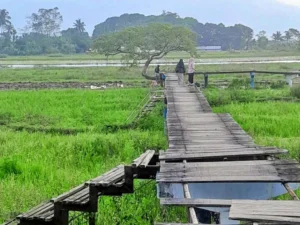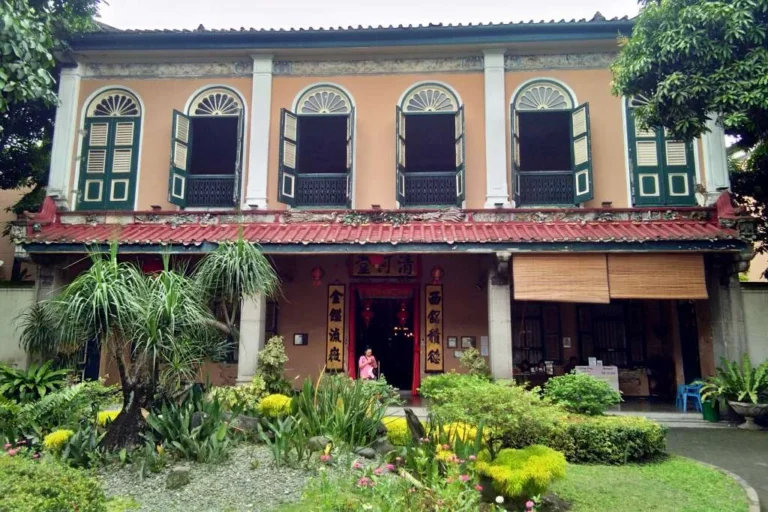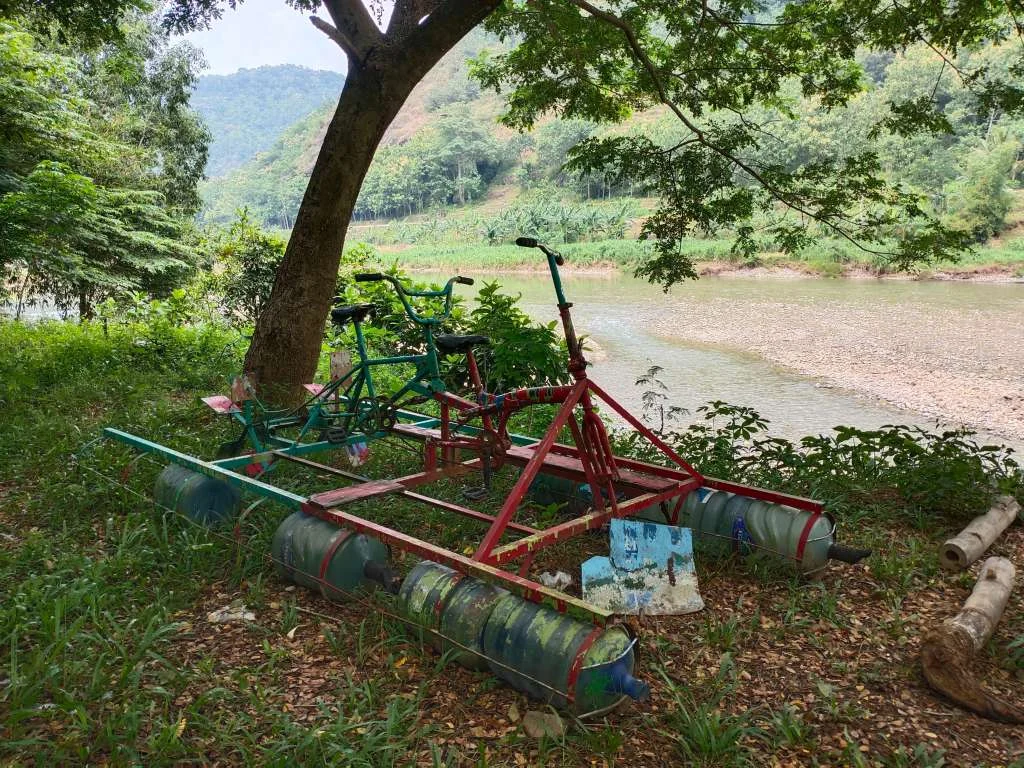
Nestled against the lush, undulating green hills of Imogiri in the Special Region of Yogyakarta, the Srikeminut Tourism Village presents a picturesque landscape of tiered rice paddies and rural tranquility. A large sign bearing the word SRIHARJO greets visitors entering the heart of the community, while the brown, silt-heavy current of the Oyo River serves as a silent reminder of the region’s vulnerability to heavy seasonal rainfall. Today, many of the local tourist kiosks sit quiet and dormant, with only a handful operational, painting a poignant picture of a destination that has weathered immense socioeconomic and environmental shocks.
The journey of Srikeminut from a cluster of quiet agrarian hamlets into a celebrated tourism village is a narrative defined by visionary leadership, grassroots mobilization, devastating natural disasters, and the persistent struggle for generational continuity.

From Merantau
Roots to Community Leadership
The genesis of Srikeminut as a tourism entity is inextricably linked to the vision of Sugianto, the Head of Dukuh (Hamlet Chief) of Kedungmirih. Sugianto’s path to leadership was forged far from the tranquil landscapes of Imogiri. Between 1990 and 1999, he spent nine years as a migrant worker—locally known as merantau—in Jakarta. During his time in the capital, he engaged in diverse labor, working as a construction hand, managing a catering business, operating in a factory, and eventually assisting an automobile spare parts entrepreneur.
The economic fallout of the 1998 Indonesian Reformation forced Sugianto to return to his home village. However, the nearly decade-long experience in the bustling metropolis fundamentally transformed his mindset. He returned with the entrepreneurial acumen of a self-made businessman, recognizing that rural development required shifting the community’s mindset away from mere subsistence toward economic self-reliance.

In 2000, amid a vacancy for local leadership, Sugianto was chosen by the residents of Kedungmirih to serve as hamlet chief, formally taking office in 2001. At the turn of the millennium, Kedungmirih faced a demographic and economic dilemma. A significant portion of the local population regularly migrated out of the region to secure employment, leaving the hamlet devoid of active economic planners and youth engagement. Sugianto understood that to make his community safe, comfortable, and economically viable, he had to act as an adoptive parent to the residents, steering governmental welfare programs directly to the grassroots.
Chronology of Development: Planting the Seeds of Tourism
The institutional transformation of the region began to take concrete shape following the national policy shifts under President Susilo Bambang Yudhoyono’s administration between 2004 and 2005, which heavily promoted tourism as a viable pillar for rural poverty alleviation.
In its infancy, Sugianto’s vision met with considerable skepticism. Not only did local residents harbor doubts, but neighboring hamlets within the Sriharjo administrative village (Kalurahan Sriharjo) were similarly insular, focusing solely on their respective territories rather than collaborative regional growth. Undeterred, Sugianto leveraged local cultural institutions to build momentum.

The turning point arrived through collaboration with local youth organizations (Karang Taruna) and the intervention of academic institutions. In 2004, a three-month Community Service Program (KKN) team from Universitas Gadjah Mada (UGM) arrived in the hamlet. Working alongside local youth, the community organized traditional celebrations, cultural performances, and merti dusun (village gratitude rituals). This collaborative synergy culminated in the inauguration of a suspension bridge in Wunut, marking the official entry of the area into the realm of community-based tourism.
Following this success, stakeholders established the Tourism Awareness Group (Pokdarwis) to spearhead economic potentials, while local art studios (Sanggar Kesenian) were founded to preserve traditional Mataram-Jogja arts, including gamelan instruction for visitors. In 2008, the area officially launched as the Kedungmirih Tourism Village, later consolidating with neighboring hamlets Bengkol, Sompo, and Wunut to form "Srikeminut"—an acronym representing Sriharjo, Kedungmirih, and Wunut—formalized via a Village Head Decree.
The 2006 Yogyakarta Earthquake and the Test of Resilience
Just as the early seeds of tourism began to sprout, catastrophe struck. On May 27, 2006, a devastating 6.3 magnitude earthquake centered off the coast of Bantul struck the Special Region of Yogyakarta, resulting in over 4,100 fatalities in Bantul Regency alone. Srikeminut suffered catastrophic infrastructural damage, with residential homes reduced to rubble and critical access roads severed.

Despite the profound psychological trauma and physical destruction, the nascent tourism framework inadvertently acted as a catalyst for recovery. Recognizing the community’s proactive initiatives, regional government officials directed reconstruction assistance toward Srikeminut. By late 2007, rebuilding efforts commenced under an integrated recovery model. Planners attempted to advocate for traditional Javanese architectural styles using local wood materials, known as the "desoh" model, to preserve the rural aesthetic essential for educational tourism. However, bureaucratic constraints regarding procurement and material auctions necessitated permanent, modern brick-and-mortar reconstructions for many residential homes, forcing the community to adapt their homestay offerings into semi-traditional architectural formats.
By 2010, the village had sufficiently recovered to host prominent regional events, such as the International Healthy Walk led by Gusti Pembayon, which showcased local micro, small, and medium enterprises (MSMEs). By 2012, Srikeminut achieved a major milestone, regularly hosting community and family live-in programs and receiving validation from urban tourists seeking respite from fast-paced urban environments. The village’s bucolic charm even attracted national television production houses, which utilized Srikeminut as a backdrop for television serials between 2012 and 2016, providing invaluable national exposure.
Environmental Vulnerabilities and Contemporary Challenges
Despite its hard-fought progress, Srikeminut’s geographical vulnerabilities continually threatened its existence. On November 28, 2017, torrential rains caused the Oyo River to overflow, unleashing a violent flash flood that inundated residential zones, destroyed livelihoods, swept away vital infrastructure, and—critically—obliterated the village’s historical archives and tourism documentation.

Before the community could fully recover from the 2017 disaster, the outbreak of the COVID-19 pandemic in early 2020 dealt another severe blow to the local economy. With domestic and international travel brought to a standstill, the tourism village was forced into a prolonged state of mere survival.
Compounding these external shocks is an internal structural challenge: a critical lack of youth generational succession. Many younger residents continue to migrate outward for education and formal employment, leaving behind an aging demographic to manage the tourism infrastructure. Today, Srikeminut finds itself trapped in a precarious socioeconomic limbo—colloquially described as "too stagnant to thrive, yet too persistent to perish."
Implications and the Path Forward
The trajectory of the Srikeminut Tourism Village offers a compelling case study in the complexities of community-based rural tourism in Indonesia. While visionary leadership and government-backed initiatives successfully elevated the economic standing of marginalized hamlets post-2000, the enterprise remains intensely vulnerable to natural calamities and global health crises.

The long-term viability of Srikeminut depends heavily on institutional revitalization, climate disaster mitigation strategies along the Oyo River corridor, and targeted youth engagement programs to foster local leadership succession. Without systematic interventions to attract younger generations back into rural enterprise, pioneering community initiatives risk fading into historical footnotes, leaving destinations like Srikeminut to struggle indefinitely against the tides of environmental and demographic change.