In a groundbreaking discovery that has fundamentally reshaped our understanding of the early Solar System, scientists have identified a rare meteorite originating from Mars that dates back more than 4.1 billion years. This celestial object, known as Teghaza 001, provides a vital link to a period in Martian history when the planet was vastly different from the cold, arid, and desolate desert we observe today. By analyzing the unique chemical composition of this rock, researchers have confirmed that Mars once hosted an environment capable of sustaining water, offering profound insights into the planet’s geological evolution and its potential to have harbored early conditions suitable for life.
The findings, published in the journal Science in late October, were led by planetary scientists at NASA’s Jet Propulsion Laboratory (JPL) in California. The study suggests that the Red Planet’s transition from a water-rich world to a dry environment occurred earlier and under more complex circumstances than previously theorized.
Discovery and Origin of Teghaza 001
The story of Teghaza 001 began in 2022, when the meteorite was discovered in the Teghaza salt flats of Mali, West Africa. The find consists of eight distinct fragments with a combined weight of approximately 798.5 grams (1.76 pounds), with the largest individual piece weighing 442 grams (0.97 pounds). While many meteorites are found in arid regions like the Sahara due to the ease of spotting dark rocks against light-colored sand, Teghaza 001 was initially dismissed by researchers as just another specimen of the common "Shergottite" class.
Shergottites constitute approximately 90 percent of the known Martian meteorite collection. Typically, these meteorites are relatively young in geological terms, often dating back only 600 million years or less. Because of this statistical trend, Yang Liu, a prominent planetary scientist at JPL, was initially skeptical that the sample held anything of scientific novelty. It was only after a detailed reassessment that the true age and significance of the sample came to light, revealing it to be a relic from the planet’s primordial era.
A New Analytical Paradigm
To confirm the age of Teghaza 001, the research team employed a cutting-edge technique pioneered by Hayward Melton, a doctoral student at the California Institute of Technology (Caltech). Unlike traditional methods that require dissolving large sections of a sample, this new approach utilizes high-precision laser ablation.
"This method uses a laser to vaporize a tiny portion of the sample, rather than dissolving a larger piece," Melton explained. This non-destructive, micro-scale analysis allows for the examination of individual grains and crystals, which act as geological "time capsules." By focusing on zircons—a mineral notoriously resistant to chemical weathering—the team was able to precisely date the formation of the rock to 4.1 billion years ago. This places the formation of the meteorite within the first few hundred million years of Mars’ existence, a time frame that coincides with the early development of life on Earth.
Evidence of Water on Ancient Mars
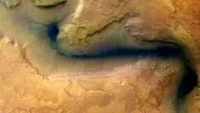
The most compelling aspect of the research is the evidence of liquid water interaction found within the mineral structure of Teghaza 001. The presence of specific isotopes of oxygen and calcium-rich minerals indicates that this rock was not merely a product of volcanic cooling, but was subjected to aqueous processes while sitting in the Martian crust billions of years ago.
Zircons found within the sample serve as critical evidence. These crystals form when molten rock cools, but their composition can be altered by the presence of water during their formation or subsequent geological activity. The specific ratios found in Teghaza 001 suggest that the Martian surface environment was sufficiently hydrated to alter the chemical signatures of the planet’s igneous rock. This reinforces the "wet Mars" hypothesis, suggesting that water was not merely a transient feature but a core component of the early Martian geological system.
Chronology of the Martian Environment
To understand the scale of this discovery, one must look at the timeline of the Martian environment. Current consensus suggests three main eras for Mars:
- The Pre-Noachian Era (Pre-4.1 billion years ago): The period of planetary accretion and initial crust formation.
- The Noachian Period (4.1 to 3.7 billion years ago): A period characterized by high rates of cratering and significant volcanic activity, during which liquid water appears to have been abundant.
- The Hesperian and Amazonian Periods (3.7 billion years ago to present): A shift toward the cold, dry, and acidic conditions that define the modern Martian landscape.
Teghaza 001 sits precisely at the dawn of the Noachian period. By providing a tangible sample from this specific era, scientists are now able to calibrate their climate models more accurately. The meteorite proves that the transition from a potentially habitable environment to a barren one was a gradual process influenced by the internal thermal evolution of the planet.
Implications for Planetary Science
The discovery of Teghaza 001 has significant implications for how we search for life beyond Earth. If Mars possessed abundant water and stable crustal temperatures 4.1 billion years ago, it aligns the timeline of Martian habitability with that of Earth. During this era, Earth was also undergoing its own "cradle" phase, where the first simple life forms were likely emerging.
"This is an incredibly rare, ancient Martian meteorite that gives us a window into the early crust and mantle of Mars, at a time when life was just beginning on Earth," Liu noted. The ability to study this material in a laboratory setting—rather than relying solely on the limited analytical capabilities of remote rovers—provides a level of chemical detail that was previously impossible.
Furthermore, the research team is now using the data gained from Teghaza 001 to refine the search for other meteorites of similar antiquity. By identifying the unique chemical "fingerprint" of this specimen, scientists have identified 13 potential locations on Mars from which such ancient material might have been ejected by past asteroid impacts.
Challenges and Future Research
Despite the excitement, the research is not without its challenges. Martian meteorites are rare, and finding samples that date back to the first billion years of the planet’s history is akin to finding a needle in a haystack. The vast majority of Martian samples currently in human hands are relatively "young" volcanic rocks.
The success of the laser-ablation technique used by Melton and his team, however, opens the door for a re-examination of other existing samples in global collections. There is a strong possibility that other meteorites previously categorized as common Shergottites may actually contain hidden, ancient grains that have been overlooked by less sensitive analytical techniques.
The scientific community is already looking toward the next steps. Plans are being formulated to conduct a comparative study between the isotopes found in Teghaza 001 and the data currently being transmitted by NASA’s Perseverance rover, which is currently collecting samples from the Jezero Crater on Mars. Bridging the gap between the terrestrial analysis of meteorites and the in-situ analysis of Martian surface material is the next frontier in planetary exploration.
Conclusion
The identification of Teghaza 001 as a 4.1-billion-year-old witness to Martian history represents a monumental achievement in planetary science. By confirming the early presence of water and identifying the specific geological conditions of the early Martian crust, researchers have moved closer to answering the fundamental question of whether the Red Planet was once a sibling to Earth in terms of its biological potential. As technology advances and our ability to parse the secrets of these celestial visitors improves, the legacy of Teghaza 001 will likely serve as a cornerstone for future missions and theories regarding the history of the Solar System. The silent, pink-hued rock from the sands of Mali has, in effect, rewritten the early biography of a planet, proving that while Mars may be dead today, its past remains very much alive in the laboratory.