Federal Aviation Administration Orders Unprecedented Halt to All Departing Domestic Flights Due to Critical System-Wide Communications Breakdown
The United States aviation network experienced a historic and widespread disruption as the Federal Aviation Administration (FAA) ordered a nationwide ground stop for all departing flights. The emergency measure, which halted air traffic across the country, was triggered by a catastrophic telecommunication failure affecting the Air Route Traffic Control Centers responsible for managing high-altitude domestic air traffic. While federal authorities swiftly moved to reassure the public that there were no immediate indications of foul play or malicious cyberattacks, the sudden paralysis of the world’s most complex airspace sent shockwaves through the global travel industry, stranding tens of thousands of passengers and exposing the vulnerability of critical transportation infrastructure.
Chronology of the Crisis and Initial Response
The disruption began in the early morning hours when air traffic controllers and technical personnel at several regional Air Route Traffic Control Centers noticed intermittent data transmission failures. As the morning progressed, the communication glitch escalated from a localized technical hiccup into a systemic crisis affecting critical radar and flight data processing systems.
Realizing that real-time communication between ground control and airborne aircraft was severely compromised, FAA leadership convened an emergency operational review. At approximately 7:30 a.m. Eastern Standard Time, the agency made the unprecedented decision to issue a nationwide ground stop, prohibiting any commercial, cargo, or private aircraft from taking off from any airport within the United States.
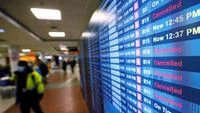
Passengers arriving at major aviation hubs, including John F. Kennedy International Airport, Los Angeles International Airport, O’Hare International Airport, and Hartsfield-Jackson Atlanta International Airport, were met with immediate confusion. While departure boards initially continued to display scheduled flight times, security checkpoints quickly filled with disgruntled travelers who were informed that boarding had been indefinitely suspended.
FAA Technicians and Engineering Teams Mobilize
In an official statement released via its official channels, the FAA detailed the scope of the emergency order. "We are issuing a nationwide ground stop for all airports in the United States following a communication issue that impacted all Air Route Traffic Control Centers," the agency stated.
Specialized engineering teams and telecommunication technicians were immediately dispatched to inspect primary and backup fiber-optic networks, data servers, and satellite communication links. The FAA categorized the incident on social media and official press briefings as a "temporary telecommunication disruption," emphasizing that the nationwide grounding was implemented "as a matter of extra precaution" to ensure passenger safety in an environment where situational awareness was temporarily degraded.
Government Officials Confirm No Evidence of Malicious Attack
In the immediate aftermath of the shutdown, federal agencies, including the Department of Homeland Security and the Transportation Security Administration, initiated threat-assessment protocols to rule out hostile interference. Given the heightened state of global cybersecurity threats and the historical trauma associated with catastrophic aviation events in the United States, government officials moved quickly to quell public anxiety.
Markwayne Mullin, addressing reporters and aviation stakeholders, explicitly distanced the telecommunication failure from any security breaches. "This is not an event like 9/11," Mullin stated firmly, referencing the 2001 terrorist attacks. He added that preliminary investigations yielded no indication of a malicious attack or cyber intrusion. "It is purely a telecommunication disruption," he noted, though he acknowledged that investigators would maintain an open mind and thoroughly examine all potential technical vulnerabilities until root causes were definitively identified.
Aviation Context and Historical Rarity
A nationwide ground stop of this magnitude is an exceedingly rare event in the history of American civil aviation. Typically, flight suspensions are limited to specific geographic regions due to extreme weather conditions, local power outages, or localized technical failures at specific air traffic control towers.
The last time the United States airspace was entirely shut down by federal decree occurred on September 11, 2001, following the coordinated terrorist attacks. More recently, minor regional disruptions have occurred due to software updates or localized radar anomalies—most notably the Notice to Air Missions (NOTAM) system failure that caused widespread delays in early 2023. However, a deliberate, preemptive nationwide halt ordered specifically to combat a communication failure across all high-altitude control centers represents a watershed moment for modern air traffic management.
The United States airspace system is a colossal undertaking. On any given day, the FAA manages more than 45,000 flights and 2.9 million airline passengers across more than 29 million square miles of airspace. The intricate web of communication relies on a mixture of legacy ground-based radar systems, digital data networks, and modern satellite communications. When a critical node in this infrastructure experiences a systemic failure, the cascading effects can compromise the safety margins required for high-density flight operations.
Economic and Operational Implications
The immediate operational fallout of the nationwide ground stop extended far beyond the duration of the actual flight ban. Even after FAA technicians successfully isolated the telecommunication fault and began lifting the ground stop in a phased, orderly manner, the ripple effects promised to disrupt air travel schedules for days.
Airlines face massive logistical challenges in repositioning stranded aircraft, reassigning flight crews whose duty hours were disrupted, and accommodating millions of delayed or canceled passenger itineraries. Major carriers, including Delta Air Lines, United Airlines, American Airlines, and Southwest Airlines, activated waiver policies to allow affected travelers to change or cancel flights without incurring standard penalty fees.
Economists and aviation analysts note that incidents of this scale inflict significant financial losses on both commercial airlines and corporate travelers. Supply chain logistics, air cargo deliveries, and perishable goods transport also suffered immediate delays, highlighting how heavily modern economic activity depends on the seamless functioning of civil aviation networks.
Broader Infrastructure Vulnerabilities and Future Outlook
The telecommunication failure has reignited a fierce debate among lawmakers, aviation experts, and union representatives regarding the state of America’s aging transportation infrastructure. For years, critics have argued that the FAA relies on a patchwork of outdated software and hardware systems that are increasingly vulnerable to technological obsolescence, power surges, and telecommunication bottlenecks.
While Congress has repeatedly allocated funding for the modernization of the Next Generation Air Transportation System (NextGen), progress has often been slow, bureaucratic, and hindered by budget disputes. Industry watchdogs have consistently warned that underfunded technological upgrades leave critical systems exposed to operational failures.
In the wake of this incident, congressional committees have already signaled intentions to summon FAA officials for emergency oversight hearings. Lawmakers are expected to demand a comprehensive accounting of the root causes behind the telecommunication breakdown, an evaluation of the redundancy measures currently in place, and a accelerated timeline for infrastructure modernization.
As the US aviation system slowly returns to normalcy, the event serves as a stark reminder of the fragile technological equilibrium upon which global mobility rests. Ensuring that air travel remains the safest mode of transportation will require sustained investment, rigorous technical oversight, and a commitment to modernizing the digital backbone of the world’s busiest skies.