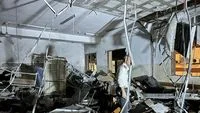
The ongoing humanitarian catastrophe in the Gaza Strip escalated sharply following a devastating military airstrike executed by the Israel Defense Forces targeting the Nasser Medical Complex located in the southern city of Khan Younis. The pre-dawn raid, which occurred on Thursday, resulted in the immediate deaths of at least six Palestinian civilians, while leaving dozens of others with severe, life-altering injuries. Health officials and emergency responders on the ground confirmed that the assault directly pierced critical infrastructure within one of the dwindling number of partially functioning medical facilities remaining in the besieged enclave, further straining a health sector already pushed past the brink of total collapse.
According to data compiled and released by the Gaza Ministry of Health and the Palestinian Civil Defense, the precision-guided missile strike caused widespread destruction within the western Khan Younis compound, injuring approximately 20 individuals. Hospital administrators and eyewitness accounts detailed a horrifying scene as structural integrity failed in multiple sections of the facility, compounding the trauma faced by vulnerable patients, medical professionals, and displaced civilians seeking shelter within the hospital walls.
Structural Devastation and Impact on Patient Care
Raed al-Dashan, the director of the Nasser Medical Complex, provided a grim assessment of the structural and human toll following the impact. According to al-Dashan, a heavy missile penetrated the medical facility vertically, tearing through multiple concrete floors before detonating. The trajectory of the weapon resulted in catastrophic structural damage, specifically crippling the hospital’s surgical department and its intensive care unit (ICU), two vital lifelines for the region.
Al-Dashan warned that the official death toll of six is preliminary and expected to rise significantly in the coming hours. The severity of the wounds sustained by the dozens of injured individuals—ranging from severe blast trauma to massive internal injuries and complex fractures—overwhelms the remaining operational capacity of the hospital staff, who are forced to perform life-saving procedures under extreme duress, amidst power outages, and with severely depleted medical supplies.
Al Jazeera correspondent Hind Khoudary, reporting directly from the ground in Gaza, underscored the profound gravity of the attack on the medical facility’s population. "The vast majority of those killed and wounded are vulnerable patients, including individuals who were scheduled to undergo critical, life-saving surgeries the following morning," Khoudary reported.
Furthermore, health experts emphasize the irreplaceable nature of the facility. The Nasser Medical Complex stands as one of the largest and most comprehensive medical institutions in the entire Gaza Strip. Crucially, it serves as the sole remaining major hospital operating in Khan Younis, functioning as the primary healthcare provider for an estimated population of 500,000 residents and displaced persons stranded in southern Gaza.
Military Justification Versus Accusations of War Crimes
In the immediate aftermath of the strike, the military leadership of the Israel Defense Forces (IDF) issued a statement defending the operation. According to the Israeli military narrative, the airstrike was not intentionally directed at medical personnel or vulnerable patients, but rather specifically targeted a high-ranking Hamas commander purportedly operating within or in the immediate vicinity of the hospital grounds. The IDF maintains that militant groups systematically exploit civilian infrastructure, including hospitals, schools, and humanitarian zones, for military command and control purposes—an allegation that Palestinian authorities and international humanitarian organizations have consistently and vehemently denied.
The response from Hamas and various Palestinian factions was swift and uncompromising. In an official statement, Hamas condemned the attack on the Nasser Medical Complex as a blatant and undeniable "war crime." The group rejected the Israeli military’s rationale, characterizing the claim of targeting a militant commander as a fraudulent and transparent pretext designed to manufacture public justification for recurring attacks against protected civilian and medical facilities.
"The international community, international mediators, and the government of the United States must immediately intervene and take decisive action to halt the continuous, flagrant violations perpetrated by the occupation forces," the Hamas statement read. The group further urged international actors to enforce strict compliance with existing ceasefire agreements, arguing that diplomatic passivity effectively greenlights further atrocities against defenceless populations.
Background Context and Fragile Ceasefire Violations
The latest attack on the Nasser Medical Complex occurs against the backdrop of a prolonged and devastating military campaign that has fundamentally reshaped the geopolitical and humanitarian landscape of the Middle East. Although a fragile ceasefire agreement was brokered and formally implemented in October 2025 in an effort to halt major hostilities, the cessation of violence has proven exceptionally porous on the ground.
Data compiled by the Gaza Ministry of Health indicates that since the formal enactment of the October 2025 ceasefire, continuous localized military operations, artillery bombardments, and targeted airstrikes by Israeli forces have resulted in the deaths of approximately 1,600 Palestinians. This persistent loss of life demonstrates that large-scale hostilities have smoothly transitioned into a continuous, low-intensity war of attrition, severely undermining diplomatic efforts to achieve lasting peace and stability.
Humanitarian organizations, including the World Health Organization (WHO) and Médecins Sans Frontières (MSF), have repeatedly issued urgent warnings regarding the systematic degradation of medical infrastructure in Gaza. Under international humanitarian law, hospitals and medical complexes are explicitly designated as protected zones, shielded from military attack except under very specific, legally defined circumstances where their protected status has been definitively forfeited through direct military acts. Human rights advocates argue that even when military necessity is claimed, the principle of proportionality must strictly govern operations, a standard that critics argue is repeatedly violated during strikes on densely packed medical compounds housing vulnerable patients.
Broader Implications for Regional Stability and the Health Sector
The implications of the strike on the Nasser Medical Complex extend far beyond the immediate physical damage sustained by the hospital buildings. From a humanitarian perspective, the progressive neutralization of the remaining medical facilities in southern Gaza threatens to create a total vacuum in emergency healthcare delivery. With major hospitals facing infrastructural collapse, shortages of specialized personnel, and a chronic deficit of pharmaceutical supplies, common and manageable medical conditions rapidly become fatal.
Economically and socially, the constant targeting of civic and medical infrastructure deepens the psychological trauma inflicted upon a traumatized civilian population. Generations of Gazans face displacement, grief, and chronic insecurity, with little access to psychological support services. The destruction of physical infrastructure ensures that post-conflict recovery and reconstruction will require decades of international financial aid and logistical mobilization, even assuming a permanent political settlement is eventually reached.
Diplomatically, incidents of this magnitude place immense pressure on international mediators—particularly regional actors such as Egypt and Qatar, alongside the United States—who have invested significant political capital in maintaining and enforcing the fragile October 2025 ceasefire framework. The continuous flaring of violence threatens to derail ongoing negotiations aimed at achieving a permanent cessation of hostilities, prisoner exchanges, and the large-scale entry of humanitarian aid into the enclave.
As the dust settles around the shattered wards of the Nasser Medical Complex, international monitors, human rights investigators, and local health workers are left to tally the human cost of a conflict that continues to test the limits of international humanitarian law and the resilience of the civilian population caught in the crossfire.