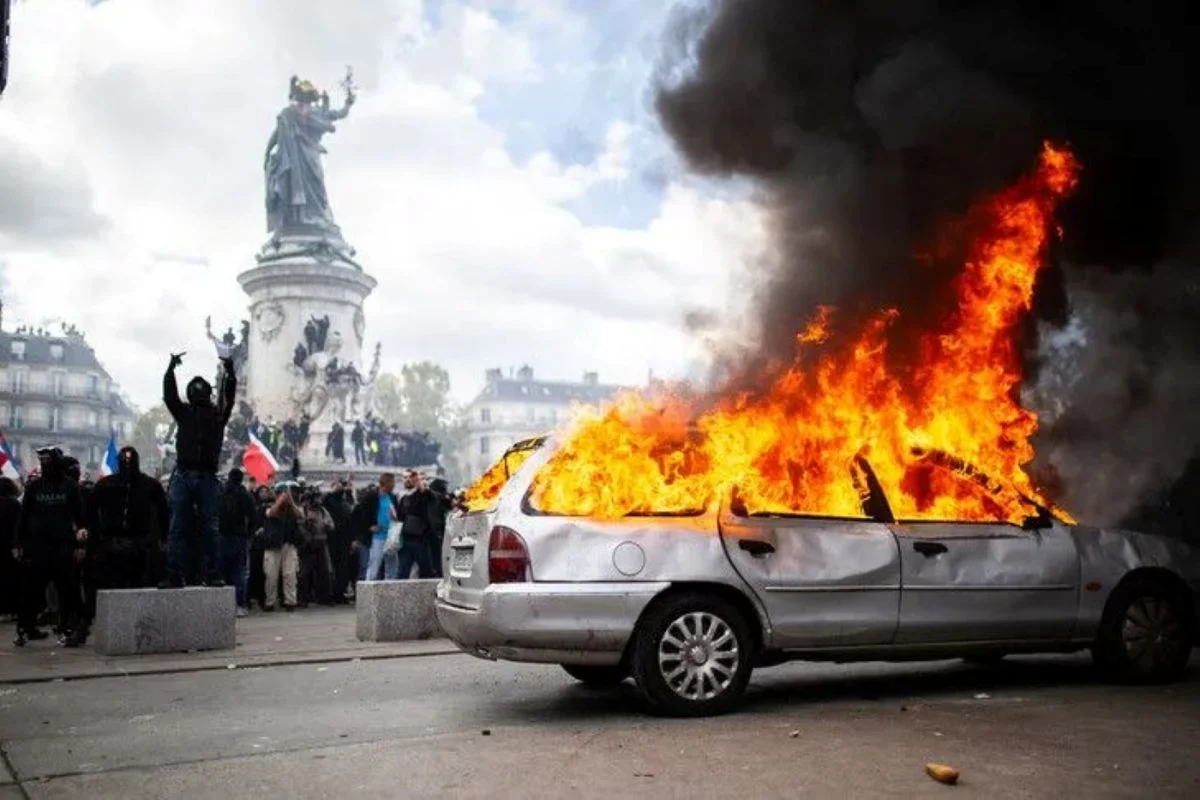
The French Republic is currently navigating one of its most volatile periods in recent history, as a wave of mass demonstrations that began in mid-September 2026 escalated into violent civil unrest by the weekend of October 17. What originated as localized protests concerning the deteriorating state of the national education system has rapidly morphed into a multifaceted socio-economic rebellion. Hundreds of thousands of citizens—ranging from students and educators to blue-collar workers—have flooded the streets of major cities including Paris, Marseille, Lyon, Lille, and Bordeaux, expressing a profound disillusionment with the administration of President Emmanuel Macron. As the government struggles to contain both peaceful protestors and opportunist rioters, the nation finds itself at a critical juncture, with the stability of the state being tested just months before the 2027 presidential election cycle begins in earnest.
A Chronology of Escalation: From Classrooms to Barricades
The genesis of the current crisis can be traced back to September 17, 2026, when faculty and staff at the Lycée Saint-Exupéry in Créteil initiated a walkout. Their grievances were foundational: a critical shortage of teaching staff, crumbling infrastructure, and a lack of basic educational resources. This localized labor dispute acted as a catalyst for a broader movement. By early October, the movement had gained momentum as students—feeling that their future prospects were being jeopardized by a decaying public school system—began organizing sit-ins and marches.
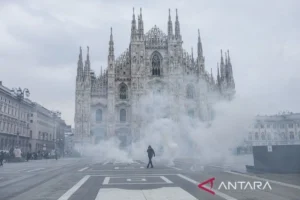
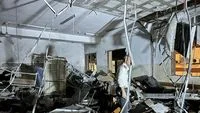
The situation reached a flashpoint on Saturday, October 17, 2026. Data from the French Ministry of the Interior and various international news outlets suggest that between 550,000 and 800,000 people participated in demonstrations nationwide. While the vast majority of these individuals were expressing legitimate grievances, the sheer scale of the crowds provided cover for fringe groups to engage in systematic destruction. By the evening, the character of the protests in several urban centers shifted from civic expression to open rioting. In Limoges, the City Hall was set ablaze, while in Marseille and Lyon, public buildings and private commercial hubs, including major retail outlets like Carrefour, were targeted for looting and vandalism.
The Anatomy of Discontent: Economic and Social Drivers
The unrest is not merely a reaction to school conditions; it is a manifestation of deep-seated economic anxiety that has been brewing for years. Central to the protestors’ anger is the rising cost of living, exacerbated by inflationary pressures on fuel, food, and utilities. Much like the Gilets Jaunes (Yellow Vests) movement of 2018, which paralyzed parts of the country over fuel taxes, the 2026 protests have tapped into a collective sense of being "left behind" by elite policies.
Middle and low-income families are reporting that their purchasing power has been severely eroded, leading to a precarious existence that leaves little room for financial shocks. The intersection of this economic malaise with a perceived decline in the quality of public services has created a toxic environment for the government. Educators argue that the state’s failure to provide adequate support for schools is a symptom of a broader divestment from the social contract. When the promise of upward mobility through education fails, and the cost of daily survival becomes untenable, the threshold for public protest lowers significantly.
Official Responses and the Security Apparatus
The response from the Élysée Palace has been one of firm condemnation regarding the violence, while attempting to maintain a rhetorical distinction between the legitimate grievances of the citizenry and the criminal acts of the rioters. President Emmanuel Macron, addressing the nation, called for calm and stated unequivocally that the destruction of public property and looting are unacceptable. He emphasized that the government is willing to listen to the concerns of the peaceful protestors but warned that law and order must be restored to protect the democratic process.
By Sunday, October 18, the scale of the state’s crackdown became apparent. Minister of the Interior Laurent Nuñez reported that approximately 2,400 individuals had been detained across the country. The human cost of the weekend’s violence was high: nearly 1,000 police officers were reported injured in clashes, and, tragically, one demonstrator suffered a fatal heart attack during the chaos in Paris. The deployment of tear gas and riot control measures has become a standard, albeit controversial, response by the French Gendarmerie to maintain control over public squares and transit hubs.
Economic and Political Implications
The economic toll of the October 2026 riots is already being calculated by local chambers of commerce and government agencies. Beyond the direct costs of repairing infrastructure like the scorched Limoges City Hall, the disruption of retail and transport sectors has further strained an already fragile economic recovery. Analysts suggest that if the unrest continues, France could see a significant dip in investor confidence and a sustained impact on the hospitality and tourism sectors, which are vital to the national GDP.
Politically, the implications are profound. As France approaches the 2027 presidential election, the ability of the Macron administration to resolve this crisis will likely define the political discourse. The opposition parties are seizing the opportunity to highlight the perceived failures of the government’s domestic agenda. If the administration fails to address the underlying issues of inequality and service degradation, the center-ground of French politics risks further polarization, potentially benefiting populist movements that have long campaigned on anti-establishment platforms.
Comparative Analysis: The Ghost of 2018
Observers of the French political landscape have been quick to compare the current events to the Gilets Jaunes protests of 2018. However, there are distinct differences. The current movement is arguably more fragmented, involving a coalition of labor unions, student groups, and teachers, alongside the disenfranchised working class. While the 2018 movement was largely singular in its focus on fuel taxes, the 2026 unrest is an accumulation of diverse grievances—education, inflation, and public services—which may make it harder for the government to reach a singular, cohesive settlement.
Furthermore, the involvement of organized labor unions gives this movement a different structural weight. Unions have the capacity to organize systemic strikes that can cripple transport and power sectors, exerting a level of pressure on the government that student protests alone cannot. If the unions decide to escalate their actions to indefinite national strikes, the logistical impact on the country would be far more severe than the street-level violence witnessed in October.
Prospects for Resolution: A Path Forward?
The path toward stability remains uncertain. To de-escalate the situation, the government must move beyond containment and engage in substantive policy shifts. This likely requires a multi-pronged approach:
- Educational Reform: A rapid injection of funding and staffing into the public school system, particularly in underserved regions, is necessary to appease the student and teacher factions of the movement.
- Cost of Living Mitigation: Targeted subsidies or price caps on essential goods and energy may be required to alleviate the immediate financial burden on households, though such measures risk further straining the national deficit.
- Political Dialogue: A national consultation or "Great Debate" equivalent could serve as a venue for the government to demonstrate that it is listening to the public, thereby isolating the violent elements from the mainstream protestors.
However, the government is caught in a classic political trap. If it concedes too much, it may appear weak and encourage further disruptive protests; if it concedes too little, it risks deepening the alienation of the electorate. The presence of such massive unrest in a developed democracy serves as a sobering reminder of the fragility of the social contract.
As of late October 2026, the streets of France remain tense. The government has already begun implementing localized curfews in areas deemed high-risk, and the intelligence services are monitoring for further mobilization. Whether this period is remembered as a fleeting, albeit violent, outburst of frustration or as the beginning of a sustained period of political upheaval remains to be seen. What is certain is that the events of October 17 have irrevocably changed the political calculus for the remainder of the presidential term. The administration must now prove that it can govern not just through the force of law, but through the efficacy of its social and economic policies in the face of a citizenry that is increasingly unwilling to accept the status quo.
The international community, particularly European neighbors and trade partners, is watching closely. Stability in France is a cornerstone of the European Union, and any prolonged internal conflict could have ripple effects across the continent, affecting market stability and regional security cooperation. As the government pivots to address these challenges, the eyes of the world remain fixed on Paris, waiting to see if the Republic can navigate its way back to normalcy or if it is on the precipice of a more profound structural transformation. The coming weeks will be decisive in determining whether the voices of the protesters lead to meaningful reform or a long, cold winter of discontent.