Socio Today
PT Amman Mineral Internasional Tbk (Amman) has officially announced the completion of its state-of-the-art copper smelter in West Sumbawa Regency, West Nusa Tenggara (NTB), a strategic national project that signifies a major leap forward in Indonesia’s mineral downstreaming agenda. This landmark achievement is poised to substantially enhance the value of domestically mined resources, reinforcing the nation’s commitment to transforming its raw mineral wealth into high-value processed products. The modern facility, a testament to robust collaboration and engineering prowess, underscores Indonesia’s ambition to become a significant player in the global supply chain for critical minerals, particularly those vital for the burgeoning renewable energy and digital technology sectors.
The completion of the smelter marks a critical juncture for both Amman Mineral and Indonesia’s broader industrialization strategy. President Director of Amman, Arief Sidarto, emphasized that the successful culmination of this project is a direct result of the collective effort, resilience, and strong collaboration among all employees and partners. "The completion of this smelter project is a significant achievement for Amman. Behind it lies the hard work, tenacity, and strong collaboration of all our employees and partners in overcoming various challenges during the construction and commissioning process," Arief stated in a written release on Friday, July 24. This facility is heralded as one of the most integrated and modern copper smelter and precious metal refinery complexes globally, setting a new benchmark for mineral processing technology within the country.
The Strategic Imperative of Mineral Downstreaming
Indonesia, a nation endowed with vast mineral resources, has long championed a policy of mineral downstreaming, or ‘hilirisasi’, aimed at maximizing the economic benefits derived from its natural wealth. For decades, the country primarily exported raw or semi-processed minerals, missing out on the substantial value addition that occurs during advanced processing. The government, under President Joko Widodo, has aggressively pushed this agenda, instituting export bans on certain raw minerals and mandating domestic processing. This policy is driven by several key objectives: to create more jobs, increase state revenue through higher taxes and royalties on value-added products, foster the development of domestic manufacturing industries, and enhance Indonesia’s resilience in global supply chains. The Amman Mineral smelter aligns perfectly with this national vision, transforming copper concentrate into essential industrial materials.
The project, designated as a National Strategic Project (PSN), received considerable support and attention from the government, reflecting its importance to the national economy and industrial structure. PSN status typically grants projects expedited permitting, land acquisition, and other facilitations, underscoring the government’s recognition of their critical contribution to national development. The copper smelter in West Sumbawa is a prime example of how public and private sectors can collaborate to achieve large-scale industrial goals, laying the groundwork for a more diversified and robust economy.
Capacity, Technology, and High-Value Output
The Amman smelter is designed with an impressive processing capacity of up to 900,000 metric tons of copper concentrate per year. This substantial volume will primarily be sourced from Amman’s flagship Batu Hijau mine, one of the largest copper-gold mines in the world, located just a few kilometers from the smelter site. In the future, raw material supply will also extend to the developing Elang mine, further solidifying the integrated nature of Amman’s operations and ensuring a stable, long-term supply chain for the smelter.
The integrated facility is engineered to produce a range of high-value products crucial for various modern industries. These include:
- Copper Cathodes: The primary output, high-purity copper cathodes (typically 99.99% pure), are fundamental building blocks for electrical wiring, plumbing, and a multitude of electronic components. With the global push towards electrification and renewable energy, the demand for high-grade copper is projected to soar, especially for electric vehicles (EVs), charging infrastructure, and wind and solar power systems.
- Gold and Silver: As by-products of copper refining, significant quantities of gold and silver are recovered. These precious metals have diverse applications, from jewelry and investment to advanced electronics and industrial catalysts.
- Sulfuric Acid: A critical industrial chemical, sulfuric acid is widely used in fertilizer production, petroleum refining, metal processing, and chemical manufacturing. Its production at the smelter demonstrates a commitment to resource efficiency and circular economy principles, utilizing sulfur dioxide emissions from the smelting process.
- Selenium: A trace element with niche but important applications in electronics (photovoltaic cells, rectifiers), glass manufacturing, and as a nutritional supplement.
The production of these diverse materials domestically means that Indonesia will capture significantly more value from its copper resources compared to merely exporting raw concentrate. This vertical integration not only generates higher revenue but also fosters the growth of downstream industries that rely on these materials, creating a ripple effect across the economy.
Project Timeline and Milestones
The journey to complete Amman Mineral’s copper smelter has been a multi-year endeavor marked by significant investment and strategic planning. While the precise groundbreaking date was not explicitly detailed, large-scale projects of this nature typically span several years from conception to full operational status. The project gained momentum following the Indonesian government’s intensified focus on mineral downstreaming in the early to mid-2010s.
A critical milestone in the project’s formal completion was the signing of the Completion and Project Acceptance Certificate (PAC) between Amman and China Nonferrous Metal Industry’s Foreign Engineering and Construction Co., Ltd. (NFC) in Beijing, China, on July 18, 2024. While the original source mentioned "July 18, 2026," this appears to be a typographical error given the context of the announcement being made on July 24, and the statement that the facility "has been operating for more than one year." Assuming the correct year is 2024, the PAC signing formally confirms that all construction work and commissioning activities have been completed in accordance with the contract’s scope. This certificate is not merely a formality; it signifies that the smelter has successfully passed all performance guarantee tests, officially transitioning from a project phase into long-term operational status. The fact that the facility had already been operating for over a year prior to the PAC signing indicates a phased commissioning and ramp-up process, a common practice for complex industrial plants to ensure smooth operations and address any initial technical challenges.
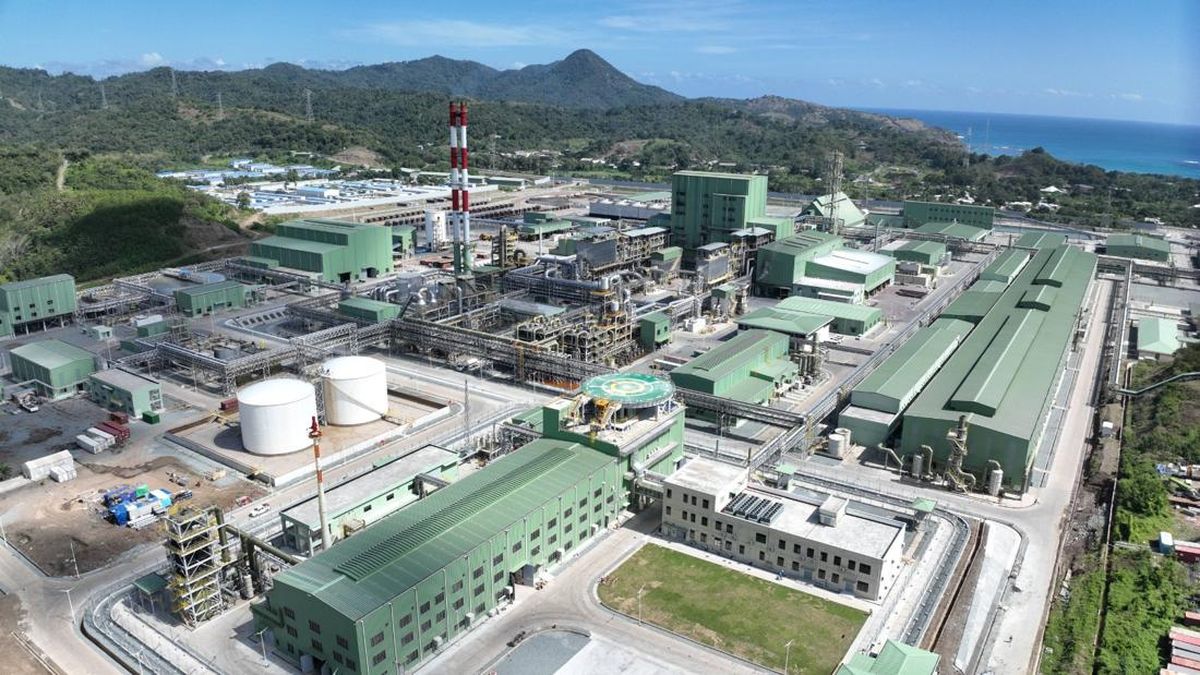
The collaboration with NFC, a renowned international engineering and construction firm specializing in nonferrous metals, highlights the global expertise brought to bear on this ambitious project. Such partnerships are essential for large-scale infrastructure development in Indonesia, blending local resources and regulatory understanding with international technological know-how.
Economic and Social Ramifications
The completion and operation of the Amman copper smelter are expected to deliver profound economic and social benefits, particularly for the West Sumbawa Regency and the wider West Nusa Tenggara province, and by extension, the national economy.
Economic Impact:
- Increased GDP Contribution: The value-added processing of copper concentrate will significantly boost Indonesia’s Gross Domestic Product (GDP). Instead of exporting concentrate at, for example, $3,000 per ton, the refined copper cathodes and by-products could fetch upwards of $8,000-$10,000 per ton (depending on market prices and product mix), leading to a multi-fold increase in export value.
- Foreign Exchange Earnings: Higher export values translate into greater foreign exchange earnings for Indonesia, strengthening the national currency and improving the balance of trade.
- Investment Attraction: The success of such a large-scale project can attract further domestic and foreign investment into Indonesia’s downstream industries, creating an ecosystem for industrial growth.
- Fiscal Revenue: Increased corporate taxes, royalties, and other levies from the expanded operations will contribute substantially to government coffers, which can then be reinvested in public services and infrastructure.
- Development of Supporting Industries: The smelter’s operations will necessitate a robust supply chain, stimulating local businesses that provide goods and services, from logistics and maintenance to catering and housing.
Social Impact:
- Job Creation: The construction phase alone would have created thousands of direct and indirect jobs. The operational phase of the smelter will sustain hundreds, if not thousands, of skilled and semi-skilled permanent positions. This includes engineers, technicians, operators, and administrative staff. Beyond direct employment, the ripple effect through supporting industries will generate even more opportunities.
- Human Capital Development: Operating a modern smelter requires specialized skills, leading to investment in training and education for the local workforce. This enhances human capital, making the local population more competitive in the job market.
- Regional Development: The presence of a major industrial facility often spurs infrastructure development in the surrounding areas, including roads, electricity grids, water supply, and telecommunications, improving living standards for local communities.
- Community Empowerment: Corporate Social Responsibility (CSR) programs often accompany such projects, focusing on education, health, and economic empowerment initiatives for local communities, fostering sustainable development.
Amman Mineral’s Strategic Vision and Future Outlook
For Amman Mineral, the smelter’s completion is a cornerstone of its long-term strategic vision. It transitions the company from primarily a concentrate producer to an integrated mining and processing powerhouse. This vertical integration provides greater control over the value chain, reduces exposure to volatile raw material prices, and strengthens the company’s competitive position in the global market. The future integration of the Elang mine, which holds significant copper and gold reserves, will further secure the smelter’s raw material supply and extend Amman’s operational lifespan and profitability.
Arief Sidarto’s call for a supportive policy ecosystem that enhances the competitiveness of domestic processing and mining industries highlights the ongoing need for government collaboration. He emphasized that such an environment is crucial for Indonesia to maximize the benefits of downstreaming and remain competitive amid global dynamics. This includes stable regulatory frameworks, competitive energy pricing, and efficient logistics.
Looking ahead, the Amman smelter is poised to play a crucial role in Indonesia’s contribution to the global energy transition. Copper is indispensable for green technologies, and by producing it domestically, Indonesia strengthens its position in the emerging green economy. However, like all large-scale industrial projects, the smelter will face ongoing challenges related to environmental management, particularly regarding waste disposal and energy consumption. Modern smelters are designed with advanced pollution control technologies, but continuous monitoring and adherence to stringent environmental standards will be paramount for sustainable operations. The sulfuric acid production, for instance, is a positive step in managing sulfur dioxide emissions, turning a potential pollutant into a valuable commodity.
Broader Implications for Indonesia’s Industrial Future
The successful completion of the Amman Mineral copper smelter sends a strong signal to international investors and the global mining industry: Indonesia is serious about its downstreaming agenda. This project, alongside other major processing facilities like nickel smelters, is transforming Indonesia from a raw material exporter to a key manufacturing hub for critical minerals. This strategic shift has implications beyond economics, touching upon national sovereignty over resources and geopolitical positioning. By controlling more of the value chain, Indonesia gains greater leverage in international trade and enhances its energy security.
Furthermore, the experience gained from constructing and operating such a complex facility will build domestic expertise and capabilities in advanced industrial processes. This human capital development is invaluable for future industrial expansion and technological self-reliance. As Indonesia aims to ascend to a developed nation status, investments in high-tech manufacturing and value-added processing, exemplified by the Amman smelter, are non-negotiable pillars of its long-term economic strategy. The West Sumbawa smelter is not just a plant; it is a symbol of Indonesia’s industrial ambition and its determined march towards a future where its vast natural resources are fully leveraged for national prosperity and global impact.