KAI Kereta Api Indonesia class economy train journey from Central Java to Bandung transformed into an unexpected social experiment when a commercial airline pilot found himself the victim of an elaborate travel prank. The incident, which occurred in early October, highlights a stark contrast between high-speed aviation and the grounded, immersive experience of railway transit. While commercial air travel focuses entirely on speed and efficiency, this chance encounter inside a packed economy coach of the Kahuripan train reignited a broader discourse on the psychological value of slow travel, unplanned itineraries, and human connection in modern transportation.
The Chronology of an Unplanned Journey
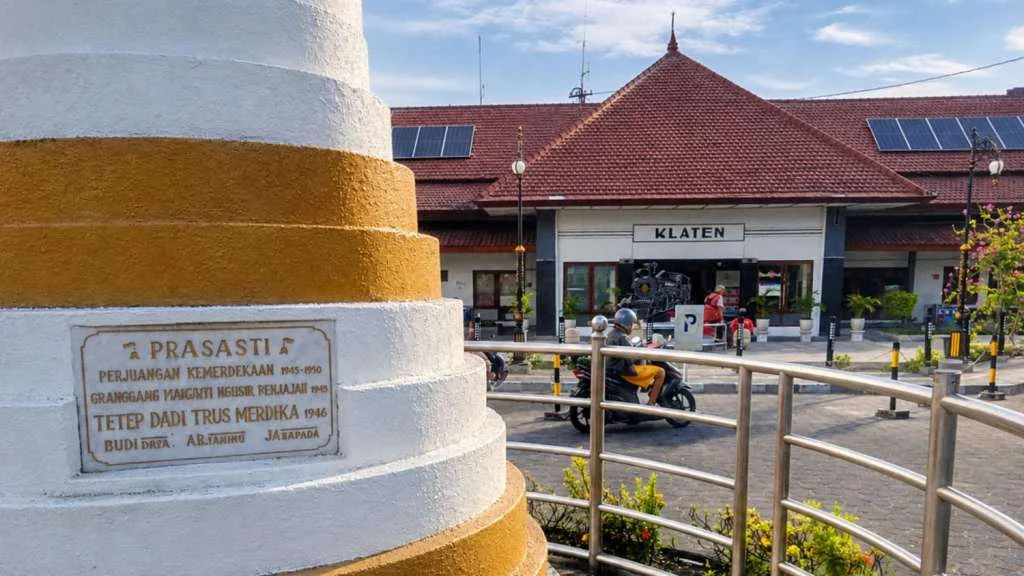
The sequence of events began late at night in Yogyakarta and Central Java. A young, professional airline pilot—accustomed to navigating the skies inside modern aircraft cockpits—prepared for a transit to Bandung, West Java. Unbeknownst to him, a fellow pilot friend had decided to orchestrate a practical joke. Instead of booking a standard flight or a priority executive-class ticket, the friend secretly purchased a ticket for the Kahuripan economy train, departing from Lempuyangan Station in Yogyakarta, while the traveler himself boarded from Klaten Station in Central Java.

Upon stepping inside the crowded economy carriage, the pilot experienced an immediate wave of shock. Unlike the predictable, sterile, and spacious environment of an aircraft cabin, the night train presented a dense configuration of passengers sitting face-to-face and shoulder-to-shoulder. The initial disbelief quickly gave way to realization as he pieced together the prank. However, what began as a moment of cultural dislocation evolved. As the hours passed and the train chugged westward through the night, the pilot transitioned from a state of shock to genuine enjoyment of the socio-cultural atmosphere unique to Indonesian rail travel.
Industry Perspectives and Statistical Context in Indonesian Rail Transit
Data from PT Kereta Api Indonesia (KAI) indicates that economy-class passenger trains remain a vital artery for domestic mobility, carrying millions of passengers annually across Java. Despite ongoing modernization efforts, including the introduction of new-generation steel and stainless-steel economy cars with ergonomic seating, traditional economy configurations still foster a high-density, communal environment.
Industry analysts point out that while air travel dominates inter-island and long-haul national connectivity—serving tens of millions of passengers through major hubs like Yogyakarta International Airport (YIA) and Husein Sastranegara or Kertajati International Airport—rail transit continues to anchor regional connectivity. The rail network offers an economic baseline that bridges urban and rural populations. According to transportation economists, the juxtaposition of an airline pilot experiencing economy train travel for the first time underscores the social stratification often masked by modern premium transportation. Aviation professionals typically operate within isolated bubbles of flight decks, private terminals, and crew hotels, rarely engaging with the ground-level socio-economic fabric experienced by everyday commuters.

The Psychology of Modern Tourism and the Illusion of Perfection
The chance encounter aboard the Kahuripan train sheds light on contemporary travel psychology. Modern tourism has evolved into a hyper-curated industry. Travel agencies, digital platforms, and social media algorithms heavily promote seamless itineraries: five-star resorts, meticulously timed schedules, pristine photographic backdrops, and high-speed transit. Market research in the hospitality sector suggests that consumers increasingly pay premium rates to eliminate friction, uncertainty, and delay from their journeys.
Yet, travel theorists argue that the pursuit of absolute perfection often strips travel of its authenticity. When every minute is accounted for and optimized for digital documentation, the traveler risks becoming a passive consumer rather than an active participant. The unexpected discomforts—such as delayed schedules, cramped seating, or unintended detours—frequently crystallize into the most enduring memories. In this light, the pilot’s involuntary immersion in an economy train served as a corrective mechanism against the sterilized bubble of corporate travel.
Comparative Analysis: Aviation versus Rail Transit

A structural comparison between commercial aviation and long-distance rail reveals fundamental differences in how humans perceive space and geography. Aviation is fundamentally designed for spatial compression. By bypassing terrain at 30,000 feet, an aircraft reduces travel time between Yogyakarta and Bandung to a fraction of a day, but it entirely erases the intervening landscape.
Conversely, long-distance train travel acts as a geographical narrative. Passengers retain a continuous line of sight to the changing topography: transitioning from urban density to rural agricultural fields, watching dusk bleed into night, and observing the gradual shift in regional architecture. Transportation sociologists emphasize that rail travel preserves a temporal rhythm that airplanes eliminate. While planes transport bodies efficiently, trains engage human senses, offering a slower, observational pace that fosters unexpected interpersonal exchanges—such as the impromptu two-hour seminar on aviation mechanics, aircraft black boxes, and airport infrastructure that transpired between the pilot and his seatmate in the economy coach.
Broader Implications for Travelers and Society
The accidental journey aboard the Kahuripan train serves as a micro-cosmic reminder of the value inherent in unscripted experiences. As transportation networks become faster and more automated, the opportunities for serendipitous human encounters diminish. The irony of a professional pilot—whose career is dedicated to accelerating human transit—finding profound engagement in a deliberately slowed, crowded railway carriage highlights a modern paradox.

Ultimately, the incident challenges travelers to recalibrate their expectations. While efficiency and comfort remain valid priorities, the rigid pursuit of flawless itineraries can impoverish the human experience. By relinquishing absolute control and embracing the unpredictable elements of a journey, travelers open themselves up to deeper cultural immersion, unexpected friendships, and a richer understanding of the world outside their intended destinations.