BANGKOK — Amidst an escalating landscape of great power competition, the Association of Southeast Asian Nations (ASEAN) faces a pivotal juncture that is forcing the regional bloc to reevaluate its traditional posture of strict neutrality. According to high-level diplomatic insights delivered recently by Thailand’s Deputy Prime Minister and Minister of Foreign Affairs, Sihasak Phuangketkeow, the grouping can no longer afford to remain passively non-aligned while global superpowers jostle for dominance in the Indo-Pacific. Speaking on the sidelines of the prestigious ISEAS Roundtable, Sihasak articulated a nuanced perspective that acknowledges the enduring validity of ASEAN’s foundational neutrality, while simultaneously highlighting its operational limitations in a fractured international order.
The geopolitical chessboard of the 21st century has transformed drastically. Once viewed primarily as a stable economic market, Southeast Asia has increasingly become the epicenter of strategic friction between the United States and the People’s Republic of China. This friction encompasses trade restrictions, technological decoupling, maritime territorial disputes in the South China Sea, and intense diplomatic lobbying. For decades, ASEAN has successfully navigated these turbulent waters by adhering to the ASEAN Outlook on the Indo-Pacific (AOIP) and the principle of centrality, ensuring that all external powers engage with the region on its own terms. However, as the structural rivalry between Washington and Beijing deepens, diplomatic maneuvering room is shrinking rapidly, compelling policymakers across Southeast Asian capitals to ask hard questions about the efficacy of absolute neutrality.
The Limits of Neutrality in a Polarized World
During his comprehensive engagement with regional media outlet CNA, Sihasak Phuangketkeow laid bare the strategic dilemma confronting ASEAN member states. While affirming that the organization has no intention of abandoning its non-aligned DNA, the veteran Thai diplomat underscored that neutrality is not synonymous with inaction or indifference.
"We clearly will not take sides, (but) at the same time, we cannot constantly remain neutral because we also have to make decisions that align with what we perceive as our interests," Sihasak stated during the roundtable discussions.
This assertion strikes at the heart of modern Southeast Asian diplomacy. True neutrality implies a balancing act, but when vital national and regional interests—ranging from supply chain security and digital infrastructure development to maritime governance—are directly impacted by superpower mandates, passivity can quickly morph into vulnerability. By declaring that ASEAN must increasingly make decisions based on its own sovereign calculations, Sihasak signaled a subtle yet significant evolution in regional diplomacy: a shift from defensive neutrality to proactive strategic autonomy.
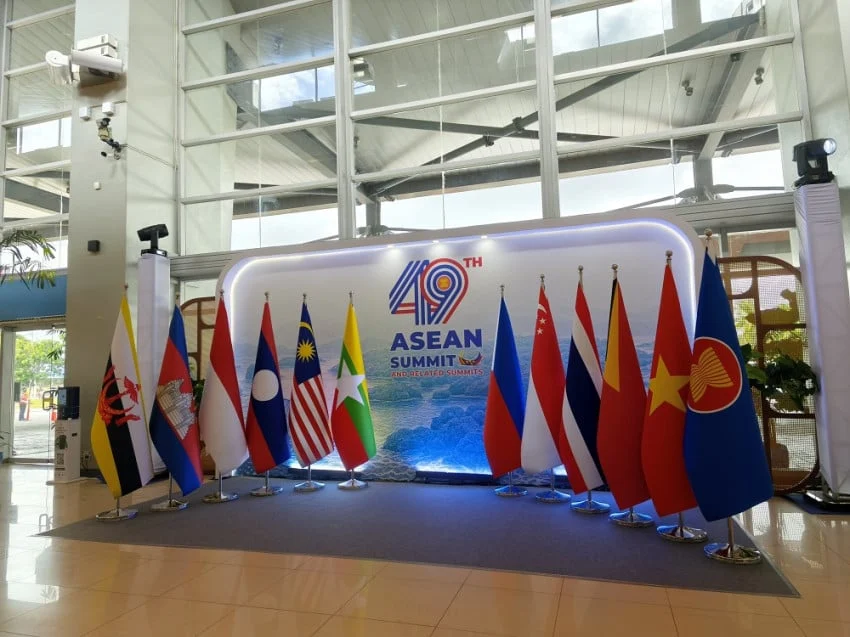
The imperative for unity remains paramount within this framework. Sihasak emphasized that ASEAN member states must present a cohesive front when engaging with competing global titans. Fragmentation among the ten member states—Brunei, Cambodia, Indonesia, Laos, Malaysia, Myanmar, the Philippines, Singapore, Thailand, and Vietnam—has historically been exploited by external actors seeking bilateral leverage. To counter this vulnerability, the Thai foreign minister advocated for an inclusive diplomatic strategy that looks beyond the US-China binary.
Expanding Strategic Horizons and Partnerships
To safeguard its strategic autonomy and expand its freedom of choice, ASEAN is being urged to deepen its engagement with other influential Indo-Pacific and global stakeholders. Relying exclusively on Washington and Beijing creates an unhealthy binary trap. Therefore, bolstering robust economic, technological, and security partnerships with middle powers is no longer optional; it is an existential necessity for the bloc.
"We want to engage other major powers that have interests in this region: India, Japan, South Korea, Australia, and the European Union. This will allow us to have greater strategic autonomy and a wider freedom of choice," Sihasak elaborated.
This multi-alignment strategy is designed to dilute the pressure of the Sino-American rivalry. By entrenching the economic and diplomatic stakes of nations like Japan, India, and the EU within Southeast Asia, ASEAN creates a multi-layered security architecture where no single hegemony can dictate regional terms. Japan remains a leading investor in infrastructure and supply chain resilience; India is a crucial partner in maritime security and the digital economy; South Korea offers advanced technological synergies; Australia provides deep security cooperation and educational ties; and the European Union serves as a vital champion of multilateralism, rules-based trade, and sustainable development.
Broader Regional Challenges: Beyond Superpower Rivalry
While the US-China rivalry dominates headlines, Sihasak Phuangketkeow rightly pointed out that Southeast Asia’s geopolitical landscape is burdened by a complex web of broader, intersecting challenges. The region is navigating a volatile confluence of localized armed conflicts, persistent economic uncertainties, and accelerated global transformations that demand urgent, coordinated attention.
Foremost among these is the ongoing sociopolitical crisis in Myanmar, which continues to test ASEAN’s diplomatic credibility and its principle of non-interference. The civil conflict following the February 2021 military coup has generated humanitarian crises, refugee spillover effects, and transnational crime syndicates operating along porous borders. While ASEAN’s Five-Point Consensus has struggled to yield decisive political breakthroughs, the crisis underscores the heavy price of regional disunity in the face of internal instability.
Furthermore, economic headwinds—including global inflationary pressures, fluctuating commodity prices, supply chain realignments, and the weaponization of trade policies—pose severe threats to post-pandemic recovery across developing Southeast Asian economies. Compounding these economic vulnerabilities are non-traditional security threats, such as climate change vulnerabilities, cybersecurity breaches, transnational narcotics trafficking, and illegal, unreported, and unregulated (IUU) fishing. These multidimensional crises require agile decision-making, unhindered by the paralysis that often accompanies strict adherence to consensus-based neutrality when consensus itself is weaponized by external or internal disagreements.
Historical Context and the Evolution of ASEAN Centrality
To fully understand the weight of Sihasak’s remarks, one must examine the historical evolution of ASEAN’s diplomatic posture. Established on August 8, 1967, via the Bangkok Declaration by Indonesia, Malaysia, the Philippines, Singapore, and Thailand, the bloc was originally conceived as a bulwark against the spread of communism during the height of the Cold War. Over subsequent decades, particularly through the expansion to include Indochinese nations and Myanmar in the 1990s, ASEAN institutionalized the Zone of Peace, Freedom and Neutrality (ZOPFAN) declaration of 1971.
Throughout the post-Cold War era, ASEAN successfully positioned itself as the "driver" of regional multilateral architecture, creating mechanisms such as the ASEAN Regional Forum (ARF), the East Asia Summit (EAS), and the ASEAN Defense Ministers’ Meeting-Plus (ADMM-Plus). This architecture was built on the bedrock of "ASEAN Centrality"—the principle that ASEAN must remain in the driver’s seat of regional cooperation, setting the agenda and managing relations with external dialogue partners.
However, the return of Great Power competition, often described as a "New Cold War," has placed unprecedented stress on ASEAN Centrality. Unlike the original Cold War, contemporary interdependence is characterized by deep economic integration between Southeast Asia and both the United States and China. China is ASEAN’s largest trading partner, while the United States remains a premier source of foreign direct investment (FDI) and technological innovation. Consequently, a binary choice between the two superpowers would inflict catastrophic economic damage on Southeast Asian economies, making proactive neutrality and multi-alignment the only viable paths forward.
Implications for Regional Security and Global Markets
The policy shift articulated by Thailand’s top diplomat carries profound implications for international business, regional security, and global diplomacy. As ASEAN moves away from passive neutrality toward interest-driven, decisive autonomy, several key developments can be anticipated:
-
Heightened Diplomatic Agility: Member states are likely to pursue pragmatic issue-based coalitions. Rather than waiting for a unified consensus on every contentious global issue, like-minded ASEAN nations may spearhead minilateral initiatives to address specific security or economic concerns, provided they do not fatally fracture the broader community.
-
Enhanced Bargaining Power with Superpowers: By actively diversifying partnerships with India, Japan, South Korea, Australia, and the European Union, ASEAN can resist coercive economic or diplomatic pressure from Washington and Beijing. This multi-pronged engagement enhances the bloc’s collective bargaining power on trade agreements, green energy transitions, and maritime governance.
-
Redefining Regional Security Architecture: Security cooperation in the Indo-Asia-Pacific will likely become more decentralized and fluid. Frameworks like the Quad (US, Japan, India, Australia) and AUKUS (Australia, UK, US) will be continuously scrutinized by ASEAN capitals to ensure they complement, rather than undermine, regional stability and international law, particularly the United Nations Convention on the Law of the Sea (UNCLOS).
-
Economic Resilience Amid Global Decoupling: As multinational corporations execute "China Plus One" strategies and supply chain diversification, Southeast Asia remains a primary beneficiary. By making independent, business-friendly decisions unhindered by ideological alignments, ASEAN nations can position themselves as neutral, secure hubs for global manufacturing, semiconductor production, and digital commerce.
Conclusion: A Defining Moment for Southeast Asia
The warning issued by Thai Deputy Prime Minister and Minister of Foreign Affairs Sihasak Phuangketkeow serves as a sobering reality check for the international community and regional policymakers alike. The luxury of maintaining a comfortable, passive neutrality is rapidly evaporating in the crucible of escalating geopolitical rivalry.
For ASEAN to remain relevant, prosperous, and secure in the decades ahead, it must transform its foundational principles into active tools of strategic execution. By anchoring its decisions firmly in its own collective interests, strengthening internal cohesion, and aggressively expanding diplomatic and economic bridges with global middle powers, ASEAN can successfully navigate the storms of the 21st century. The path forward demands courage, pragmatism, and unyielding solidarity—qualities that will ultimately determine whether Southeast Asia shapes its own destiny or becomes a passive theater for external ambitions.