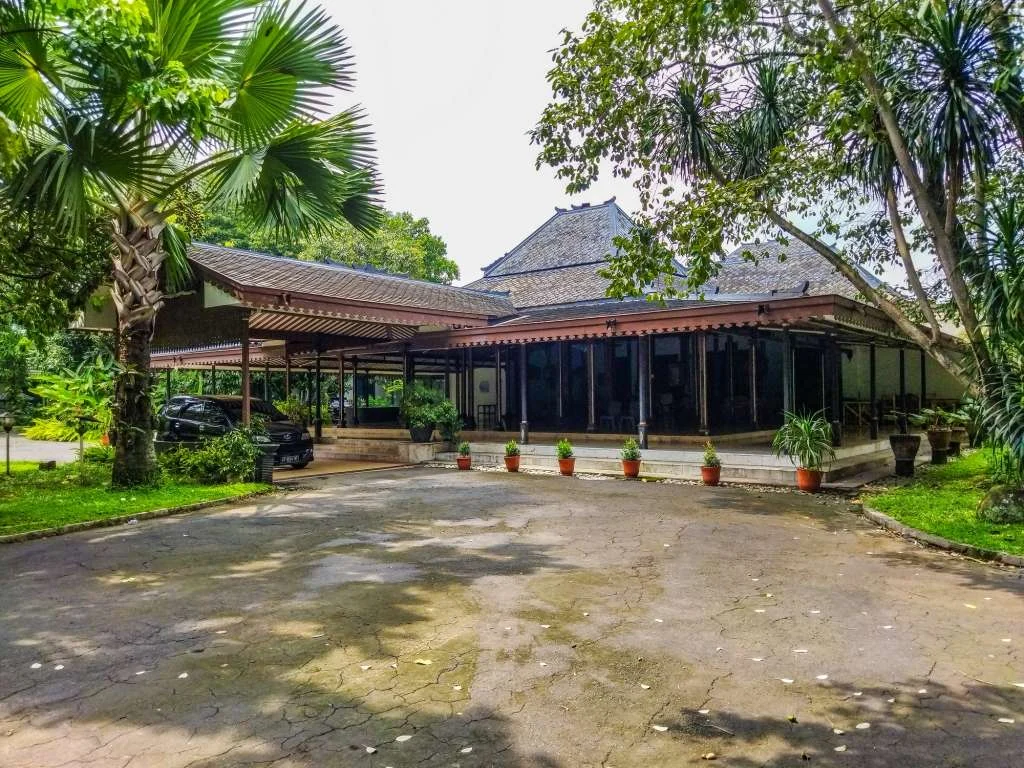
The urban landscape of Surakarta, historically known as Solo, is a living testament to the grandeur of Javanese royalty, colonial-era dynamics, and the shifting political tides of the Indonesian archipelago. Amid the rapid modernization and dense residential clusters of Penumping sub-district sits a remarkably preserved architectural jewel: Ndalem Kalitan. Originally established as a royal country retreat or buitenverblijf by Sunan Pakubuwana VIII in the early 19th century, this historic estate has traversed nearly two centuries of transformation. Once serving as a private sanctuary for the monarchs of the Kasunanan Surakarta Hadiningrat, the property evolved through royal redistribution, aristocratic ownership, and twentieth-century national history, ultimately becoming famously associated with Indonesia’s second president, General Soeharto, and his wife, Siti Hartinah, better known as Ibu Tien.
The historical significance of Ndalem Kalitan extends far beyond its physical structures. It offers a rare window into the spatial planning of nineteenth-century Surakarta, where royal authorities, European elites, and indigenous nobility coexisted along strategic infrastructural corridors. While adjacent quarters like Laweyan earned legendary status as the epicenter of indigenous batik trade and mercantile wealth, Penumping and its northern enclave, Kampung Kalitan, functioned as an elite residential zone. Historians and cultural observers note that this district was home to high-ranking priyayi, colonial officials, and prominent figures of the Vorstenlanden era. Today, as contemporary Surakarta navigates the challenges of rapid urban expansion, Ndalem Kalitan remains an isolated bastion of traditional Javanese architecture, retaining its majestic pendopo, sprawling gardens, and intricate interior details against the backdrop of modern concrete developments.
Chronology and Origins under Sunan Pakubuwana VIII
Historical documentation provides precise insights into the genesis of the estate. According to travelogues penned by Raden Mas Arya Purwolelana Candranegara—a high-ranking official from Demak who chronicled his journeys to Surakarta in the early decades of the 19th century—Ndalem Kalitan was already established by 1820. In his publication Negeri Surakarta, Purwolelana detailed his third journey to the city in 1830, describing the property as a sprawling retreat commissioned by Sunan Pakubuwana VIII long before ascension to the throne.
At the time of its founding, the estate functioned as a countryside escape located conveniently outside the strict protocol walls of the Surakarta Palace, yet close enough to the territory of the Pura Mangkunegaran. Purwolelana’s detailed observations characterized the pesanggrahan as a miniature palace that harmoniously blended traditional Javanese structural elements with European aesthetic influences. The property was enclosed by solid brick walls, featured a traditional shingle roof (sirap), and was elevated significantly above ground level, reminiscent of colonial-style elevated country homes or lodgings with upper-level frameworks. The interior was reportedly furnished with high-end Dutch imported goods, surrounded by meticulously manicured botanical gardens designed for royal leisure and state receptions.
During the reign of Sunan Pakubuwana VIII and subsequent rulers, the estate served a vital logistical and diplomatic purpose. It acted as an intermediate resting point for royal processions and foreign dignitaries. Archival records from 1837 highlight an instance where Sunan Pakubuwana VIII utilized the estate as a staging ground before embarking on a formal diplomatic visit to Yogyakarta via the nearby Purwosari railway station, underscoring the integration of traditional royal transit with the burgeoning colonial railway networks of the Vorstenlanden.
Architectural Evolution and Structural Integrity

The physical layout of Ndalem Kalitan exemplifies classic Javanese palatial architecture tailored for a regional retreat. Unlike many of the contemporary royal rest houses in neighboring Boyolali regency—which have largely fallen into ruin or vanished entirely—Pesanggrahan Kalitan has survived with a high degree of structural integrity.
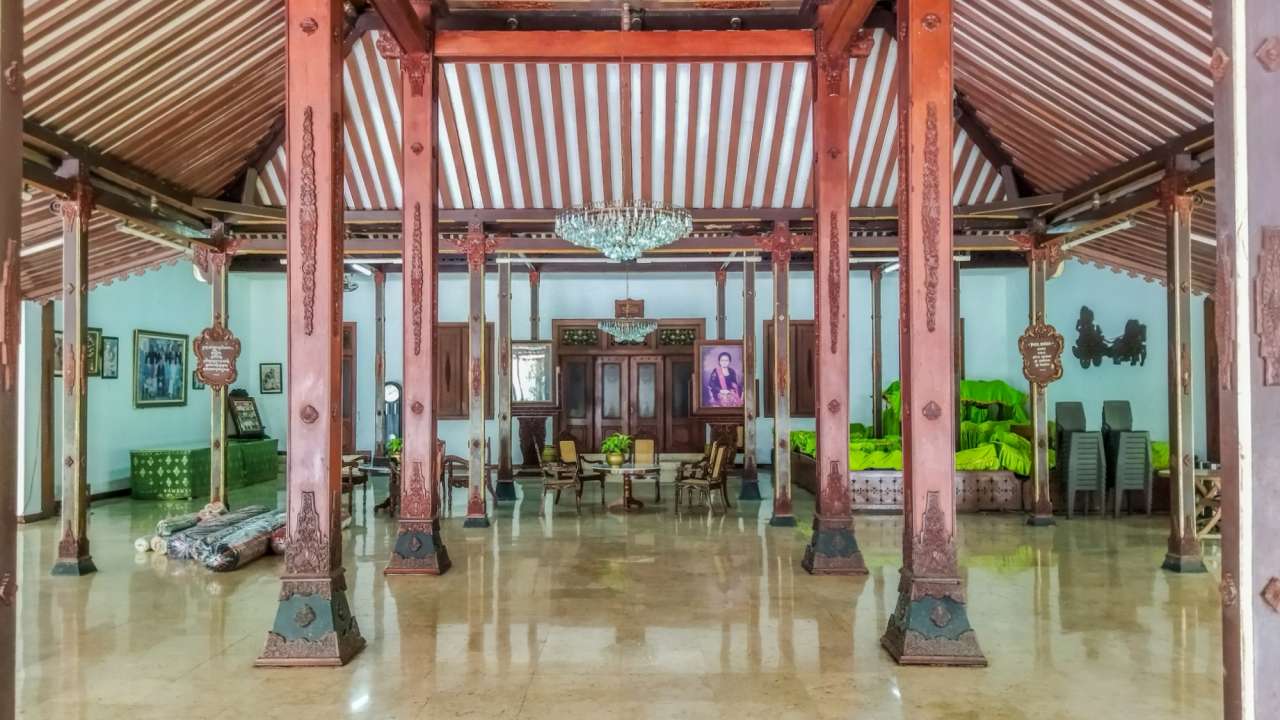
The complex is centered around the grand pendopo, a spacious open-air pavilion supported by massive sacred pillars known as soko guru. The pendopo acts as the symbolic heart of the estate, historically utilized for receiving high-ranking guests, hosting formal audiences, and displaying familial prestige. Connected to the pendopo is the pagelaran, a transitional architectural space that links the public pavilion to the ndalem ageng, the private inner sanctum of the residence.
Furthermore, the architectural composition includes traditional elements such as the kuncungan canopy at the main entrance and intricate woodcarvings known as kerobongan. These features reflect the refined craftsmanship of Javanese artisans under royal patronage. Despite multiple changes in ownership, subsequent occupants have meticulously preserved these structural components, ensuring that the spatial hierarchy—from public reception areas to deeply private family quarters—remains intact.
Shifting Ownership: From Royal Hands to the Mangkunegaran Aristocracy

Following the passing of Sunan Pakubuwana VIII, the estate maintained its status as a royal retreat through successive reigns. However, a significant turning point occurred during the influential administration of Sunan Pakubuwana X in the late 19th century. Recognizing the need to redistribute royal assets and accommodate members of the extended royal family outside the congested Baluwarti palace complex, the king transferred the ownership of the pesanggrahan to his eldest daughter, Ratu Alit.
With this transfer, the designation of the property officially shifted from a general state pesanggrahan to a private noble residence, acquiring the moniker Ndalem Kalitan. Cultural analysts suggest that assigning the estate to the eldest princess—who, under traditional Javanese succession laws, could not inherit the throne—served as a formal provision ensuring the social standing and financial security of the royal progeny outside the primary line of succession.
The twentieth century brought further structural and ownership transitions. In 1960, the property was acquired by Kanjeng Pangeran Harya (KPH) Prawironegoro, a prominent noble figure linked to the Pura Mangkunegaran court and a relative of KPH Soemoharyomo. Through this acquisition, the estate transitioned from the sphere of the Kasunanan Surakarta into the hands of Mangkunegaran-affiliated aristocracy. It subsequently became the ancestral home of KPH Soemoharyomo’s family, setting the stage for its most politically prominent chapter in modern Indonesian history.
The Era of President Soeharto and Ibu Tien

The most widely recognized chapter of Ndalem Kalitan’s modern history is its association with the family of Indonesia’s second president, General Soeharto, through his wife, Siti Hartinah—affectionately and respectfully known across the nation as Ibu Tien Soeharto.
Ibu Tien was born as Bendara Raden Ayu (BRay) Siti Hartinah, a direct descendant of the Mangkunegaran royal lineage. Her father, KPH Soemoharyomo, was a grandson of KPH Suryodiningrat through Raden Mas Ngabehi Harjakusumo, while her mother, Kanjeng Raden Ayu Hatmanti Hatmohoedojo, descended from high-ranking Mangkunegaran nobility through the lineage of B.R.M.A. Soerjohoedojo. Because of this deep-rooted connection to the Pura Mangkunegaran, the acquisition and habitation of Ndalem Kalitan by the family preserved its aristocratic dignity while adapting it to the lifestyle of Indonesia’s twentieth-century political elite.
During the New Order administration, Ndalem Kalitan frequently functioned as a private sanctuary and regional residence for President Soeharto and Ibu Tien during their visits to Central Java. Despite the intense national spotlight on the First Family, the interior and exterior of the estate maintained a strict adherence to traditional Javanese etiquette and conservation ethics. The property was managed as a private family retreat rather than a state guesthouse, preserving archival photographs, historical artifacts, and personal memorabilia of the presidential couple within the classic wooden walls of the ndalem ageng.
Urban Implications and Heritage Preservation

In the contemporary context, the survival of Ndalem Kalitan serves as a vital case study in urban heritage preservation within historical Indonesian cities. Surakarta has experienced rapid commercial and residential development over recent decades, with modern housing developments, commercial complexes, and asphalt roadways encroaching upon traditional kampungs.
The presence of Ndalem Kalitan within Kampung Kalitan highlights the delicate balance between urban progress and cultural conservation. Preserved through generations—first by royal decree, then through aristocratic acquisition, and subsequently by preservation-minded family stewardship—the estate demonstrates how historic properties can remain functional living spaces without losing their historical essence. Cultural heritage experts frequently point to Ndalem Kalitan as a model for adaptive reuse in royal cities, where historic buildings retain their residential function while continuing to educate the public about regional history.
Looking forward, the preservation of sites like Ndalem Kalitan is essential for maintaining the cultural identity of Surakarta as a twin-court city shaped by both the Kasunanan and the Mangkunegaran. As local authorities and heritage organizations push for more rigorous architectural conservation policies, properties that bridge the gap between nineteenth-century royal infrastructure and twentieth-century national history will undoubtedly play a pivotal role in cultural tourism, historical research, and urban identity.