Socio Today
An Iraqi paramilitary coalition, operating under the umbrella of the Islamic Resistance in Iraq, has officially announced a $10 million bounty for the assassination of former United States President Donald Trump. The announcement, which surfaced through regional media outlets including Press TV and the Middle East Monitor on Saturday, July 18, 2026, characterizes the reward as a "curse" upon the former American leader. This provocative move marks a significant escalation in the long-standing tensions between Iranian-backed factions and U.S. interests in the Middle East, specifically citing the 2020 targeted killing of high-ranking Iranian and Iraqi commanders as the primary catalyst for the decree.
According to the statement released by the group on Thursday, July 16, the $10 million reward—equivalent to approximately 179.4 billion Indonesian Rupiah—was reportedly amassed through a centralized fundraising effort involving contributions from the organization’s members and its broader network of supporters. The Islamic Resistance in Iraq, a key component of the regional "Axis of Resistance," stated that the bounty is available to any individual who carries out the killing of Donald Trump or facilitates the transfer of the reward to any entity, group, or institution that successfully executes the act.
Historical Context: The 2020 Baghdad Airport Strike
The core motivation behind this bounty dates back to January 3, 2020, a pivotal moment in modern Middle Eastern geopolitics. On that day, a U.S. MQ-9 Reaper drone conducted a precision strike outside Baghdad International Airport, targeting a convoy. The strike resulted in the deaths of Major General Qasem Soleimani, the commander of the elite Quds Force within Iran’s Islamic Revolutionary Guard Corps (IRGC), and Abu Mahdi al-Muhandis, the deputy commander of Iraq’s Popular Mobilization Forces (PMF).
Donald Trump, who was the sitting President at the time, took full responsibility for ordering the strike. The U.S. administration justified the action by claiming Soleimani was actively developing plans to attack American diplomats and service members in Iraq and throughout the region. However, the move was condemned by the Iraqi government as a violation of national sovereignty and was viewed by Tehran and its allies as an act of state-sponsored terrorism.
The Islamic Resistance in Iraq’s recent communique explicitly refers to Soleimani and Al-Muhandis as the "commanders of victory," asserting that Trump’s "criminal arrogance" in ordering their deaths is the ultimate sign of the "moral collapse of the U.S. government." For these factions, the assassination of Soleimani was not merely a military loss but a symbolic assault on the ideological framework of their movement.
The Chronology of Escalation (2020–2026)
The path to this $10 million bounty has been marked by a series of escalatory cycles. Following the 2020 strike, the Iranian government issued its own arrest warrants for Trump and dozens of other U.S. officials, appealing to Interpol for assistance—a request that was ultimately declined due to the political nature of the case.
Between 2021 and 2025, the Islamic Resistance in Iraq and associated militias transitioned from conventional military engagements to a strategy of persistent harassment. This included frequent rocket and drone attacks on the Ain al-Asad Airbase and the U.S. Embassy in Baghdad’s Green Zone. The rhetoric intensified during the anniversary of the Soleimani assassination each year, with leaders of the "Axis of Resistance" repeatedly vowing that "blood would be met with blood."
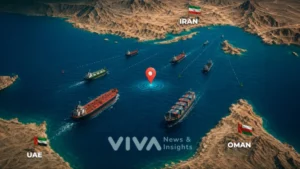
The situation reached a new level of intensity on February 28, 2026, when a fresh phase of hostilities erupted between Iran-aligned forces and the U.S.-Israeli alliance. While a brief ceasefire offered a temporary reprieve, the conflict reignited following a series of disputes regarding the sovereignty and operational control of the Strait of Hormuz. As a strategic chokepoint through which approximately 20% of the world’s petroleum passes, the tensions in the Strait provided a backdrop of global economic instability that empowered regional militias to take more radical public stances, such as the issuance of the bounty on a former U.S. head of state.
Rhetoric and Ideological Justification
The language used in the militia’s announcement reflects a deeply entrenched ideological narrative. The statement emphasizes that "the oppressors will never taste peace" and that "free people around the world" are duty-bound to hunt those they deem responsible for the deaths of "children and scientists."
By framing the bounty as an "obligatory promise for the mujahideen" (fighters), the group seeks to provide a religious and moral veneer to an act of political violence. The statement further asserts that "the blood of the martyrs will remain a curse that shakes the thrones of the arrogant until the aggressors are defeated and the fortresses of tyranny crumble." This rhetoric is designed to resonate with a specific constituency in the Middle East that views U.S. foreign policy as inherently imperialistic and tyrannical.
Security Implications and International Law
The issuance of a multi-million dollar bounty on a former U.S. President presents unprecedented challenges for international security and diplomatic norms. Under U.S. law, the Secret Service is mandated to provide lifetime protection to former presidents, a task that becomes significantly more complex when a non-state actor publicly incentivizes assassination.
Legal experts note that such a bounty constitutes a violation of several international conventions, including the Convention on the Prevention and Punishment of Crimes against Internationally Protected Persons. However, because the Islamic Resistance in Iraq operates as a non-state actor—often with ambiguous ties to the formal Iraqi state apparatus—holding the group accountable through traditional legal channels remains difficult.
From a security perspective, the threat is viewed with high seriousness by U.S. intelligence agencies. While Donald Trump is no longer in office, he remains a prominent figure in American politics and a symbol of U.S. power. The threat of "crowdsourced" political violence, where a reward is offered to anyone regardless of affiliation, complicates the task of monitoring potential attackers, as it could theoretically inspire "lone wolf" actors who are not directly connected to the militia.
Regional Reactions and Potential Responses
While the Iraqi government has not yet issued a formal condemnation of the bounty, the situation places Baghdad in a precarious position. The Iraqi administration must balance its relationship with the United States, which provides essential military and economic support, against the significant domestic influence of the PMF and its political wings.
In Washington, the response is expected to be one of "zero tolerance." Historically, the U.S. State Department has responded to threats against its officials by increasing sanctions on the sponsoring groups and, in some cases, conducting retaliatory strikes against militia infrastructure. Analysts suggest that the U.S. may pressure the Iraqi government to crack down on the financial networks used to collect the $10 million bounty.
In Tehran, the official stance remains one of "legitimate revenge." While the Iranian government often distances itself from the specific tactical decisions of Iraqi militias to maintain a level of plausible deniability, the overarching goal of removing U.S. influence from the Middle East remains a shared objective.
Broader Impact on Middle East Stability
The bounty announcement comes at a time when the Middle East is already grappling with extreme volatility. The mention of the Strait of Hormuz in the militia’s statement highlights the potential for this localized threat to spill over into global energy markets. If the U.S. perceives that the threat to its former leader is being facilitated by regional state actors, it could lead to a broader naval escalation in the Persian Gulf.
Furthermore, this development underscores the diminishing effectiveness of traditional diplomacy in the face of ideological warfare. When non-state actors feel emboldened enough to offer massive financial rewards for the death of a former world leader, it signals a breakdown in the international order and the "rules of engagement" that have historically governed state-to-state conflict.
Analysis: The Future of Non-State Actor Threats
The decision by the Islamic Resistance in Iraq to use a bounty as a weapon of psychological and political warfare represents a shift in the tactics of the "Axis of Resistance." By involving "contributions from members and supporters," the group is attempting to democratize the conflict, making their struggle appear as a grassroots movement rather than a top-down military operation.
This $10 million offer is not just an attempt on a single life; it is a strategic move to maintain the relevance of the 2020 assassinations in the public consciousness. It serves to remind the U.S. that for these groups, the "account" for Qasem Soleimani and Abu Mahdi al-Muhandis has not yet been settled. As the 2026 conflict continues to evolve, the international community remains on high alert for how these threats might manifest into actual security breaches, and whether they will lead to a new, even more dangerous chapter in the U.S.-Middle East saga.