The resignation of a high-ranking state official in the Republic of Indonesia triggers a rigorous legal and political process designed to maintain institutional stability and uphold the supremacy of the 1945 Constitution (UUD 1945). Recent political discourse surrounding potential vacancies in the second-highest office of the executive branch has brought public attention back to the foundational laws governing state leadership succession. Contrary to popular assumptions, the resignation of a Vice President does not grant the sitting President the unilateral authority to appoint a successor. Instead, Indonesia’s constitutional framework mandates a collaborative and deliberate legislative process, requiring the active participation of the People’s Consultative Assembly (Majelis Permusyawaratan Rakyat, or MPR).
As democratic governance matures in the world’s third-largest democracy, strict adherence to constitutional safeguards ensures that executive power transitions transparently. When a vacancy arises due to resignation, impeachment, death, or permanent incapacitation, the mechanisms outlined in the constitution are immediately activated. This comprehensive review examines the legal foundation, procedural steps, historical context, and broader political implications of filling a vice-presidential vacancy under Indonesian law.
Constitutional Framework and Legal Foundations
The primary legal basis governing the vacancy of the vice-presidential office is enshrined in the 1945 Constitution of the Republic of Indonesia. Specifically, Article 8, Paragraph 2 dictates the exact protocol to be followed when the office of the Vice President becomes vacant.
The constitutional provision explicitly states that in the event of a vacancy in the office of the Vice President—arising from death, resignation, dismissal, or inability to perform duties—the President shall nominate two candidates within a maximum period of sixty days. Subsequently, the MPR must convene a special plenary session to elect a new Vice President from the slate of nominees provided by the head of state.
This strict sixty-day timeline is designed to prevent prolonged political uncertainty and to ensure that the executive branch functions at full capacity. The President cannot operate indefinitely without a deputy, nor can they bypass the legislative branch to install a chosen candidate of their sole preference. The requirement for MPR approval acts as a vital system of checks and balances, ensuring that the legislative representatives of the Indonesian people hold the final mandate in confirming executive leadership.
Chronology of Events and Procedural Stages
The process of replacing a resigned Vice President unfolds through a structured, multi-stage constitutional timeline. Understanding this sequence is essential for assessing how the executive and legislative branches interact during a crisis of leadership.
Phase 1: Formal Notification and Acceptance of Resignation
The process begins when the incumbent Vice President submits a formal, written letter of resignation addressed to the President and the leadership of the MPR and the House of Representatives (Dewan Perwakilan Rakyat, or DPR). Once the resignation is formally tendered and acknowledged by the relevant state organs, the office is officially declared vacant. This declaration starts the statutory sixty-day countdown mandated by Article 8 of the UUD 1945.
Phase 2: Executive Consultation and Candidate Nomination
Within the designated sixty-day window, the President is tasked with selecting and nominating two qualified candidates for the vacant vice-presidential post. These nominees must meet all the legal prerequisites stipulated for presidential and vice-presidential candidates under the General Elections Law, including citizenship, age requirements, educational background, and freedom from legal liabilities. During this phase, political lobbying often intensifies as the President consults with coalition parties in the DPR to ensure that the proposed candidates can garner sufficient support within the MPR.
Phase 3: MPR Convening and
Plenary Deliberations
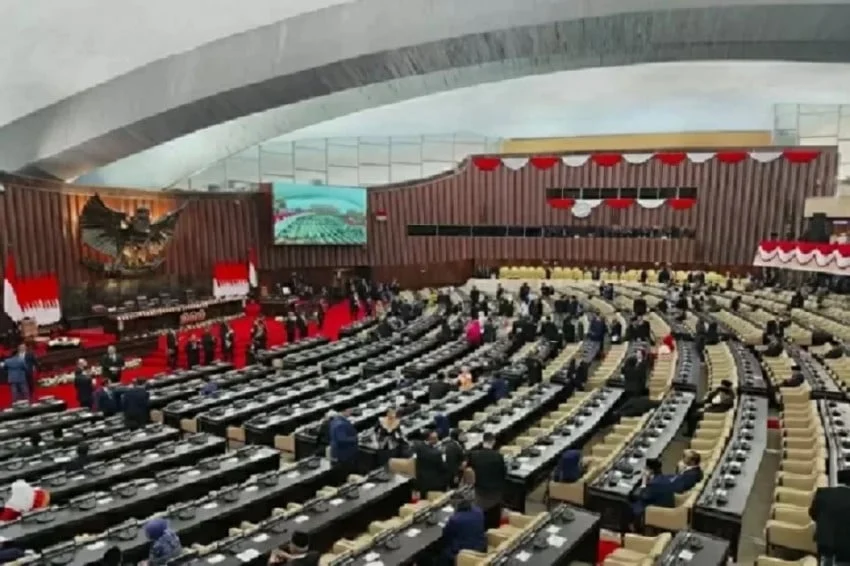
Upon receiving the official nominations from the President, the leadership of the MPR schedules a special session. All members of the DPR and the Regional Representative Council (Dewan Perwakilan Daerah, or DPD) convene in Jakarta to evaluate the credentials, vision, and operational capacity of the two nominees. Parliamentary factions engage in rigorous debates and vetting procedures to assess the candidates’ suitability for national governance.
Phase 4: Voting and Confirmation
The final stage involves a democratic vote conducted among the members of the MPR. To secure the position, a candidate must win a majority vote from the assembled delegates. Once a candidate achieves the required threshold, the MPR leadership officially ratifies the election result. The newly elected Vice President takes the oath of office before the MPR plenary session, immediately assuming the constitutional duties and responsibilities of the second-highest office in the land.
Historical Precedents and Past Transitions
Indonesia’s post-reformasi history provides critical context regarding executive transitions and vacancies. While direct resignations of a Vice President have been rare, the nation has experienced significant political realignments and leadership successions that tested the resilience of its constitutional framework.
In July 2001, following the impeachment and removal of President Abdurrahman Wahid (Gus Dur), Vice President Megawati Sukarnoputri was automatically elevated to the presidency in accordance with Article 8, Paragraph 1 of the UUD 1945. This transition created an immediate vacancy in the vice-presidential office. To fill this gap, the MPR swiftly organized a special session, resulting in the election of Hamzah Haz as the new Vice President of Indonesia.
More recently, discussions regarding executive accountability, parliamentary initiatives such as the House Memorandum of Policy (Hak Menyatakan Pendapat, or HMP), and political rumors surrounding high-profile figures have reignited public interest in the mechanics of removal and resignation. The rigorous scrutiny applied by lawmakers to executive actions demonstrates that Indonesia’s political institutions remain vigilant in exercising oversight.
Official Responses and Political Reactions
As debates surrounding potential leadership changes circulate in the national media, key political figures, government spokespersons, and legislative leaders have offered varied perspectives. Official statements from administration representatives emphasize stability, adherence to the rule of law, and the continuation of national development agendas.
Cabinet ministers and senior government officials have consistently reassured the public that state administration will not be paralyzed by high-level political transitions. Spokespersons have underscored that executive mechanisms are robust enough to manage sudden shifts in personnel without disrupting public services, foreign policy commitments, or economic policies.
Concurrently, members of the legislature from various political parties have stressed the importance of transparency and constitutional compliance. Lawmakers have noted that any petition or proposal for political inquiry—including those concerning parliamentary rights of opinion or investigation—must be processed through established legislative channels. Representatives from both coalition and opposition factions have reiterated that the sixty-day window for appointing a new Vice President provides an ample timeframe for democratic deliberation, preventing rushed decisions driven by partisan panic.
Broader Implications and Fact-Based Economic Analysis
The departure and replacement of a Vice President carry significant implications for national stability, investor confidence, and policy continuity. Financial markets and international observers closely monitor political developments in Jakarta, as stability in the executive branch is viewed as a cornerstone of Indonesia’s economic growth.
From an economic perspective, a prolonged political vacuum or contentious succession battle can introduce uncertainty into foreign direct investment (FDI) projections and domestic market sentiment. Investors prefer predictable regulatory environments and steady governance. Therefore, the strict enforcement of the sixty-day constitutional timeline acts as a stabilizing mechanism, reassuring markets that leadership transitions will be handled swiftly and lawfully.
Furthermore, the introduction of a new Vice President can alter the domestic political equilibrium. The choice of nominees presented by the President reflects the delicate balancing act required to maintain a majority coalition in the DPR. A newly appointed Vice President must often navigate complex relationships between traditional political parties, regional stakeholders, and economic technocrats. Consequently, the selection process is not merely a legal formality but a pivotal political maneuver that can shape legislative productivity and policy implementation for the remainder of an administration’s term.
Conclusion
The constitutional architecture of the Republic of Indonesia provides a clear, orderly, and democratic path for addressing vacancies in the executive branch. The mandatory adherence to Article 8, Paragraph 2 of the 1945 Constitution ensures that the resignation of a Vice President does not lead to authoritarian overreach or administrative paralysis. Through a cooperative process involving executive nomination and legislative confirmation by the MPR, Indonesia continues to strengthen its democratic institutions, proving that the rule of law remains paramount in times of political transition.