The European aviation sector is grappling with a sophisticated and unsettling wave of security threats that has disrupted major flight paths across the continent twice in a single week. On Thursday, November 5, at least 14 commercial flights were targeted by a series of hoax bomb threats, triggering emergency protocols, the scrambling of fighter jets, and the diversion of aircraft to military and commercial airfields. This latest incident follows a nearly identical pattern of disruption observed on Tuesday, November 3, raising alarms among aviation security agencies and intelligence officials regarding the vulnerability of European airspace to coordinated "hybrid warfare" tactics.
A Chronology of Thursday’s Disruption
The security crisis began early Thursday morning as reports of bomb threats against commercial airlines began to flood air traffic control centers across multiple European nations. While initial reports from Agence France-Presse (AFP) identified at least 12 affected flights, subsequent data tracking and reports from Reuters confirmed that the number of impacted aircraft reached at least 14 by the end of the day.
The intensity of the response was immediate. In one of the most high-profile incidents, Aer Lingus flight EI402, en route from Dublin to Rome, was forced to declare an emergency while near Paris. French authorities authorized the diversion of the Airbus A320 to the Evreux airbase, located approximately 100 kilometers west of the French capital. French Air Force jets were scrambled to escort the aircraft, ensuring its safe landing as ground crews prepared for a security sweep.
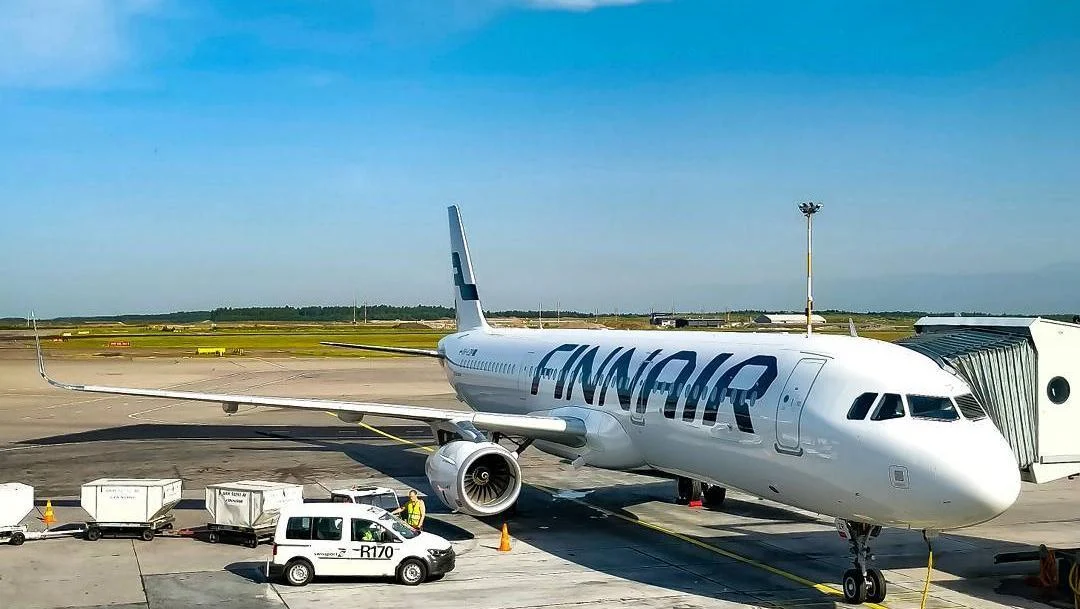
Simultaneously, the impact spread across the continent. Finnair reported that two of its flights were targeted. One aircraft, operating a service from Helsinki to Rome, was escorted by fighter jets for the duration of its approach into the Italian capital, where it underwent a rigorous inspection by explosives ordnance disposal (EOD) teams. Another Finnair service, operated by Jettime, landed safely in Vienna after receiving a similar threat.
In Central and Eastern Europe, the situation was equally tense. Polish carrier LOT saw one of its flights from Warsaw diverted to Brussels, while Bulgarian authorities managed three emergency landings. Two Ryanair flights—originating from Copenhagen and Madrid—landed safely in Sofia, while a third flight arriving from London was diverted to Plovdiv. In the Czech Republic, local police confirmed that four separate flights heading toward Prague received bomb threats. Despite the low credibility of the specific threats, authorities initiated full-scale emergency procedures. Subsequent investigations by Czech officials confirmed that no explosive materials were found on board any of the four aircraft.
Analyzing the Pattern: A Repeat of Tuesday’s Chaos
This week’s events are part of an escalating trend. The disruption on Thursday mirrored a similar wave of threats that occurred on Tuesday, November 3, which affected approximately 10 flights and a cruise ship. During that period, Warsaw’s Chopin Airport faced temporary operational closures, and Italian authorities were forced to mobilize air defense assets to escort targeted aircraft.
The logistical strain on airlines has been significant. Ryanair, in particular, has emerged as a primary target, with four of its flights subjected to security alerts on Tuesday alone. Additionally, the broader instability was signaled as early as Monday, November 2, when a Wizz Air flight traveling from London to Sofia was diverted to Budapest. The response was immediate, with Hungarian Gripen fighter jets deployed to intercept and escort the passenger plane, underscoring the high state of alert maintained by NATO-aligned air forces.
Intelligence Context and Geopolitical Tensions
While no single entity has officially claimed responsibility for the string of hoax threats, the incidents have occurred against a backdrop of heightened geopolitical friction. European security officials have increasingly pointed to the prevalence of "hybrid warfare"—a strategy that combines conventional military posturing with cyberattacks, sabotage, and disinformation campaigns.
For months, senior officials in Brussels and several EU capitals have accused Russia and Iran of orchestrating various acts of sabotage across the continent. These activities are widely interpreted by analysts as attempts to destabilize Western cohesion, test the responsiveness of European security protocols, and impose economic costs on the transport and logistics sectors.
Both Moscow and Tehran have categorically denied any involvement in the recent wave of aviation threats. However, the systematic nature of the hoaxes—specifically the targeting of multiple, geographically dispersed flights within a short time window—suggests a level of coordination that transcends simple prank calls. Intelligence experts are currently examining the possibility that these threats are designed to probe the speed and efficiency of the European Integrated Air and Missile Defense System (EIAMDS) and to foster a climate of public anxiety.
Security Implications and Operational Costs
The financial and operational consequences of these hoaxes are profound. Every bomb threat, even if deemed to have "low credibility," requires an exhaustive safety protocol:
- Diversion and Scrambling: Redirecting commercial airliners incurs massive fuel costs, passenger compensation, and the wear on military assets used for escort missions.
- EOD Inspections: Upon landing, aircraft must be moved to isolated areas of the tarmac, where passengers are evacuated and specialized police units conduct searches.
- Operational Delays: A single diverted flight can trigger a "domino effect" of delays across an airline’s network, affecting hundreds of other passengers and crew members.
"We do not underestimate these threats," a spokesperson for the Czech Police noted on the social media platform X. This sentiment reflects the standard operating procedure across Europe: security agencies cannot afford to assume any threat is a hoax until it is proven so, a vulnerability that the perpetrators appear to be exploiting.
The Human and Legal Dimension
For the passengers involved, the experience has been one of significant distress. Thousands of travelers have been subjected to unscheduled landings, lengthy police interrogations, and the psychological strain of being escorted by armed fighter jets. While authorities have thus far managed these incidents without any loss of life or injury, the risk of a mid-air accident during an emergency diversion or a rapid descent remains a primary concern for aviation safety regulators.
Legal experts note that the perpetrators of these hoaxes, if identified, face severe criminal charges. Under international aviation law, interfering with flight operations—even through false reports—is classified as a major security offense. Countries affected by the threats are currently coordinating through Europol and Interpol to trace the origins of the communications. The use of encrypted messaging services and potentially state-sponsored cyber tools makes the attribution process difficult, yet investigators are focusing on digital footprints left behind during the dissemination of the threats.
Future Outlook and Mitigation Strategies
As European aviation enters a period of heightened vigilance, the incident highlights a critical need for enhanced cooperation between intelligence agencies and civil aviation authorities. The frequency of these threats suggests that European airspace will remain a contested space for hybrid actors for the foreseeable future.
Moving forward, airlines are expected to implement more robust verification protocols for security threats, potentially utilizing artificial intelligence to analyze the veracity of incoming messages in real-time. Meanwhile, the European Union is likely to push for more unified security policies regarding how member states respond to coordinated threats, ensuring that an alert in one country triggers a synchronized and standardized response across the bloc.
The events of this past week serve as a stark reminder that in the modern era, the security of civil aviation is inextricably linked to the broader landscape of international security. While the skies remain open, the "terror" of these hoax threats represents a new frontier in the challenges facing global travel, demanding a sophisticated and resilient response from the international community to ensure the safety and continuity of the European transit network.