TEHRAN — Amid persistent geopolitical tensions and a prolonged economic squeeze, Iran has asserted that its homegrown technological advancements have enabled the nation to successfully stand up to the world’s leading military superpowers. According to high-ranking military officials within the Islamic Republic, nearly half a century of sweeping international sanctions has paradoxically catalyzed a defense revolution, transforming the country into an autonomous military producer capable of projecting strategic deterrence.
The declaration was made by Brigadier General Hossein Mohebbi, spokesperson for the Islamic Revolutionary Guard Corps (IRGC), during a comprehensive briefing regarding the state of the nation’s aerospace sector in Tehran. Addressing military analysts, domestic media, and defense officials, Mohebbi framed Iran’s military evolution not merely as a matter of survival, but as a historic strategic achievement that challenges the unipolar defense paradigms long dominated by Western powers.
The Context of Decades-Long Isolation
The Islamic Republic of Iran has faced varying degrees of economic, technological, and military sanctions since the aftermath of the 1979 Islamic Revolution. What began as localized arms embargoes and asset freezes by the United States and its Western allies gradually expanded over the decades into a multifaceted international containment strategy. These measures were significantly tightened through United Nations Security Council resolutions, unilateral US executive orders, and European Union trade restrictions, particularly as Tehran’s contentious nuclear program advanced through the 2000s and 2010s.
For decades, the conventional wisdom among international defense experts was that comprehensive sanctions would eventually cripple Iran’s military readiness, grounding its aging air force—largely reliant on pre-1979 American hardware such as the F-14 Tomcat and F-4 Phantom—and preventing the acquisition of modern naval and ground combat systems. However, Tehran adopted a doctrine of "resistance economy" and asymmetrical defense development, pouring state resources into domestic research, development, and reverse-engineering programs.
Technological Autonomy and Aerospace Breakthroughs
According to General Mohebbi, the linchpin of Iran’s current defense posture is its domestic aerospace sector. Speaking to an audience in Tehran, the IRGC spokesperson emphasized that the transition from a net importer of foreign military hardware to a mass producer of indigenous defense platforms represents a structural turning point for the country.
"This is also a major achievement, that Iran—having been under sanctions for 47 years—is able to face the world’s largest military powers with superior technology," Mohebbi stated, highlighting what he described as advanced indigenous capabilities in missile technology, unmanned aerial vehicles (UAVs), and air defense systems.
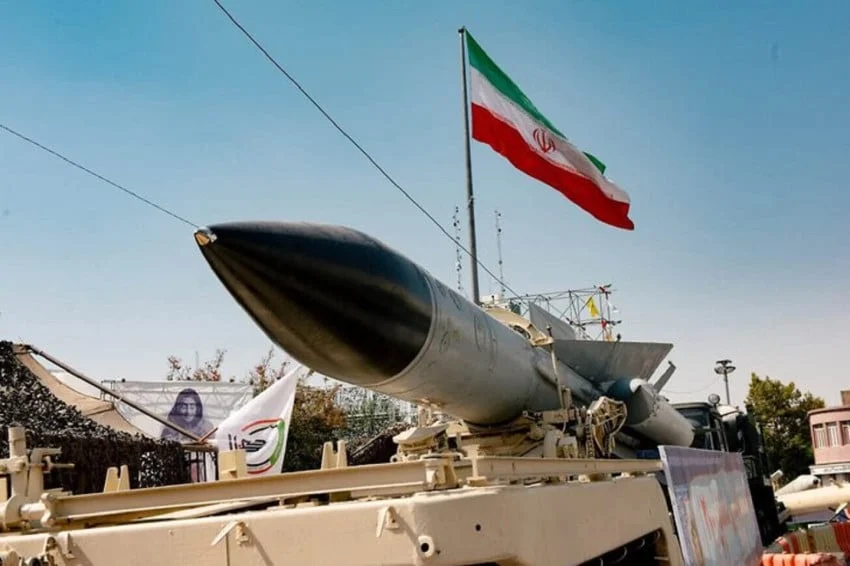
Over the past two decades, Iran’s military industrial complex, spearheaded by the Ministry of Defense and supported by the IRGC’s specialized engineering corps, has unveiled a series of sophisticated weapon systems. These include the Bavar-373 long-range air defense system—frequently touted by Iranian media as a domestic equivalent to the Russian S-300—alongside an array of ballistic and cruise missiles such as the Fateh and Qiam series. Furthermore, Iran has emerged as a prominent global player in drone technology, developing long-range loitering munitions and reconnaissance UAVs like the Shahed and Mohajer series, which have heavily influenced modern tactical doctrines in various contemporary conflicts.
Chronology of Escalation and Strategic Shift
To understand the trajectory of Iran’s defense self-reliance, it is necessary to examine key milestones in its modern military history:
- 1979–1988 (The Post-Revolutionary and Iran-Iraq War Era): Following the Islamic Revolution and the outbreak of the devastating eight-year war with Iraq, Western arms supplies were abruptly cut off. This forced Tehran to establish primitive repair networks and initiate rudimentary domestic defense manufacturing to keep its armed forces operational.
- 1990s–2000s (Asymmetric Doctrine and Missile Foundations): Facing continued isolation, Iran pivoted toward asymmetric warfare strategies, prioritizing underground missile cities, fast-attack naval craft in the Persian Gulf, and the foundational development of medium-range ballistic missile technology with assistance from foreign partners such as North Korea.
- 2010s (Cyber Warfare and UAV Expansion): As international sanctions intensified over its nuclear activities, Iran accelerated its investments in asymmetrical domains, successfully reverse-engineering captured foreign reconnaissance drones and expanding its cyber warfare capabilities, while laying the groundwork for advanced aerospace programs.
- 2020–Present (Mass Production and Regional Projection): Overcoming the expiration and subsequent reimposition of various arms controls, Iran shifted from prototyping to the mass production of complex defense systems. Concurrently, IRGC officials have increasingly emphasized the operational deterrence of their forces, citing instances where US naval assets reportedly altered their positioning in regional waters.
Official Responses and Regional Implications
While Iranian military leadership presents these developments as a triumph over foreign aggression, international reaction remains deeply divided. Western capitals, led by Washington and Brussels, view Iran’s expanding missile and drone arsenals as a direct threat to regional stability, international shipping lanes, and the security of Middle Eastern allies such as Israel and the Gulf Cooperation Council (GCC) states.
Defense analysts in the West note that while Iran has undoubtedly achieved a high degree of self-sufficiency in specific niches—notably ballistic missiles and low-cost UAVs—its broader military apparatus still faces structural limitations. Aging surface fleets, a lack of modern fifth-generation fighter aircraft, and vulnerabilities in advanced semiconductor supply chains remain significant hurdles for Tehran’s conventional armed forces.
Nevertheless, Iranian officials maintain that their deterrence posture has fundamentally altered the calculus of potential adversaries. Referencing previous naval confrontations in the Persian Gulf and the broader Middle East, IRGC advisers have frequently asserted that hostile fleets have been forced to recalibrate their operational ranges to avoid potential asymmetric strikes from Iranian coastal defenses and missile batteries.
Broader Economic and Geopolitical Impact
The ongoing debate over Iran’s military readiness underscores the complex legacy of long-term economic sanctions. While the restrictions have undoubtedly caused severe economic hardship for the Iranian civilian population—stifling foreign investment, fueling inflation, and complicating the import of essential goods and medical supplies—they have concurrently fostered a heavily militarized, insular industrial base.
By framing technological self-reliance as an existential necessity, Tehran has leveraged its defense achievements to foster domestic political cohesion and project regional strength. As geopolitical fault lines between major global powers continue to deepen, Iran’s capability to sustain its indigenous military complex despite half a century of economic isolation serves as a significant case study in the limits of economic coercion and the adaptive capacity of sanctioned states.