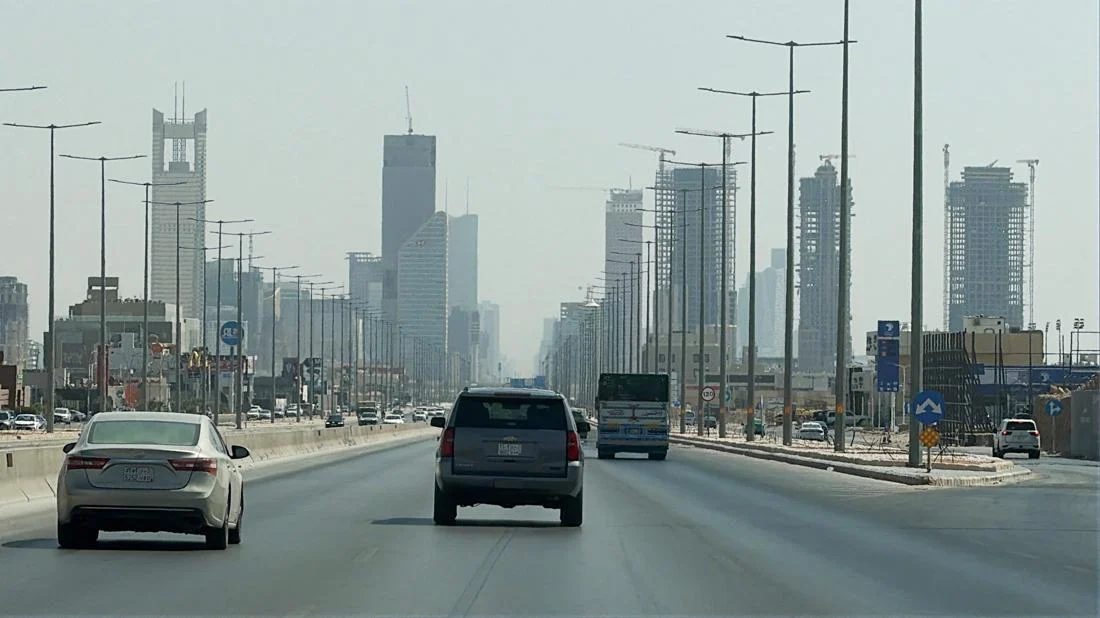
The skies above the Saudi Arabian capital of Riyadh were violently disrupted in the early morning hours as a series of loud explosions echoed across the metropolitan area, sending shockwaves through a populace already on high alert. Defense systems swung into action to neutralize an incoming aerial threat, marking yet another escalation in a widening regional conflict that has increasingly targeted critical infrastructure and population centers within the Kingdom.
According to regional reports and military statements, Saudi air defense forces successfully intercepted and destroyed a ballistic missile targeted directly at Riyadh. The attack, launched by the Houthi movement from neighboring Yemen, triggered emergency mobile alerts urging residents to seek immediate shelter. This latest assault underscores the persistent vulnerability of the Gulf state to cross-border strikes, occurring just days after a psychological blow was dealt to the nation’s financial and industrial heartland.
The incident highlights a dramatic deterioration in regional security following the expiration of a crucial truce in Yemen. As geopolitical tensions engulf the wider Middle East—drawing in regional proxies, global energy markets, and international superpowers—the conflict has evolved from a localized civil war into a multi-front crisis with profound global implications.
Chronology of Escalation and the Riyadh Missile Interception
The sequence of events leading up to the morning explosions in Riyadh points to a meticulously coordinated campaign by Houthi forces, backed by external patronage, designed to exert maximum pressure on the Saudi government and its allies.
The immediate precursor unfolded in the early hours of the morning when residents across upscale and residential districts of Riyadh reported hearing thunderous booms. Simultaneously, automated emergency broadcast systems activated across cellular networks, instructing citizens to remain indoors and away from windows. Within minutes, the Saudi-led coalition commanding operations in Yemen confirmed via official communications that a ballistic missile had been tracked and pulverized in mid-air by advanced Patriot or equivalent anti-missile batteries.
However, this attack did not occur in a vacuum. Just forty-eight hours prior, Houthi forces executed a high-profile strike that struck a skyscraper belonging to the state-owned oil giant Saudi Aramco, situated squarely within Riyadh’s prestigious financial district. While physical casualties were minimized due to rapid evacuation protocols, the psychological and economic impact was profound, signaling to international investors that even the heavily fortified capital was within striking distance of insurgent ordnance.
The tempo of these attacks has accelerated dramatically since early October. Saudi Arabia, historically the world’s leading petroleum exporter, has faced near-daily aerial incursions. Among these was a particularly lethal assault weeks prior that forced the temporary closure of Riyadh’s primary international airport for a fortnight, severely disrupting global travel networks and cargo logistics.
Background Context: The Collapse of the Yemeni Truce
To understand the current volatile environment, one must examine the fragile diplomatic architecture that previously held the region together. For months, a tenuous United Nations-brokered truce in Yemen provided a rare reprieve from a war that has devastated the Arabian Peninsula’s poorest nation since 2014.
The conflict pits the Saudi-backed and internationally recognized Yemeni government against the Houthi movement, an Iran-aligned political and military organization that seized control of the capital, Sanaa, nearly a decade ago. While the truce significantly reduced large-scale conventional military engagements, underlying political settlements remained elusive.
When the ceasefire officially lapsed in July, diplomatic efforts failed to secure an extension. The expiration immediately unlocked a new and more dangerous phase of the conflict. Freed from formal constraints, the Houthis have leveraged advanced weaponry, including longer-range ballistic missiles and loitering munitions, to project power far beyond Yemen’s borders. Analysts note that these capabilities have matured significantly over the course of the decade-long war, driven by external technological transfers and domestic engineering advancements by insurgent forces.
Domestic Disruption and Precautionary Measures in the Capital
The constant threat from the skies has forced a severe disruption of normal civilian life in Riyadh. Authorities have been compelled to implement sweeping emergency protocols to safeguard the population, particularly the nation’s youth.
In response to the heightened risk of airborne attacks, educational authorities ordered all schools in Riyadh to immediately transition back to online learning. The directive affected students who had only returned to physical classrooms for a mere two days following previous scheduling adjustments.
"As part of our ongoing and primary precautionary measures to ensure the absolute safety of students and educational staff, remote learning will resume until further notice," stated an emergency notification distributed urgently to parents across the capital.
This disruption extends far beyond the educational sector. Commercial districts operate under a shadow of heightened security, and infrastructural sites remain on maximum alert. The persistent threat environment has fostered an atmosphere of perpetual vigilance, altering the daily routines of millions of residents who now routinely monitor defense alerts alongside weather forecasts.
Economic Warfare: Targeting Energy Corridors and Critical Infrastructure
Beyond psychological and civilian impacts, the strategic intent behind the recent wave of attacks appears squarely focused on crippling Saudi Arabia’s economic lifeline and destabilizing global energy markets.
On the day prior to the Riyadh missile interception, the critical East-West oil pipeline—a vital artery traversing the Arabian Peninsula toward the Red Sea—was targeted in a coordinated strike. The assault ignited a localized fire along the pipeline infrastructure. However, the Saudi Press Agency, citing a high-ranking official from the Ministry of Energy, was quick to reassure global markets that repair teams contained the blaze swiftly and that the conduit remained operational.
Nevertheless, the timing and targeting of the East-West pipeline are profoundly symbolic and strategic. This export corridor has assumed monumental importance following aggressive moves by Iran to blockade the Strait of Hormuz. As a retaliatory measure against ongoing military actions involving the United States and Israel in the broader region, Tehran’s maneuvers have effectively throttled maritime transit through the narrow gateway connecting the energy-rich Persian Gulf to international waters.
With the Strait of Hormuz facing severe operational bottlenecks and security threats, overland pipelines like the East-West corridor represent indispensable alternatives for maintaining global petroleum flows. By targeting these remaining conduits, hostile actors aim to induce severe supply shocks, drive up crude oil prices, and inflict systemic damage on the global economy.
Official Responses and Diplomatic Posture
Official reactions from Riyadh and its international partners emphasize unwavering resolve in the face of escalating terrorism, coupled with urgent calls for a unified global response to maritime and aerial aggression.
The Saudi-led coalition has repeatedly condemned the Houthi leadership for prioritizing regional destabilization over the welfare of the Yemeni people. In statements broadcast across state media, coalition spokespersons reiterated the Kingdom’s inherent right to self-defense under international law. They emphasized that military operations will continue with uncompromising precision to degrade the offensive capabilities of the insurgent militia and protect sovereign territory.
Concurrently, diplomatic channels have buzzed with emergency consultations. Western allies, particularly the United States and European Union member states, have condemned the attacks on civilian infrastructure and commercial shipping lanes. Intelligence and defense officials from allied nations are reportedly working in close coordination with Saudi counterparts to enhance early-warning radar coverage and bolster the Kingdom’s integrated air defense architecture.
Regional analysts suggest that Riyadh is walking a delicate diplomatic tightrope. While maintaining a robust military posture to deter further attacks, Saudi leadership has simultaneously sought to insulate its ambitious economic diversification projects—such as Vision 2030—from the ravages of regional warfare, engaging in quiet backchannel diplomacy to explore pathways toward sustainable de-escalation.
Broader Impact and Geopolitical Implications
The convergence of Houthi missile barrages, Red Sea shipping disruptions, and the de facto blockade of the Strait of Hormuz illustrates a dangerous new paradigm in Middle Eastern geopolitics. No longer viewed as isolated domestic insurgencies or localized border disputes, these friction points are now universally recognized as interconnected theaters of a wider proxy war.
The implications for the global economy are immediate and severe. Energy markets remain hyper-sensitive to any physical disruption or credible threat to Saudi production and transport facilities. Even temporary closures or scares—such as the two-week shutdown of Riyadh’s airport or fires along energy pipelines—send immediate ripples through commodities exchanges, inflating fuel costs for consumers worldwide and threatening fragile post-pandemic economic recoveries.
Furthermore, the conflict poses acute security dilemmas for international maritime commerce. The militarization of crucial chokepoints forces shipping conglomerates to reroute vessels, incurring massive delays and exorbitant insurance premiums that ultimately translate into higher consumer prices for goods globally.
As the smoke clears over Riyadh following the latest interception, the underlying reality remains stark: until a comprehensive and inclusive political settlement can be forged in Yemen—and until broader regional accommodations are reached regarding state sponsorship of militant proxies—capitals across the Gulf will remain on edge. The resilience of Saudi Arabia’s air defense systems has averted immediate catastrophe, but the persistent drumbeat of war serves as a grim reminder of the volatility defining the contemporary Middle East.