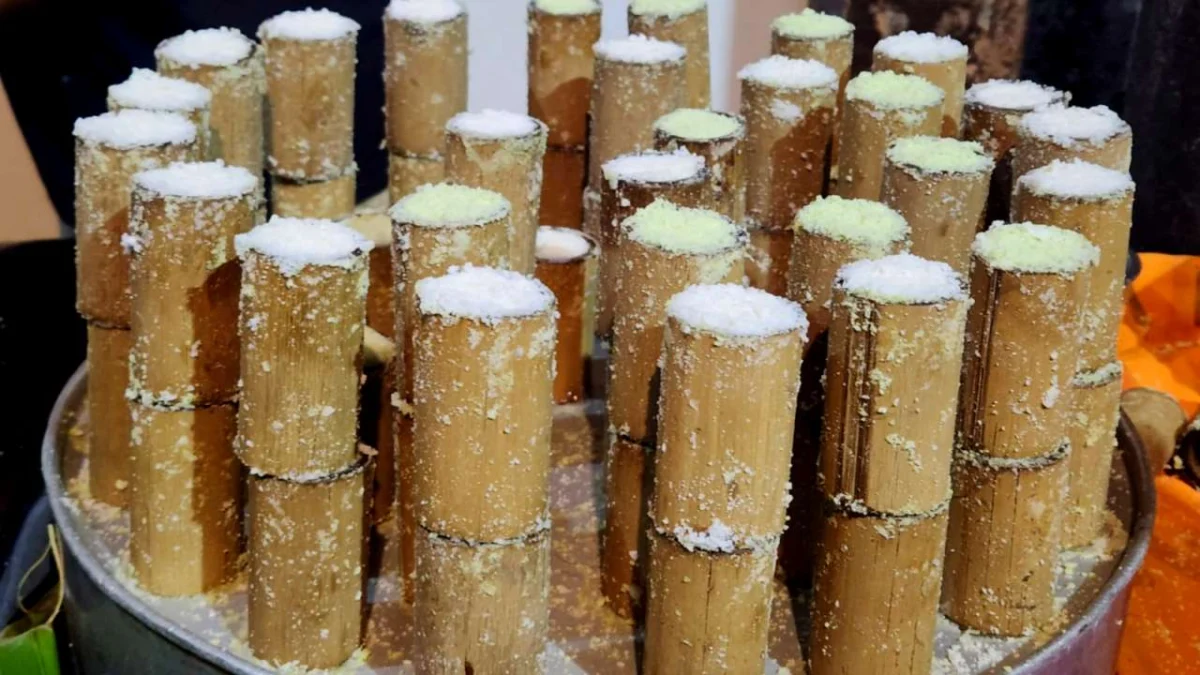
Nestled in a quiet alleyway off Jalan Jaksa Agung Suprapto, the modest stall of Puthu Lanang comes alive each evening as the cool mountain air settles over Malang. Despite opening its doors just after the Maghrib prayer, the stall rarely experiences a quiet start. Instead, long queues of eager patrons invariably snake down the narrow lane, waiting patiently for a taste of a culinary institution that has defined the city’s nocturnal food scene for nearly a century. Amidst the swirling steam of bamboo cylinders and the fragrant aroma of palm sugar and pandan, current owner Siswoyo orchestrates the nightly rush with decades-honed efficiency. Puthu Lanang is far more than a purveyor of traditional Indonesian sweets; it is a living testament to culinary resilience, generational continuity, and the preservation of authentic flavors in a rapidly modernizing urban landscape.
The Genesis of a Legend: From Street Vendor to Cultural Landmark
The history of Puthu Lanang is deeply intertwined with the socio-economic fabric of mid-20th century Indonesia. The enterprise was established in 1935 by founders Supiah and her husband, Abdul Jalal. In an era long before brick-and-mortar storefronts became viable for small-scale culinary artisans, the couple relied on mobility to build their customer base. Armed with a traditional wooden shoulder pole—known locally as a pikulan—they traversed the neighborhoods of Malang, peddling freshly steamed rice cake delicacies directly to consumers.
As their reputation for exceptional taste and quality grew, the founders eventually established a more permanent presence in the Celaket district. During this period, the business became widely known as "Puthu Celaket," a moniker that achieved such high local renown that it was subsequently adopted by numerous competing vendors in the region.
The transition of leadership occurred in 1985 when Siswoyo, the son of Supiah, formally assumed control of the family business. Having assisted his mother since childhood and having completed higher education, Siswoyo chose not to abandon his roots. Instead, he committed himself to sustaining and expanding the family trade. Under his stewardship, the operational scope broadened to accommodate bulk orders, supplying traditional market snacks (jajanan pasar) for corporate catering, luxury hotels, regional restaurants, and ceremonial tumpeng presentations.
It was not until the early 2000s that the stall adopted its current and universally recognized designation. The name "Puthu Lanang" emerged from a casual family discussion reflecting on the absence of male grandchildren in the family at the time. In the Javanese language, lanang translates to "male" or "masculine," serving as a clever semantic counterpart to the more widely distributed puthu ayu (pretty puthu). Recognizing the commercial and cultural value of branding, a loyal patron who happened to be a notary legally formalized the trademark in 2003, firmly anchoring the identity of Puthu Lanang in Indonesia’s culinary lexicon.
The Craft of Puthu: Simplicity, Chemistry, and Sensory Appeal

The enduring popularity of Puthu Lanang is rooted in the uncompromising simplicity of its ingredients and the precision of its preparation method. Unlike modern confections laden with artificial additives, stabilizers, and complex processing, traditional puthu relies on a minimalist formulation: coarse rice flour, liquid palm sugar (gula jawa), freshly grated coconut, and fragrant pandan leaves for natural coloring and aroma.
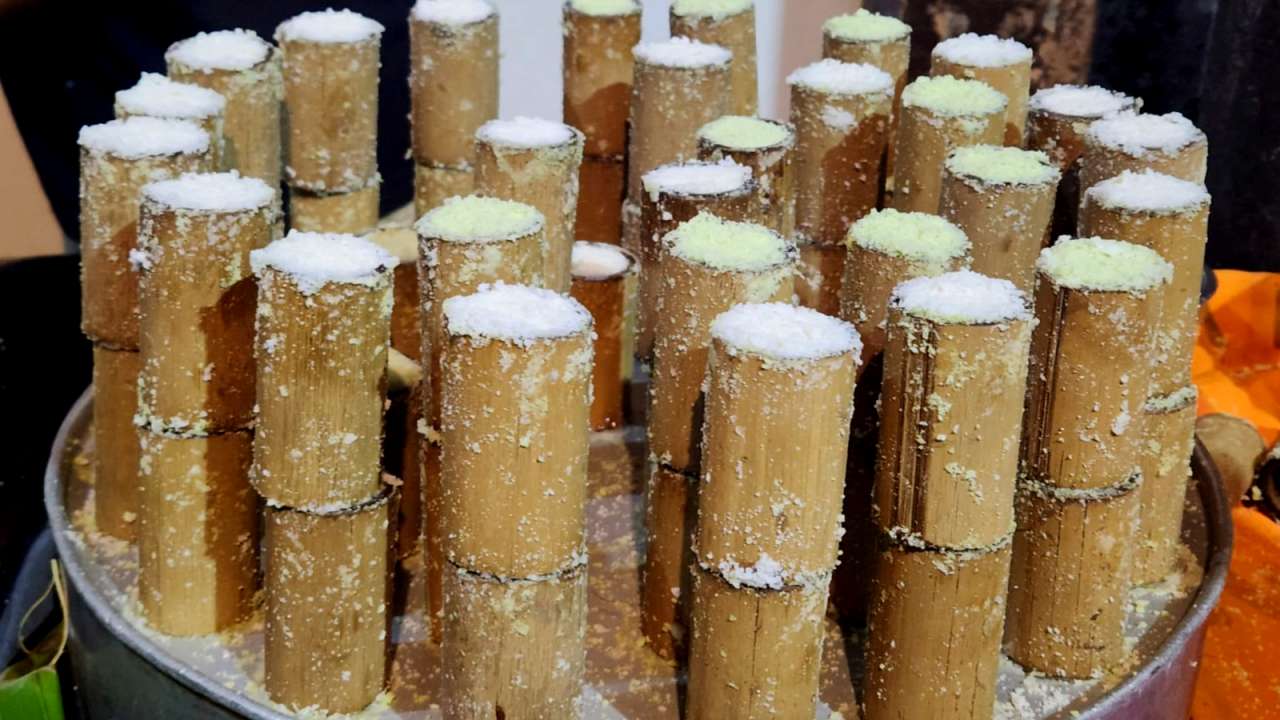
The preparation process is a sensory spectacle. The rice flour mixture is pressed into small, hollow bamboo cylinders, with a core of solid palm sugar inserted into the center of the grain matrix. These cylinders are then placed over a steaming apparatus powered by boiling water. As the steam forces its way through the bamboo, the high thermal energy rapidly cooks the rice flour while simultaneously liquefying the enclosed palm sugar. Within minutes, the cylinders are unseated, releasing a fragrant plume of steam redolent of fresh bamboo, toasted rice, and caramelized sugar.
The resulting product is characterized by a soft, pliable texture that yields easily to the bite, immediately releasing the rich, molasses-like sweetness of the molten palm sugar. This sweetness is masterfully counterbalanced by the savory, slightly salty crunch of the freshly grated coconut rolled onto the exterior of the cake immediately before service. Beyond the classic white variant, Puthu Lanang produces a pandan-infused green iteration, utilizing natural leaf extractions to impart both color and an herbaceous fragrance.
Diversification and Accessibility: Beyond the Signature Puthu

While the cylindrical rice cake serves as the anchor of the enterprise, Puthu Lanang has diversified its menu to encompass a comprehensive array of classical Javanese market confections (jajanan pasar). Alongside the signature puthu, the stall offers lupis—glutinous rice cakes compressed and boiled in banana leaf wrappers—as well as chewy, brightly colored cenil and klepon, the latter of which features a liquid palm sugar center encased within a sphere of glutinous rice flour infused with pandan or suji leaf juice.
To accommodate consumers eager to sample the full spectrum of traditional flavors, the establishment offers a consolidated mixed portion priced at an accessible Rp18,000. This pricing strategy ensures that traditional heritage foods remain economically viable and accessible to diverse demographics, spanning students, local families, and international tourists alike.
Furthermore, the institutional capacity of Puthu Lanang extends far beyond retail street-level transactions. By institutionalizing high-volume catering services and artisanal tumpeng arrangements, the business bridges the gap between street food culture and formal hospitality requirements, securing a stable revenue stream through institutional and familial events.
Adherence to Tradition: The Principle of "Jual Mau, Beli Mau"

In an industry driven by rapid scaling, franchising, and commercial optimization, Puthu Lanang maintains a remarkably conservative growth strategy anchored by a guiding familial philosophy: "jual mau, beli mau" (what is sold must be worthy of being bought and consumed by one’s own family). This philosophy dictates every facet of operational management, from daily ingredient sourcing to strict quality control protocols.
Siswoyo maintains stringent criteria for raw materials, insisting on freshly harvested coconuts daily and pure palm sugar without chemical extenders. Even during periods of inflationary pressure on agricultural commodities, management steadfastly refuses to compromise on ingredient grade or portion sizing. This unwavering commitment to product integrity has shielded the enterprise from the quality degradation frequently observed in mass-produced traditional foods.
The effectiveness of this customer-centric philosophy is evidenced by the profound generational loyalty exhibited by its clientele. It is commonplace for elderly patrons, who first visited the stall during its early decades of operation, to introduce their children and grandchildren to the establishment, effectively passing down a shared cultural memory through taste.
The cultural capital of Puthu Lanang has also attracted national political figures and cultural elites. Archival and oral histories associated with the stall indicate that high-ranking state officials—including former President Suharto, who reportedly requested private deliveries to his Cendana residence in the 1980s, alongside subsequent leaders such as Megawati Soekarnoputri and Joko Widodo—have partaken in its offerings.

Despite receiving numerous lucrative offers to commercialize, franchise, or establish secondary branches in metropolitan centers like Jakarta, Siswoyo has consistently rejected expansion proposals. His decision is predicated on the perishable nature of the product; puthu possesses optimal texture and flavor only when consumed immediately after the steaming process. Prioritizing product authenticity over quantitative business growth, Siswoyo has ensured that the operational footprint remains strictly confined to its historical origin point at Jalan Jaksa Agung Suprapto, Gang Buntu.
Socio-Economic Implications and Preservation of Intangible Heritage
The longevity and operational model of Puthu Lanang offer significant insights into the broader socio-economic dynamics of urban culinary preservation in Indonesia. As secondary cities like Malang experience rapid infrastructural development, commercial gentrification, and the proliferation of contemporary cafe culture, traditional micro-enterprises often face displacement or forced modernization.
By refusing to relocate or dilute its product line, Puthu Lanang demonstrates that cultural authenticity can serve as a viable long-term economic asset. The business functions as an anchor of intangible cultural heritage, safeguarding indigenous culinary techniques, traditional agricultural supply chains (such as local coconut farmers and palm sugar producers), and intergenerational knowledge transfer.

Furthermore, the enterprise contributes to local employment and tourism economies. It functions as a mandatory itinerary item for culinary tourists visiting East Java, thereby stimulating secondary economic activity within the surrounding neighborhood.
Conclusion: The Lasting Steam of Malang’s Culinary Identity
Nearly a century after Supiah and Abdul Jalal first shouldered their wooden cart across the unpaved streets of Malang, Puthu Lanang remains remarkably unchanged. In an era obsessed with disruptive innovation and rapid commercial scaling, the establishment derives its strength from the opposite: absolute consistency, uncompromised quality ingredients, and an unyielding dedication to a craft perfected over generations.
As the evening chill deepens in the alleyways of Jalan Jaksa Agung Suprapto, the queue outside the stall persists—a diverse assembly of individuals united by the shared anticipation of a simple sweet treat. Through the rhythmic movements of Siswoyo and his staff, and the persistent hiss of steam escaping from bamboo tubes, Puthu Lanang continues to write its story, proving that some culinary traditions do not need to adapt to the modern world to remain profoundly relevant.