Pyongyang has accelerated its defense modernization efforts with a renewed focus on unmanned aerial systems, as Supreme Leader Kim Jong Un formally ordered a massive expansion of the country’s military drone fleet during a high-profile inspection of a defense research facility. This strategic pivot toward autonomous and remote-controlled weaponry comes at a time of heightened international anxiety regarding military cooperation between North Korea and the Russian Federation, particularly concerning the war in Ukraine. While Western defense analysts and intelligence agencies continue to monitor the potential transfer of advanced combat technology between Moscow and Pyongyang, specialized military experts have increasingly turned their attention toward a more immediate, asymmetric threat: North Korea’s growing inventory of low-cost, fiber-optic-guided attack drones capable of evading traditional electronic warfare countermeasures.
The announcement by the North Korean leadership underscores a broader, global shift in modern warfare tactics, where commercial-off-the-shelf technology and inexpensive loitering munitions have fundamentally altered the cost-benefit analysis of battlefield dominance. As the conflict in Eastern Europe drags on, the intersection of North Korean manufacturing capabilities and Russian combat experience has created a volatile nexus of technological exchange that threatens to destabilize not only the Korean Peninsula but also the broader security architecture of the Indo-Pacific region.
Main Facts and Technological Developments
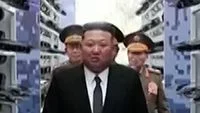
During his recent visit to the Unmanned Aerial Technology Complex, Kim Jong Un watched live demonstrations of various newly developed attack drones and suicide UAVs designed to strike both stationary and moving targets on land and at sea. State media reports highlighted the leader’s insistence on mass-producing these systems as rapidly as possible, citing their proven effectiveness in contemporary armed conflicts. The strategic emphasis is no longer merely on nuclear deterrence and long-range ballistic missile systems, but on integrating asymmetrical, tactical warfare capabilities that can be deployed at scale.
Military analysts closely examining the footage and photographic evidence released by North Korean state media have identified multiple classes of unmanned aerial vehicles. These include reconnaissance drones, medium-range loitering munitions, and small, man-portable kamikaze drones. Of particular concern to defense experts are the tactical suicide drones that appear to incorporate fiber-optic guidance systems.
Unlike traditional radio-frequency-controlled drones, which are highly susceptible to electronic jamming, spoofing, and signal interception, fiber-optic-guided drones utilize a physical spool of ultra-thin glass fiber attached to the munition. As the drone flies toward its target, it unspools the fiber, maintaining a secure, un-jammable data link with the operator. This technology effectively neutralizes standard electronic countermeasures (ECM) deployed by modern armed forces, making these inexpensive systems exceptionally lethal against armored vehicles, fortifications, and infantry positions.
Chronology of North Korea’s Unmanned Aerial Evolution
The intensification of North Korea’s drone program is not an isolated development; it represents the culmination of a multi-year effort to modernize its armed forces through domestic innovation and foreign intelligence acquisition.
In 2014, North Korea captured international attention when several rudimentary reconnaissance drones crossed the heavily fortified Demilitarized Zone (DMZ) and crashed in South Korean territory. At the time, these aircraft were widely dismissed by defense analysts as crude, low-tech adaptations of commercial model airplanes equipped with basic analog cameras.
By September 2022, however, the threat landscape shifted dramatically. Five North Korean reconnaissance drones crossed the Military Demarcation Line into South Korean airspace, penetrating restricted zones near Seoul and evading interception by South Korean air defense systems for several hours. This incident exposed critical vulnerabilities in South Korea’s low-altitude radar coverage and prompted an immediate overhaul of its counter-drone strategy, including the establishment of dedicated drone operations commands.
The trajectory of Pyongyang’s drone ambitions accelerated further following the outbreak of the war in Ukraine in February 2022. As Russia sought alternative sources of military hardware and ammunition, North Korea emerged as a willing partner, supplying millions of artillery shells and ballistic missiles in exchange for economic aid, food supplies, and, crucially, advanced military technology. Intelligence reports from Seoul, Washington, and Kyiv have documented the deployment of thousands of North Korean regular troops to Russia’s Kursk region, providing Pyongyang’s military personnel with firsthand exposure to modern drone-centric warfare, electronic warfare tactics, and integrated battlefield intelligence systems.
Supporting Data and Strategic Assessments
Quantifying the exact size of North Korea’s drone arsenal remains difficult due to the secretive nature of the regime, but defense white papers and intelligence estimates published by the South Korean Ministry of National Defense provide a sobering baseline. Seoul’s military intelligence estimates that North Korea possesses an inventory of approximately 1,000 to 1,000+ unmanned aerial vehicles of various types, ranging from simple target drones to armed reconnaissance platforms.
Furthermore, economic assessments indicate that North Korea is heavily leveraging its state-controlled industrial base to bypass international sanctions by utilizing dual-use commercial components sourced from abroad. By importing microchips, electric motors, and carbon-fiber materials through third-party intermediaries in China and Southeast Asia, Pyongyang has managed to manufacture thousands of explosive-laden drones at a fraction of the cost required to build traditional precision-guided munitions.
According to a recent assessment by the Asan Institute for Policy Studies, a leading think tank in Seoul, the unit cost of a small, fiber-optic-guided attack drone is estimated to be between several hundred and a few thousand US dollars. In contrast, standard anti-tank guided missiles or precision artillery shells frequently cost tens or hundreds of thousands of dollars. This staggering disparity in cost allows North Korea to overwhelm conventional air defense networks through sheer volume, a tactic frequently observed on the battlefields of Ukraine.
Official Responses and International Repercussions
The international community has reacted with profound alarm to North Korea’s aggressive expansion of its asymmetric warfare capabilities and its deepening military alliance with Moscow.
In Seoul, the administration of President Yoon Suk Yeol has convened multiple National Security Council meetings to address the dual threats posed by North Korea’s advancing drone fleet and its troop deployments to Russia. The South Korean military has responded by accelerating the deployment of domestic laser-based anti-air weapons, advanced signal jammers, and multi-layered radar detection grids designed to identify small, low-flying signatures. South Korean defense officials have reiterated that any direct provocation involving unmanned incursions across the border will be met with overwhelming and decisive retaliation.
In Washington, the United States Department of Defense has expressed deep concern over the transfer of sensitive military technology from Russia to North Korea. Pentagon press briefings have repeatedly emphasized that Moscow’s willingness to provide aerospace, missile, and drone technology to Pyongyang in exchange for conventional munitions represents a direct violation of multiple United Nations Security Council resolutions. U.S. diplomats have engaged in intensive consultations with allies in Tokyo and Seoul to strengthen export controls, disrupt illicit supply chains, and enhance intelligence-sharing frameworks to counter the emerging Pyongyang-Moscow axis.
Meanwhile, official statements from the Russian Foreign Ministry have largely dismissed Western criticisms regarding military cooperation with North Korea, asserting that bilateral relations are conducted in full compliance with international law and do not pose a threat to regional stability. However, independent military analysts point out that the battlefield synergy between Russian electronic warfare units and North Korean hardware testing creates a dangerous feedback loop, where tactical lessons learned in Ukraine are rapidly integrated into North Korean doctrine.
Broader Impact and Implications for Global Security
The implications of Kim Jong Un’s directive to mass-produce military drones extend far beyond the immediate confines of the Korean Peninsula. As asymmetric warfare continues to redefine the nature of military conflict, the democratization of precision strike capabilities through inexpensive drones poses a systemic challenge to global security.
For regional stability in East Asia, North Korea’s mastery of low-cost attack drones introduces a destabilizing element to the military balance. South Korea and its American allies have traditionally relied on technological superiority—specifically advanced radar systems, stealth aircraft, and sophisticated missile defense shields—to deter North Korean aggression. However, the proliferation of thousands of expendable, fiber-optic-guided drones has the potential to saturate traditional air defense systems, rendering expensive interceptor missiles economically unviable and exposing critical infrastructure to asymmetric swarm attacks.
Furthermore, the operational lessons that North Korean military personnel are absorbing on the battlefields of Ukraine cannot be overstated. By embedding technical advisors and combat troops alongside Russian forces, Pyongyang is gaining invaluable, real-world experience in drone integration, tactical reconnaissance, counter-jamming operations, and joint-arms coordination. This generational shift from a static, Cold War-era military doctrine to a dynamic, technology-driven fighting force transforms North Korea into a more formidable and unpredictable adversary.
As the international community grapples with these developments, the imperative for robust, adaptive defense strategies has never been greater. Whether through advanced kinetic interceptors, directed-energy weapons, or aggressive cyber operations aimed at disrupting North Korean manufacturing hubs, regional powers must adapt to a new era of warfare where the humble drone has become a primary instrument of geopolitical leverage. Kim Jong Un’s latest military directive serves as a stark reminder that the future of conflict will be shaped not only by nuclear stockpiles and strategic missiles, but by the relentless mass production of autonomous, low-cost lethality.