The newly established state-owned enterprise under the Danantara sovereign wealth fund, PT Perusahaan Mineral Nasional (Persero), or Perminas, has officially commenced an intensive exploration phase for rare earth elements (REE) in Mamuju, West Sulawesi. As global demand for high-tech industrial components surges, the strategic push by Perminas marks a significant milestone in Indonesia’s efforts to capitalize on its vast geological wealth, transitioning from a traditional commodities exporter to a critical player in the global technology supply chain.
Rare earth elements—a group of seventeen chemically similar metallic elements—are the silent workhorses of the modern economy. They are indispensable in the production of high-performance permanent magnets used in electric vehicle (EV) motors, advanced telecommunications infrastructure, high-fidelity consumer electronics, and sensitive defense technologies. By securing domestic control over these resources, Indonesia aims to insulate its nascent EV battery ecosystem from the volatility of international supply chains.
The Strategic Exploration Campaign in Mamuju
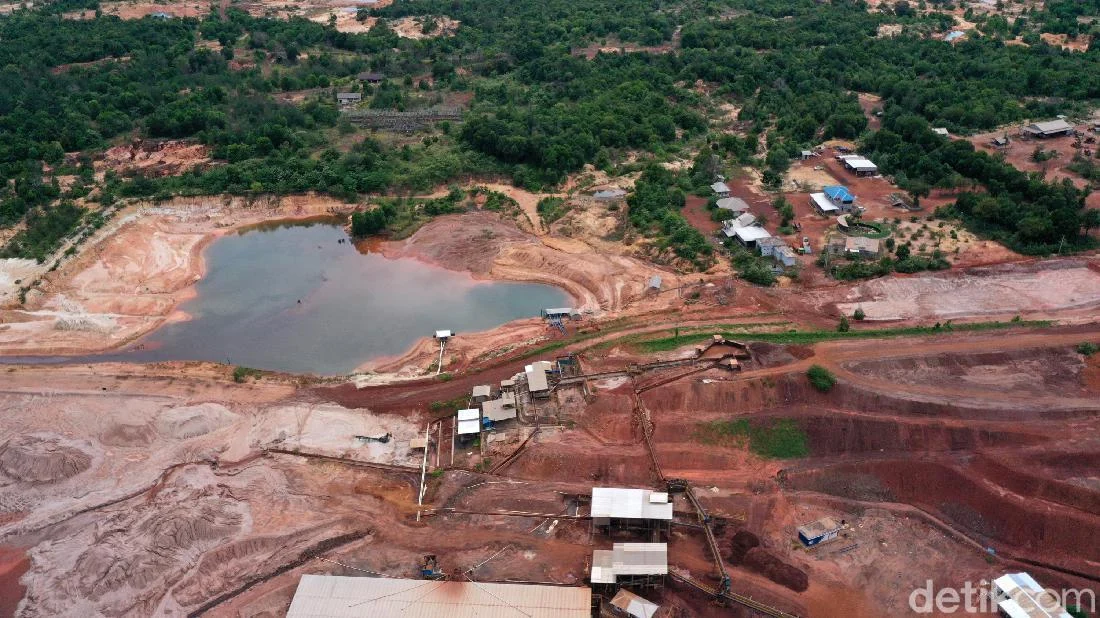
PT Perminas is currently conducting a meticulous geological survey across two primary blocks in Mamuju, spanning a total of 200 hectares. The project follows a rigorous regulatory timeline: the company secured its Mining Business License (IUP) for exploration from the Ministry of Energy and Mineral Resources (ESDM) in July 2026, followed by the approval of the Exploration Work Plan and Budget (RKAB) in August 2026.
La Ode Tarfin Jaya, Director of Technology and Business Development at Perminas, confirmed that the firm is currently executing "in-fill" drilling operations. "We are conducting tight-grid drilling, specifically at 50-by-50-meter intervals, across the designated blocks. We have completed approximately 10% of the planned 72 drilling points," Tarfin Jaya stated during a briefing at the Jiexpo Kemayoran in Jakarta on November 3, 2026.
This intensive methodology is designed to validate and expand upon previous preliminary data collected by the Geological Agency of Indonesia. The objective is to establish a high-confidence estimate of mineral resources and reserves, which will ultimately be certified by a "competent person" in accordance with international reporting standards. Perminas anticipates that the exploration phase will conclude within the next year, providing a definitive roadmap for subsequent mining development.
Geological Significance and the Ion-Adsorption Advantage
The Mamuju deposit is particularly significant due to its classification as an "ion-adsorption clay" type of REE deposit. This specific geological formation is highly sought after because it typically allows for lower-cost extraction and processing compared to hard-rock deposits.
"The Mamuju deposit shares the same characteristics as world-class REE sites, such as Bayan Obo in China, regions in Myanmar, and the Caldeira deposit in Brazil," explained Tarfin Jaya. "These ion-adsorption clays are considered the gold standard for primary REE sourcing, as they often contain higher concentrations of heavy rare earth elements which are essential for high-temperature magnets."
This geological profile positions Indonesia as a potential competitor to current dominant suppliers. By mastering the extraction of ion-adsorption clay, Perminas expects to lower the capital expenditure required for downstream processing, making the Indonesian output highly competitive in the global market.
Chronology of Indonesia’s Rare Earth Exploration Efforts
The mobilization in Mamuju is the culmination of years of systemic efforts by the Indonesian government to identify and map critical mineral resources. The Geological Agency of the Ministry of ESDM has been the primary architect of this strategy, executing a multi-year plan that began in earnest around 2020.
- 2020: The Geological Agency initiated preliminary exploration efforts in various regions across Indonesia, identifying potential sites for rare earth mineralization.
- 2022: A landmark year for REE mapping. The government conducted comprehensive explorations in Mamuju and Parmonangan (North Sumatra). Data indicated that Mamuju possessed total rare earth oxide (TREO) levels reaching up to 4,571 ppm, significantly higher than the 1,549 ppm recorded in Parmonangan.
- 2023: The government expanded its exploration scope to include Melawi, Sibolga, Papua, and the Bangka Belitung islands. This period also saw the formalization of the Working Mining Area (WIUP) proposals for Mamuju and Parmonangan.
- 2024: Detailed exploration expanded into Ketapang and the Tiga Puluh Mountain range, further broadening the national inventory of critical mineral potential.
- 2026: Perminas, now operating under the Danantara framework, assumes the lead role in transitioning these government-identified prospects from the exploration phase to commercial-scale development.
Broader Implications for the Indonesian Economy
The activities of Perminas represent more than just mining; they are a strategic instrument for national economic sovereignty. With the global transition toward renewable energy, the demand for REEs is projected to outpace supply for the remainder of the decade. By localizing the supply chain, Indonesia intends to attract upstream and downstream investment, specifically in magnet manufacturing and refining facilities.
Furthermore, the exploration efforts have not been limited to terrestrial mining. The Geological Agency has also scrutinized unconventional sources, such as the Sidoarjo mudflow area. Their findings confirmed the presence of lithium, strontium, and REEs, although the commercial viability of these unconventional deposits remains a subject of ongoing research. These findings underscore the government’s commitment to exploring every geological avenue to secure minerals essential for the green transition.
Challenges and Future Outlook
While the potential in Mamuju is promising, the transition from exploration to extraction is fraught with technical and environmental complexities. Extracting REEs from ion-adsorption clays involves chemical leaching processes that require stringent environmental oversight to prevent soil and water contamination. Perminas faces the dual challenge of meeting the high expectations of the Indonesian government regarding economic output while adhering to the highest environmental, social, and governance (ESG) standards required by international investors.
The success of the Mamuju project will likely serve as a blueprint for other Perminas operations. If the company can successfully prove the reserves and establish an efficient, environmentally responsible extraction model, it will validate the government’s decision to centralize critical mineral management under the Danantara-backed Perminas structure.
Industry analysts suggest that Indonesia’s entry into the rare earth market could disrupt existing supply chains, providing an alternative to the current concentration of processing capacity in East Asia. However, this will require significant investment in human capital, specialized refining technology, and stable regulatory frameworks.
As the drilling at Mamuju continues, the eyes of the global mining industry remain fixed on the data emerging from these 200 hectares. For Indonesia, the success of this project is not merely about mining minerals; it is about proving its capacity to manage the "vitamins of modern industry" and securing a vital role in the technologies that will define the 21st century. With the exploration phase set to conclude in 2027, the coming months will be critical in determining the scale and speed of Indonesia’s ascent as a rare earth power.