The head of the Indonesian Food and Drug Authority (BPOM), Prof. dr. Taruna Ikrar, has issued a strategic call for an intensified tripartite collaboration between academia, the private sector, and the government to dismantle the country’s longstanding reliance on imported pharmaceutical ingredients. Speaking at the 2026 Science, Technology, and Industry Convention (KSTI) held at the Institut Teknologi Sepuluh Nopember (ITS) in Surabaya on Thursday, November 12, Prof. Ikrar emphasized that achieving national sovereignty in the production of Active Pharmaceutical Ingredients (APIs) is not merely an economic goal, but a critical component of national health security.
The convention, which spanned from November 10 to 13, served as a high-level platform for discussing the roadmap toward industrialization in the life sciences sector. By bringing together global scientific luminaries, including the 2021 Nobel Laureate in Chemistry, Prof. Benjamin List, the event underscored the urgency of transitioning from laboratory innovation to large-scale commercial manufacturing.
The Landscape of Import Dependency
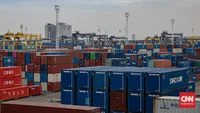
Indonesia’s pharmaceutical sector currently faces a significant structural challenge: approximately 90% of the raw materials required for medicine production are imported, primarily from China and India. This heavy reliance leaves the domestic supply chain vulnerable to global geopolitical shifts, currency fluctuations, and disruptions in international logistics, such as those witnessed during the COVID-19 pandemic.
For decades, domestic pharmaceutical companies have operated largely as formulation plants, importing APIs and excipients to be processed into finished dosage forms. While this model has served the immediate needs of the population, it has hindered the growth of a domestic chemical and pharmaceutical manufacturing ecosystem. Prof. Ikrar noted that the government is now shifting its regulatory posture to incentivize local synthesis of these components, aiming to transform Indonesia from an import-dependent market into a self-sustaining regional hub.
Chronology of the Policy Shift
The initiative discussed at KSTI 2026 represents the culmination of several years of policy adjustment. The chronology of this push toward independence can be traced back to the post-pandemic realization of supply chain fragility:
- 2020–2021: The COVID-19 pandemic exposes the extreme vulnerability of the national health system, leading to temporary shortages of essential medicines and personal protective equipment.
- 2022: The Indonesian government introduces the "National Health Resilience" program, aiming to increase the Domestic Component Level (TKDN) in the medical device and pharmaceutical sectors.
- 2023–2024: BPOM streamlines the registration process for locally produced raw materials, reducing bureaucratic hurdles for companies attempting to pivot toward domestic sourcing.
- 2025: The government mandates stricter TKDN requirements for public procurement, specifically targeting government-funded health programs like the National Health Insurance (JKN).
- November 2026: KSTI 2026 convenes in Surabaya, serving as the official forum to formalize the integration of scientific research from universities into the industrial supply chain.
The Triple Helix Framework: Academia, Business, and Government
Prof. Ikrar’s proposal centers on the "Triple Helix" model of innovation. In this paradigm, the roles are clearly defined yet deeply interdependent:
- Academia as the Innovation Engine: Universities are tasked with moving beyond theoretical research and focusing on applied sciences. This includes identifying cost-effective synthesis routes for APIs that are currently under patent protection or are strategically vital.
- Business as the Commercial Catalyst: The private sector is expected to take the risks associated with scaling up production. By investing in manufacturing infrastructure that meets Good Manufacturing Practice (GMP) standards, domestic firms can provide the necessary volume to replace imported alternatives.
- Government as the Regulatory Architect: BPOM and the Ministry of Health play the role of facilitators. This involves creating a "regulatory sandbox" for local innovations, providing tax incentives for pharmaceutical manufacturers that source locally, and ensuring that the approval process for domestic raw materials is competitive with international standards.
"The core issue has never been a lack of intellectual capacity, but rather the ‘valley of death’ between research publication and industrial application," Prof. Ikrar stated in his follow-up remarks on Friday. "We need to ensure that the scientific rigor developed in our universities is translated into products that are not only effective but also economically viable for mass production."
Supporting Data and Market Potential
The economic implications of this transition are substantial. With a population exceeding 280 million, Indonesia represents one of the largest pharmaceutical markets in Southeast Asia. As of 2026, the national healthcare spending continues to rise, driven by an aging population and an expanded JKN coverage.
Current market data suggests that if Indonesia successfully domesticates the production of just the top 20 most-consumed APIs, the country could save trillions of rupiah annually in foreign exchange reserves. Furthermore, the development of a local API industry would create thousands of high-skilled jobs in chemistry, pharmacology, and industrial engineering, effectively upgrading the nation’s human capital.
However, challenges remain. The cost of initial infrastructure investment for API synthesis plants is significantly higher than that of simple formulation facilities. Additionally, the industry must overcome the perception that locally produced ingredients may lack the consistency of established international suppliers. To mitigate this, BPOM has committed to rigorous oversight, ensuring that local products undergo the same stringent quality control as international imports, thereby building trust within the medical community.
Insights from the Global Scientific Community
The presence of Prof. Benjamin List at KSTI 2026 provided a global context to the discussions. As a pioneer in organocatalysis, Prof. List’s work has revolutionized the efficiency and environmental friendliness of chemical synthesis. His participation in the convention signaled that Indonesia is serious about incorporating state-of-the-art chemical processes into its industrial roadmap.
Industry experts present at the forum noted that sustainable and "green" chemistry is essential for Indonesia’s future manufacturing sector. By adopting modern catalytic processes, local firms can minimize waste and reduce energy consumption, making Indonesian-made APIs more competitive on the global stage.
Broader Impact and Future Implications
The initiative championed by BPOM represents a paradigm shift in how the Indonesian state views its health sector. By moving toward local production, the country is effectively integrating health security with industrial policy.
The success of this collaboration will likely be measured by the rate of adoption of locally sourced ingredients in the National Formulary. If the synergy between the academic labs and the private sector proves effective, Indonesia could serve as a case study for other developing nations attempting to break free from the constraints of global supply chain volatility.
Furthermore, this strategy is expected to have a ripple effect on the biotech and vaccine industries. Having established the infrastructure and the regulatory framework for API production, the next logical step for the Indonesian pharmaceutical sector will be the development of complex biologics and biosimilars.
Conclusion
The call to action from Prof. dr. Taruna Ikrar at the KSTI 2026 marks a decisive moment for Indonesia’s pharmaceutical sector. The road to independence is long and requires sustained investment and political will, but the alignment of government policy, industrial ambition, and academic excellence creates a promising path forward.
As the convention concludes, the focus now shifts to implementation. The government must follow through on its promises of regulatory support and fiscal incentives, while the private sector must demonstrate the courage to invest in domestic capacity. If these stakeholders can maintain the momentum generated in Surabaya, Indonesia stands to gain a more resilient, self-reliant, and innovative health system that can better protect the wellbeing of its citizens in an increasingly unpredictable global environment. The transition from an import-oriented market to a producer-exporter is a monumental task, but for Indonesia, it is the necessary next step in its development as a modern, self-sufficient nation.