President Prabowo Subianto has officially authorized a substantial financial injection of approximately 42 trillion Indonesian Rupiah (IDR) dedicated to the accelerated rehabilitation and reconstruction of regions severely impacted by natural disasters across Aceh, North Sumatra, and West Sumatra. This strategic fiscal allocation, slated for the 2027 fiscal year, represents a pivotal step in the Indonesian government’s commitment to restoring infrastructure, revitalizing local economies, and ensuring long-term resilience against recurring geological and hydrometeorological hazards in the Sumatra region.
The funding structure for this initiative is twofold. It incorporates a primary allocation of approximately 33 trillion IDR earmarked for the upcoming fiscal year, supplemented by a 9 trillion IDR carry-over from the 2026 budget that remained undisbursed to various ministries and agencies due to end-of-year administrative constraints. By channeling these unspent funds into the 2027 cycle, the administration aims to prevent bureaucratic bottlenecks and ensure that reconstruction efforts maintain momentum without interruption.
Strategic Coordination and Ministerial Oversight
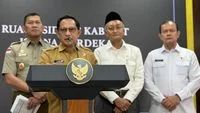
The approval was formalized following a high-level limited cabinet meeting held at the Presidential Palace in Jakarta. Minister of Home Affairs Tito Karnavian, who presented the budgetary requirements to President Prabowo, confirmed that the head of state expressed full support for the plan, citing the urgent humanitarian and structural needs of the affected provinces.
Minister Karnavian emphasized that the 42 trillion IDR will not be managed centrally by his ministry. Instead, the funds will be distributed across relevant ministries and government agencies, with the Ministry of Public Works (PU) serving as the primary lead for physical infrastructure projects. This decentralized approach is designed to leverage the specialized expertise of different departments to address multifaceted recovery needs, including the reconstruction of critical arterial roads, educational facilities, places of worship, public markets, and targeted financial support for micro, small, and medium enterprises (MSMEs).
To prevent the typical delays associated with government procurement, the Ministry of Home Affairs has urged ministries and agencies to immediately finalize their budget proposals and submit them to the Ministry of Finance. This procedural acceleration is intended to facilitate "early bidding" (lelang dini), allowing construction and restoration work to commence by January or February 2027 at the latest.
The Master Plan: A Three-Year Roadmap
The initiative is part of a broader, comprehensive recovery strategy formulated by the Task Force for the Acceleration of Rehabilitation and Reconstruction (PRR). The master plan outlines a trajectory of 11,520 distinct activities to be executed between 2026 and 2028. These activities encompass a wide range of interventions, from the reinforcement of riverbanks and bridges to the restoration of agricultural and aquaculture sectors, which form the backbone of the rural economy in the affected provinces.
The total financial requirement for this three-year master plan is estimated at 100.67 trillion IDR. The breakdown of this expenditure reflects the intensity of the work required in the immediate, medium, and long term:
- 2026: 38.93 trillion IDR
- 2027: 32.84 trillion IDR
- 2028: 28.28 trillion IDR
While the primary burden falls on 23 core ministries and agencies, 10 supporting agencies have also been tapped to provide technical assistance, requiring an additional 575.4 billion IDR. For the 2026 fiscal cycle alone, the government successfully disbursed 29.9 trillion IDR of the 39.1 trillion IDR requested, demonstrating a functional mechanism for fund transfer to 33 different state entities.
Disparity in Local Government Performance
A significant challenge identified by the central government is the uneven performance of regional administrations in utilizing the funds already provided. The central government has channeled 12.34 trillion IDR to local authorities through various mechanisms, including the Unexpected Expenditure (BTT) budget, and substantial additions to Transfer to Regions (TKD) funds for infrastructure and personnel costs.
However, internal government data reveals a troubling disparity in execution rates. In West Sumatra, for instance, while some districts have reported a 54 percent realization rate of their allocated funds, others lag significantly behind. Similarly, in North Sumatra, while the Regency of Asahan has achieved 60 percent realization, the Regencies of Mandailing Natal and Toba have recorded zero percent utilization. A similar pattern exists in Aceh, where the Regency of Pidie has utilized 93 percent of its TKD, whereas the Regency of Bireuen has yet to initiate spending.
Minister Karnavian has issued a stern warning to local leaders, urging them to prioritize the welfare of disaster-affected populations over administrative inertia. He emphasized that these funds are specifically designated for disaster recovery and must not be diverted to secondary bureaucratic needs or left idle, which would result in them becoming "sisa anggaran" (unspent budget surplus) at the end of the year.
The Challenge of Recurring Bazaars and Secondary Disasters
The urgency of the reconstruction effort is underscored by the volatility of the region’s climate and topography. Between April and October, the regions slated for reconstruction faced at least 41 secondary disasters, primarily in the form of flash floods and landslides. These events occurred across 13 regencies and cities, frequently damaging infrastructure that had been partially restored.
This cycle of destruction and reconstruction highlights the critical need for climate-resilient infrastructure. Experts argue that simply replacing damaged roads or schools is insufficient; the new infrastructure must be built to withstand the high-intensity weather patterns that are becoming increasingly frequent in the Sumatra region.
The economic implications of these delays are profound. The affected provinces are significant contributors to the national agricultural output. When rural roads are cut off and local markets remain closed, the supply chain for essential goods is disrupted, leading to localized inflation and a decline in the standard of living for hundreds of thousands of residents.
Broader Implications and Future Outlook
The decision by the Prabowo administration to commit such a large sum of money signals a proactive stance on disaster management. By integrating the recovery effort into a multi-year fiscal plan, the government is moving away from reactive, piecemeal disaster funding toward a more sustainable, project-based recovery framework.
However, the success of this 42 trillion IDR investment will depend heavily on two factors: the transparency of the bidding process and the ability of local governments to synchronize their efforts with the central government. If the decentralized model of implementation results in fragmented project management, the government may need to consider tighter supervision by the PRR Task Force.
Furthermore, the government’s focus on 2027 as a "year of acceleration" suggests that the current administration intends to see the bulk of the physical recovery completed before the end of the decade. As Indonesia faces the dual challenge of rapid development and high disaster risk, this recovery project serves as a test case for the nation’s ability to build back better.
The role of the Ministry of Public Works will be under intense scrutiny as it oversees the engineering standards of these massive infrastructure projects. Public confidence in the government’s recovery efforts will largely hinge on the durability of the roads, schools, and bridges built with these funds. If the projects can withstand the next cycle of the rainy season, it will validate the government’s current strategy.
In summary, the 42 trillion IDR commitment represents a substantial attempt to resolve one of the most pressing infrastructure crises in modern Indonesian history. By linking budget availability to administrative efficiency and setting clear, measurable targets, the Prabowo administration is positioning itself to provide long-term stability for the people of Aceh, North Sumatra, and West Sumatra. The task ahead remains daunting, requiring a seamless synergy between central planners, ministerial executors, and local government actors to ensure that every rupiah contributes to the resilience of the nation.