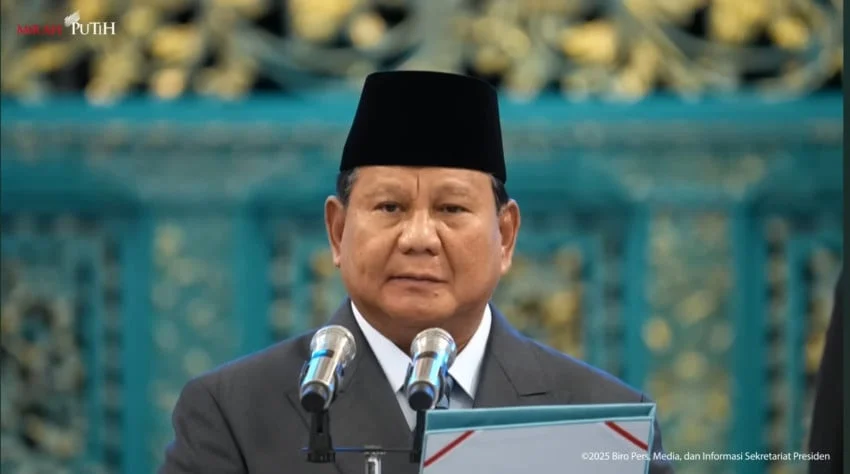
JAKARTA — President Prabowo Subianto has officially signed Law Number 27 of 2026 concerning Manpower Protection, marking a significant milestone in Indonesia’s labor reform landscape. Encompassing 23 chapters and a comprehensive 313 articles, the newly enacted legislation aims to reshape the rights, protections, and obligations governing the nation’s workforce. The signing of the bill follows months of rigorous legislative debate and intense advocacy from labor organizations seeking enhanced legal safeguards for workers across various industrial sectors.
According to official documents published on the official legal documentation portal of the State Secretariat, the Manpower Protection Law was formally signed by President Prabowo Subianto on October 28, 2026. On the very same day, the legislation was officially promulgated and recorded in the State Gazette of the Republic of Indonesia for the year 2026 as Number 179. This swift codification highlights the administration’s commitment to expediting labor market adjustments and addressing long-standing structural concerns raised by both employee unions and corporate stakeholders.
Legislative Transition and Legal Harmonization
The introduction of Law Number 27 of 2026 necessitates a massive restructuring of Indonesia’s existing labor legal framework. To prevent regulatory vacuum and ensure legal certainty during the transitional phase, the legislation outlines clear guidelines regarding the status of prior legal frameworks. Specifically, Article 310 of the newly enacted law stipulates that all existing laws and regulations that serve as implementing rules for older labor statutes shall remain in effect. This provisional continuity applies strictly to regulations derived from Law Number 13 of 2003 concerning Manpower—published in the State Gazette of the Republic of Indonesia Number 39, with Supplement Number 4279—as well as Law Number 6 of 2023 concerning the Stipulation of Government Regulation in Lieu of Law Number 2 of 2022 on Job Creation into Law. However, these legacy regulations will only remain valid provided they do not directly contradict the provisions, mandates, and protections established within the new Manpower Protection Law.
Conversely, the legislation takes a decisive stance on repealing conflicting articles from previous statutes. Article 311 explicitly states that upon the enactment of the Manpower Protection Law, both Law Number 13 of 2003 concerning Manpower and specific provisions within the controversial Job Creation Law are formally revoked and declared null and void. Specifically, Chapter IV, Part One, Article 80 letter a, and Part Two, Article 81 contained within the appendix of Law Number 6 of 2023 are completely struck down. This sweeping legislative cleanup is designed to eliminate regulatory overlap and resolve long-standing ambiguities that have historically fueled disputes between labor unions and employers regarding outsourcing, severance calculations, and contract worker provisions.
Chronology of Advocacy and Labor Pressure
The path leading to the signing of Law Number 27 of 2026 was marked by continuous dialogue, nationwide demonstrations, and high-level lobbying efforts between labor union confederations and government officials. For months, representatives from various labor organizations had intensified pressure on the executive branch, demanding swift executive action to ratify the bill. Tensions had peaked in the weeks leading up to late October 2026, when key labor leaders held formal and informal audiences with government heads, including the leadership of the Communication and Labor Board (Bakom), to urge immediate presidential approval.
Labor groups argued that rapid ratification was vital to shield workers from the precarity of the modern gig economy, unregulated contract labor, and insufficient enforcement of occupational health and safety standards. The culmination of these relentless advocacy efforts materialized on October 28, when President Prabowo Subianto formally affixed his signature to the document, satisfying a central demand of the labor movement and fulfilling campaign promises centered on worker welfare and social justice.
Mandate for Implementing Regulations
Recognizing the expansive nature of the 313-article law, the administration has instituted a strict timeline for the creation of subordinate legislation. Government ministries, particularly the Ministry of Manpower, are now tasked with drafting and finalizing all necessary implementing regulations—including government regulations, presidential decrees, and ministerial rules—within a maximum timeframe of one year from the date of promulgation.
This one-year window is critical for translating the broad statutory principles of the Manpower Protection Law into actionable administrative procedures. Legal analysts note that while the parent law sets a robust foundation for worker rights, its true efficacy will depend heavily on the quality, clarity, and enforcement mechanisms embedded within these upcoming implementing regulations. The Ministry of Manpower is expected to engage in tripartite dialogues involving representatives from the government, employer associations, and labor unions to draft these technical rules fairly and transparently.
Implications for the Indonesian Labor Market
The enforcement of Law Number 27 of 2026 introduces profound structural shifts for Indonesia’s labor market, balancing the demands for worker security with the economic necessity of maintaining a competitive investment climate. By replacing outdated provisions from the 2003 Manpower Law and fine-tuning the controversial elements of the 2023 Job Creation Law, the government aims to project a balanced approach to modern employment dynamics.
Key areas anticipated to undergo substantial reform under the new framework include enhanced worker social security coverage, stricter definitions of permissible outsourcing practices, refined dispute resolution mechanisms, and modernized protections for non-standard workers, such as digital platform and gig economy laborers. Furthermore, companies operating within Indonesia will need to conduct comprehensive legal audits of their internal human resources policies to ensure full compliance with the newly elevated labor protection standards before the one-year transition window fully closes.
As the Ministry of Manpower initiates the drafting phase for the implementing rules, all eyes remain fixed on how federal authorities will harmonize the competing interests of labor unions demanding greater job security and corporate entities advocating for operational flexibility. The successful implementation of Law Number 27 of 2026 will ultimately serve as a litmus test for the administration’s economic policy, signaling whether Indonesia can effectively protect its workforce while continuing to attract vital domestic and foreign investment.