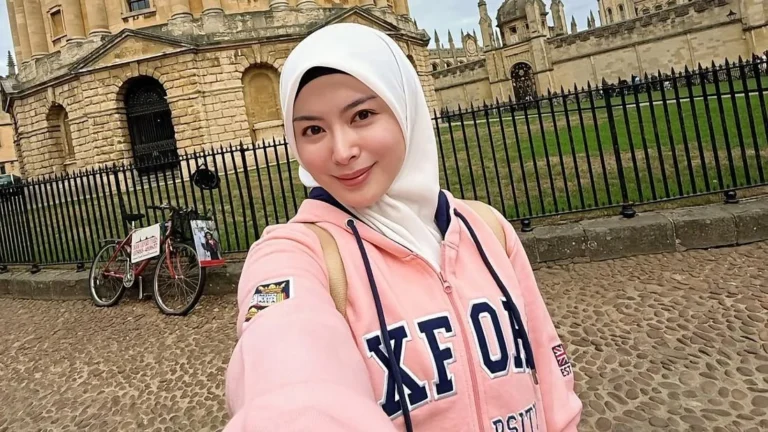
In the evolving landscape of global celebrity culture, the intersection of personal identity and aesthetic enhancement has become a focal point of public discourse. Within the Indonesian entertainment industry, an increasing number of high-profile figures have chosen to undergo surgical procedures to refine their appearances, often sparking broad conversations regarding beauty standards, self-confidence, and the medical advancements in the field of plastic surgery. This report examines the experiences of five prominent Indonesian artists—Denada, Nita Thalia, Anisa Bahar, Shafa Harris, and Tiwi—who have been transparent about their surgical journeys, detailing the procedures undertaken and the motivations behind their decisions.

The Normalization of Aesthetic Procedures in Entertainment
The professional demand for a polished public image has long been a hallmark of the entertainment sector. However, the last decade has seen a significant shift, with surgery becoming more accessible and, consequently, more openly discussed. According to data from the International Society of Aesthetic Plastic Surgery (ISAPS), the global demand for both surgical and non-surgical aesthetic procedures has seen consistent year-on-year growth. This trend is mirrored in Indonesia, where specialized medical tourism—particularly to hubs like South Korea and Thailand—has become a preferred route for celebrities seeking specialized care.
For these individuals, the decision to undergo surgery is rarely one-dimensional. While public scrutiny often centers on vanity, the celebrities themselves frequently cite a combination of restorative needs, long-term confidence, and the desire to maintain a youthful appearance in a high-pressure career environment.

Chronology of Transformations: A Detailed Overview
Denada: A Multi-Stage Aesthetic Evolution
Denada’s journey represents a deliberate and strategic approach to facial and body contouring. Her process began in 2023 with a lower facelift performed in South Korea, aimed at refining the jawline. Her transformation continued in February 2025 with an upper facelift to address skin laxity. By June 2025, she sought further refinement through rhinoplasty in Thailand. Her physical transformation culminated in the same year with breast augmentation and a recent Brazilian Butt Lift (BBL), illustrating a comprehensive commitment to her aesthetic goals.
Nita Thalia: Transparency and Repeated Intervention
The dangdut singer Nita Thalia has been perhaps the most vocal about her procedures, having first opened up about her surgeries in 2015. Her initial operations included rhinoplasty, cheek contouring, blepharoplasty (eyelid surgery), and chin refinement. Demonstrating that aesthetic maintenance is an ongoing process, Thalia returned for further refinement in April 2026, specifically targeting facial skin tightening and the reduction of under-eye bags, showcasing a sustained focus on anti-aging interventions.

Anisa Bahar: Balancing Restoration and Enhancement
Anisa Bahar’s history with surgery is complex, rooted originally in trauma. Her initial rhinoplasty was necessitated by a 1997 accident, which led to subsequent revisions to correct functionality and form. Over the years, she has expanded her repertoire of procedures to include eyelid surgery, neck liposuction, and body contouring to address unwanted fat deposits. Her experience underscores the dual nature of plastic surgery: a combination of medical necessity following trauma and elective cosmetic refinement.
Shafa Harris: Modern Standards and Revisionist Surgery
Shafa Harris represents a younger demographic of celebrities embracing cosmetic technology. Her journey began with a standard rhinoplasty in South Korea. Recognizing that initial surgeries do not always yield the desired long-term results, she underwent an Open Revision Rhinoplasty in Thailand in September 2025, utilizing rib cartilage to ensure structural integrity and aesthetic alignment. She has also been public regarding her breast augmentation, reflecting a generation that views such procedures as standard personal maintenance.

Tiwi (Eks T2): The Comprehensive Makeover
Tiwi’s recent disclosure of a five-procedure operation in November 2026 highlights the trend of "combined surgeries." By undergoing rhinoplasty, chin contouring, a mini-facelift, eye repositioning, and breast surgery in a single clinical engagement, Tiwi reflects a move toward efficiency in medical tourism. Her statement to the press emphasized that these choices were deliberate and aligned with her personal vision of her physical future.
The Medical and Economic Implications
The rise in elective surgeries among public figures has economic implications for the medical aesthetics industry. By choosing to undergo these procedures in specialized international centers, these celebrities are participating in a growing global market that emphasizes specialized expertise.

Medical experts note that the risks associated with multi-stage or combined surgeries are significant. Factors such as anesthesia duration, recovery time, and the potential for secondary complications—such as tissue rejection or the need for revision surgery—are critical components that these individuals must navigate. The trend of "revision rhinoplasty," as seen in the cases of Shafa Harris and Anisa Bahar, highlights the reality that aesthetic surgery is rarely a "one-and-done" affair; it often requires ongoing care and maintenance.
Societal Impact and Public Perception
The openness with which these five celebrities discuss their surgical histories has contributed to a paradigm shift in how the Indonesian public views plastic surgery. Historically, there was a strong cultural stigma associated with such procedures, often linked to the idea of "artificiality." However, as celebrities normalize the discussion—framing it as an investment in self-esteem rather than a surrender to vanity—the public conversation has moved toward a more nuanced understanding of personal autonomy.

Nevertheless, the "celebrity effect" carries inherent risks. When influencers and entertainers normalize high-cost, high-risk surgical procedures, there is a potential for setting unrealistic beauty standards for the general public. Critics often point out that the accessibility of these procedures for the wealthy can create a psychological gap for those who cannot afford them, potentially exacerbating body dysmorphia and social inequality.
Analytical Perspective: The Future of Aesthetic Enhancement
Looking forward, the trend suggests that as surgical techniques become safer and less invasive, the barrier to entry will continue to lower. The reliance on South Korean and Thai surgical standards suggests that local practitioners in Indonesia are now competing in a globalized market, forcing a rise in the standard of care within the country as well.

The consistency with which these celebrities return for "revisions" and "maintenance" suggests that the industry is shifting from a focus on radical transformation to a focus on longitudinal aesthetic management. This involves minor, repetitive interventions—such as facelifts, fat transfers, and skin tightening—rather than the drastic surgical reconstructions that characterized the early 2000s.
Conclusion
The stories of Denada, Nita Thalia, Anisa Bahar, Shafa Harris, and Tiwi serve as a window into the current state of cosmetic surgery within the Indonesian entertainment industry. Their willingness to share the details of their procedures—from the specific medical goals to the geographic locations of their surgeries—provides a factual basis for understanding why these individuals seek such transformations. While these procedures remain a matter of personal choice, their high-profile nature ensures that they will remain a subject of intense public interest, reflecting broader societal debates about the nature of beauty, the definition of wellness, and the evolving relationship between technology and the human form. As the landscape continues to evolve, the discourse will likely move beyond the "if" of plastic surgery toward a more sophisticated analysis of the "how" and "why," focusing on safety, informed consent, and the long-term psychological impacts of aesthetic modification.