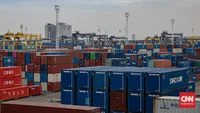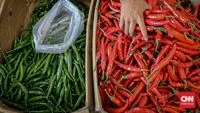
The Indonesian Ministry of Trade has launched a critical market intervention to address the surging prices of chili peppers across the archipelago by mobilizing 7 tons of supply from the surplus regions of East Java to Halmahera in North Maluku. This logistics operation, coordinated alongside the National Food Agency (Bapanas), Bank Indonesia (BI), and local government authorities, serves as a tactical response to the severe price volatility that has plagued local markets in eastern Indonesia. The initiative underscores a shift toward more proactive supply chain management, aiming to mitigate the impacts of regional scarcity and protect consumer purchasing power.
Minister of Trade Budi Santoso confirmed that the distribution effort is part of a broader government strategy to balance food availability. By bridging the gap between regions experiencing significant harvest surpluses and those facing acute shortages, the government seeks to normalize prices that have recently climbed well beyond official reference levels.
The Anatomy of a Price Surge: Weather and Distribution
The recent instability in the prices of both bird’s eye chili (cabai rawit) and curly red chili is primarily attributed to a convergence of unfavorable environmental conditions and structural logistical hurdles. According to meteorological data, extreme weather patterns—characterized by erratic rainfall and prolonged heat—have significantly hampered agricultural productivity in several primary farming hubs. When crop yields drop, the immediate consequence is a tightening of supply, which inevitably pushes market prices upward.
However, the Ministry of Trade emphasizes that the problem is not a lack of national supply, but rather a failure of efficient distribution. While regions like East Java maintain a consistent surplus, the archipelago’s geographical complexity often creates bottlenecks that prevent this excess supply from reaching high-demand areas. In Halmahera, the logistical challenges of transport and maritime connectivity have exacerbated the shortage, leading to price spikes that far exceed the national average.
Data-Driven Market Overview
The necessity for this intervention is clearly reflected in the data provided by the Ministry of Trade’s Basic Necessity Market Monitoring System (SP2KP). As of early November, the national average price for red bird’s eye chili stood at approximately Rp71,662 per kilogram, a significant premium over the government’s reference price (HA) of Rp57,000 per kilogram. Similarly, curly red chili is trading at an average of Rp67,480 per kilogram, well above the established reference price of Rp55,000 per kilogram.
These figures illustrate a market operating under pressure. When prices exceed the reference ceiling by such wide margins, it creates a ripple effect throughout the economy, contributing to food inflation and reducing the disposable income of households. The government’s decision to move 7 tons of supply is a calculated effort to force a correction by increasing the volume of goods available in the affected local markets, thereby cooling price enthusiasm and discouraging speculative hoarding by middlemen.
Synergy Among State Stakeholders
The logistics operation is not a unilateral effort by the Ministry of Trade but represents a multi-agency collaboration. The involvement of the National Food Agency (Bapanas) is pivotal, as they oversee the strategic management of food reserves and monitor consumption patterns. Simultaneously, Bank Indonesia’s participation highlights the central bank’s concern regarding the inflationary impact of volatile food prices, or "volatile food inflation," which is a core component of their monetary policy focus.
Local governments play the final, crucial role in this chain. By facilitating the intake and distribution of the 7 tons of chili within their respective jurisdictions, they ensure that the commodities reach the intended market stalls and, by extension, the final consumers. This cooperative framework is being touted by Minister Budi Santoso as the new blueprint for managing national food security.
Beyond Chili: Expanding the Logistics Strategy
The success of the chili distribution pilot program has prompted the Ministry of Trade to broaden its scope to include other essential commodities. Minister Budi Santoso revealed that the government is currently preparing similar logistics interventions for poultry eggs. Despite the national average price of eggs hovering around Rp26,400 per kilogram—which is below the national reference price of Rp30,000 per kilogram—there are localized pockets of scarcity where prices have spiked due to distribution failures.
The Ministry aims to replicate the "surplus-to-deficit" transfer model for eggs, ensuring that regions where supply is currently constrained receive an infusion of stock from surplus-producing areas. This strategy serves a dual purpose: it stabilizes consumer prices in high-cost areas while simultaneously supporting producers in surplus areas by ensuring that their goods find a market, thereby preventing a collapse in farm-gate prices that would otherwise discourage future production.
Implications for National Food Security
The current reliance on "spot interventions"—manually moving goods to stabilize prices—reveals the underlying fragility of Indonesia’s food supply chain. While these actions are effective in the short term, they highlight the need for more robust, permanent infrastructure. The implications of these interventions are far-reaching:
- Inflation Control: By keeping the prices of volatile food items within the government’s reference range, the Ministry is actively preventing food inflation from bleeding into the broader Consumer Price Index (CPI), which is critical for maintaining macroeconomic stability.
- Producer Protection: Strategic distribution protects farmers. When a region has a massive surplus, prices often drop so low that farmers operate at a loss. By shipping that surplus to a region where prices are high, the government helps balance the market, keeping prices at a level that is fair to both the producer and the consumer.
- Incentivizing Future Production: Predictable pricing is essential for farmers to plan their planting cycles. If prices are constantly subjected to extreme swings, farmers may shift to alternative crops, creating long-term supply deficits. Government intervention provides the stability necessary for consistent agricultural output.
Future Challenges and Policy Directions
Moving forward, the Ministry of Trade faces the challenge of scaling these operations. Moving 7 tons of chili is a manageable task, but managing the logistics for hundreds of thousands of tons of various food staples across thousands of islands is a daunting logistical endeavor. The Ministry must leverage digital technology and real-time data monitoring to anticipate price spikes before they occur, rather than reacting once the prices have already reached critical levels.
Furthermore, the government must address the underlying infrastructure gaps that necessitated this intervention in the first place. High logistics costs in Indonesia remain a structural drag on the economy. Investments in cold-chain infrastructure, better road networks, and efficient maritime logistics will be required to eventually render these emergency interventions obsolete.
For the immediate future, the Ministry of Trade remains committed to the current strategy. As Minister Budi Santoso noted, the focus remains on ensuring that if a surplus exists, it must be accessible to those who need it most. By maintaining this balance, the government hopes to foster a resilient food system that can withstand the pressures of climate change and geographic fragmentation, ultimately ensuring that staple foods remain affordable and accessible for every Indonesian citizen, regardless of their location.
As the program progresses, the Ministry of Trade is expected to provide ongoing updates on the efficacy of these transfers. Observers in the food and agriculture sectors will be closely watching whether this logistics-heavy approach can indeed be a sustainable solution to the country’s periodic food price volatility, or if it will require significant private sector integration to be fully realized on a national scale. For now, the 7 tons of chili moving toward Halmahera serves as a tangible demonstration of a government attempting to exert control over a complex and often unpredictable market.