
The global smartphone market is bracing for a sustained period of volatility as the industry grapples with a persistent supply chain bottleneck surrounding memory components. Industry experts and analysts have confirmed that the critical shortage of Random Access Memory (RAM), often dubbed "Ramageddon" by technology observers, is unlikely to resolve before 2028. This prolonged scarcity, driven primarily by the insatiable appetite for high-bandwidth memory in Artificial Intelligence (AI) data centers, is exerting significant upward pressure on the retail prices of consumer mobile devices, threatening to make entry-level and mid-range smartphones increasingly unaffordable for the average consumer.
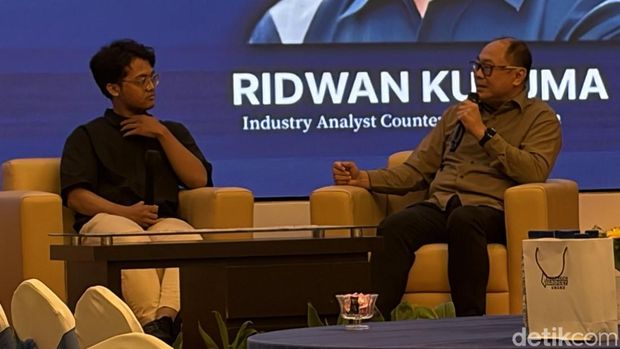
The gravity of this situation was a central theme during the Gizmo Talk session at the Indonesia Gadget Awards 2026, held on November 12, 2026. Industry leaders, including technology expert Dominikus Susanto and analysts from Counterpoint Research, converged to discuss the structural shifts in the semiconductor market that have left consumer electronics manufacturers in a precarious position.
The Anatomy of the "Ramageddon" Crisis
The term "Ramageddon" encapsulates the existential threat currently facing the hardware industry. Unlike previous supply chain disruptions that were largely tied to logistics or short-term manufacturing halts, the current crisis is rooted in a fundamental shift in demand. The rapid deployment of Large Language Models (LLMs) and other generative AI platforms has necessitated massive investments in data centers. These facilities consume the vast majority of high-performance memory output, leaving smartphone manufacturers to compete for the remaining supply at premium prices.
Dominikus Susanto emphasized during the panel that the disparity between supply and demand is exacerbated by the physical realities of semiconductor manufacturing. "Building a new fabrication plant for memory modules is not a task that can be accomplished in a matter of months," Susanto noted. "It requires astronomical capital expenditure and a timeline of 18 to 24 months to reach full operational capacity. The industry is currently locked in a cycle where the demand for AI-ready infrastructure is outpacing the expansion of memory production facilities."
Chronology of the Supply Chain Squeeze
To understand the current crisis, one must look at the preceding two years of market behavior. The year 2025 was marked by a phenomenon known as "frontloading," where major smartphone vendors, anticipating future cost increases and supply instability, aggressively stockpiled memory components. This caused a temporary artificial spike in shipping and inventory numbers during the third and fourth quarters of 2025.

When the market reached 2026, the contrast became stark. The depletion of those stockpiles, coupled with the continued diversion of memory supply to the AI sector, led to a sharp contraction in the availability of affordable memory modules. As of late 2026, vendors are no longer able to sustain the aggressive pricing strategies of the past. The industry is now entering a phase where hardware specifications are being actively downgraded to maintain profit margins. Devices that were once marketed with 12GB of RAM as a standard feature are being re-engineered to function on 8GB, a trend that underscores the severity of the component cost inflation.
Economic Implications for the Smartphone Market
The economic ripple effect of this crisis is felt most acutely in the entry-level and mid-range smartphone segments. These devices, which rely on thin profit margins, are the most susceptible to fluctuating component costs. Manufacturers are left with a difficult choice: either pass the cost of expensive RAM onto the consumer, leading to higher retail prices, or reduce the quality of other internal components to keep the final price stable.
According to data provided by Counterpoint Research, the trend toward higher pricing is not a temporary anomaly but a structural shift that will likely persist throughout 2027. Ridwan Kusuma, an analyst at the firm, highlighted that while the rate of price increases might stabilize compared to the rapid spikes seen in 2026, the cost of entry for consumers will remain elevated. "The market is recalibrating," Kusuma stated. "We are seeing a strategic pivot among major vendors to prioritize the premium and mid-premium segments, where consumers are more resilient to price fluctuations. Unfortunately, this means the ‘budget-friendly’ smartphone is becoming a harder category to fill."
Technological Adaptations and Future Projections
In the face of these headwinds, the industry is looking toward software optimization as a primary survival strategy. Since physical memory is scarce and expensive, developers and OS manufacturers are focusing on enhancing memory management efficiency. The goal is to ensure that mobile operating systems, such as Android, can provide a seamless user experience even on devices with reduced RAM capacities.
This transition involves a move toward more aggressive background process management, enhanced file-swapping technologies, and lighter application architecture. However, experts warn that there is a limit to how much optimization can compensate for hardware constraints. As applications become more data-intensive—partly due to the integration of on-device AI features—the minimum RAM requirement for a functional smartphone will inevitably creep upward, creating a "spec-flation" cycle.
The Long-term Outlook: A Light at the End of the Tunnel?
Despite the somber outlook for 2027, there is a cautious sense of optimism for 2028. Analysts suggest that the massive investments currently being poured into semiconductor fabrication plants will begin to bear fruit by the first quarter of 2028. By that time, the supply of memory modules is expected to catch up with the sustained demand from both the AI data center sector and the mobile device industry.
Furthermore, the industry is expected to undergo a period of rationalization. The "frontloading" strategies that distorted market data in 2025 and 2026 are being replaced by more disciplined, data-driven inventory management. Vendors are shifting their focus to channel-specific strategies, strengthening their presence in offline markets and diversifying their product portfolios to include a wider range of mid-tier devices that prioritize long-term value over short-term spec-wars.
Analysis of the Consumer Impact
For the average consumer, the implications of this extended crisis are significant. Firstly, the "value for money" proposition that defined the smartphone market over the last decade is undergoing a transformation. Consumers will likely see longer product lifecycles, as manufacturers aim to provide more software support to justify higher device costs. Secondly, the secondary market for refurbished or pre-owned devices is expected to grow, as the price gap between new and used technology widens.
As the industry navigates the remainder of the decade, the collaboration between memory manufacturers, smartphone OEMs, and software developers will be critical. The "Ramageddon" crisis serves as a reminder of the fragility of global supply chains in an era defined by high-performance computing. While the cost of technology is poised to remain high in the near term, the resulting focus on efficiency and sustainable manufacturing could lead to a more resilient and sophisticated mobile ecosystem in the long run.
In summary, the next 18 months will be a period of adjustment. While the market is not heading toward a total collapse, it is certainly entering a more expensive, more conservative phase. Stakeholders in the technology sector are encouraged to prepare for persistent volatility, while consumers should adjust their expectations regarding device pricing and hardware specifications in the lead-up to 2028. The era of "cheap and plentiful" memory has paused, and in its place, a new era of resource optimization and strategic hardware allocation has begun.