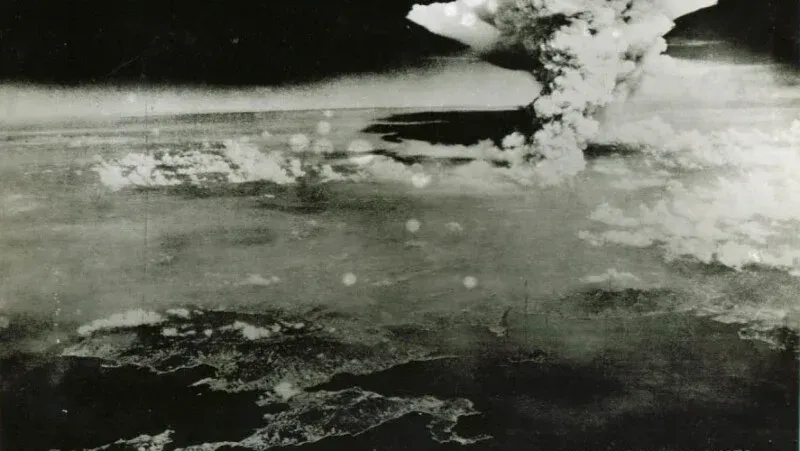
On August 6, 1945, the course of human history was irrevocably altered when the United States military deployed the first atomic weapon used in warfare over the Japanese city of Hiroshima. Decades later, a contemporary scientific analysis of the flight logs from the Enola Gay—the B-29 Superfortress that carried the "Little Boy" bomb—has unearthed a cryptic two-word observation: "cloud gone." This chilling notation, recorded by the crew, has provided researchers with new insights into the sheer magnitude of the atmospheric disturbance caused by the blast and, by extension, the terrifying potential for global climate catastrophe.
The discovery, published in the journal Geophysical Research Letters, marks a significant intersection between historical documentation and modern climate modeling. By scrutinizing the atmospheric behavior recorded by those who witnessed the dawn of the nuclear age, scientists are refining their understanding of "nuclear winter" and the long-term environmental consequences of atomic warfare.
The Shadow of the Manhattan Project
The development of the atomic bomb under the Manhattan Project was not solely a race against Axis powers; it was a venture into the unknown. Among the primary anxieties held by lead physicist J. Robert Oppenheimer and his colleagues was the theoretical possibility that a nuclear detonation might trigger a self-sustaining chain reaction within the Earth’s atmosphere.
The concern centered on the potential for the intense heat of an atomic blast to act as a catalyst for a fusion reaction between atmospheric nitrogen or hydrogen atoms. Arthur Compton, a Nobel laureate and key figure in the project, famously recounted these fears in later years. The hypothesis suggested that the extreme temperatures generated by the fission bomb could ignite the hydrogen in seawater or the nitrogen in the air, creating a reaction similar to the processes occurring in the core of the sun. Had this nightmare scenario manifested, it would have resulted in the total incineration of the planet’s atmosphere, effectively ending all biological life on Earth.
While these fears were eventually deemed statistically improbable by the team, the gravity of the gamble underscores the lack of precedent at the time. The crew of the Enola Gay was, in effect, entering an environment where the laws of physics were being tested on a planetary scale.
The Chronology of Destruction
The mission began in the early hours of August 6, 1945. At 8:15 a.m. local time, the "Little Boy" bomb was released over Hiroshima. The detonation occurred at an altitude of approximately 600 meters, instantly vaporizing much of the city’s center and generating a thermal pulse that ignited a massive firestorm.
George Caron, the tail gunner of the Enola Gay, provided a harrowing account of the aftermath. He described the city as being swallowed by a turbulent, boiling mass, likening the visual to "molasses" spreading toward the foothills. As the firestorm intensified, tongues of flame pierced through the thick, obscuring layers of smoke and debris.
The specific observation of "cloud gone" was logged at 10:52 a.m., nearly three hours after the detonation. At this point, the aircraft was roughly 760 kilometers away from the city at an altitude of approximately 7.6 kilometers. The phrase signifies a moment where the visual contact with the rising plume of the mushroom cloud was lost, not necessarily because the cloud had vanished, but because it had ascended or dispersed in a manner that defied the crew’s visual expectations.
Decoding the Atmospheric Data
The recent study sought to interpret the "cloud gone" observation by utilizing historical weather data and advanced computational modeling. Researchers performed over 100,000 simulations to account for light refraction and atmospheric conditions on that specific day in 1945. The goal was to establish a minimum height for the column of smoke and debris created by the explosion.
The simulation results were statistically significant. Researchers concluded with 95% confidence that the plume reached a height of at least 11.3 kilometers. Furthermore, the median estimate suggests the column likely surged to 12.1 kilometers or higher, placing it firmly within the upper troposphere.
The fact that the cloud became obscured from the crew’s perspective at that distance, while the plume remained at such extreme altitudes, serves as a grim indicator of the vertical force of the explosion. This height is consistent with modern models of nuclear winter, which posit that if a sufficient quantity of soot and ash is injected into the upper atmosphere, it can block solar radiation, leading to global temperature drops and widespread agricultural failure.
The Nuclear Winter Hypothesis
The concept of nuclear winter gained prominence in the 1980s, but the Hiroshima data provides a unique, empirical anchor for these theories. While the Nagasaki bombing is often discussed alongside Hiroshima, the latter is the only instance of a nuclear detonation in a dense urban environment that triggered a full-scale firestorm.
The firestorm in Hiroshima acted as a massive chimney, pulling oxygen from the surroundings and lofting smoke, dust, and charred debris high into the sky. Modern climatologists emphasize that the height of this injection is the most critical variable in determining climate impact. Material that reaches the stratosphere remains for years, whereas material in the lower atmosphere is washed out by rain within weeks. By confirming that the Hiroshima plume penetrated deep into the upper troposphere, the study validates the mechanisms that could lead to planetary cooling if a larger-scale nuclear exchange were to occur today.
Implications for Modern Security
The findings serve as a stark reminder of the environmental stakes of modern nuclear proliferation. With global tensions fluctuating, the study warns that the "nuclear winter" scenario is not merely a theoretical construct of the Cold War but a scientifically backed potential reality.
The researchers note that while their models rely on certain assumptions, the historical accuracy of the Enola Gay logs provides a rare, tangible link to the actual physical output of a nuclear weapon. The "cloud gone" notation is no longer just a cryptic line in a flight log; it is a data point in the history of human impact on the Earth’s climate.
The study highlights that even a "small" nuclear event, by modern standards, has the capacity to alter atmospheric conditions on a regional, and potentially global, scale. As the world continues to navigate the geopolitical landscape of the 21st century, the ghost of Hiroshima remains a cautionary tale. The scientific community continues to emphasize that the destruction wrought on that August day in 1945 was not just a tragedy of immediate human loss, but an demonstration of how the power of the atom can disrupt the delicate balance of the planet’s environment.
A Legacy of Scientific Vigilance
The process of revisiting these records demonstrates the importance of interdisciplinary research. By combining eyewitness testimonies from the 1940s with 21st-century computational power, scientists are closing gaps in the historical record. This allows for a better understanding of the plume dynamics that characterize nuclear blasts.
The study in Geophysical Research Letters does not merely look back; it informs future preparedness. By understanding the height and dispersal patterns of nuclear fallout and smoke columns, civil defense planners and climate scientists can better model the long-term effects of potential conflicts.
Ultimately, the phrase "cloud gone" acts as a metaphor for the profound, often invisible, changes that nuclear technology imposes upon the world. The atomic age began with the fear of destroying the atmosphere, and as the research indicates, the reality of that destruction remains a potent, latent threat. The data provided by the Enola Gay logs serves as a sobering reminder that the environmental impact of nuclear weapons extends far beyond the blast radius, reaching into the very skies that sustain life on Earth. The pursuit of historical truth in these records is not just an academic exercise—it is a necessary endeavor to ensure that the catastrophic events of 1945 remain a singular chapter in human history, rather than a precursor to a global ecological collapse.