Bangkok Metropolitan Administration and central government authorities in Thailand are actively evaluating a comprehensive overhaul of nightlife regulations that could see entertainment venues along the world-famous Khao San Road and the adjacent Rambuttri Alley permitted to operate well past midnight. The prospective policy shift is designed not only to bolster the nation’s vital tourism economy and protect service sector employment, but also to structurally address deep-seated regulatory loopholes and alleged corruption within local law enforcement and administrative agencies.
The initiative is being spearheaded by senior government officials, marking a concerted effort by the administration to drag historical nightlife zones into a modern, transparent, and legally sound framework. By transitioning Khao San Road from an ambiguous administrative classification into an officially recognized entertainment zone, Bangkok hopes to eliminate the systemic friction that has historically plagued business owners, local residents, and international tourists alike.
Chronology and Recent Developments
The momentum toward reforming Khao San Road’s operational framework accelerated rapidly following a series of high-level government interventions and compliance inspections.
On Friday, October 30, Paradorn Prissananantakul, a minister attached to the Prime Minister’s Office, convened a pivotal inter-agency meeting in Bangkok. The gathering brought together key stakeholders, including senior officials from the Bangkok Metropolitan Administration (BMA), the Royal Thai Police, and various regulatory bodies. The agenda centered on examining structural updates to licensing requirements, operational curfews, and monitoring protocols for nightlife establishments in the capital’s historic district.
This high-level coordination was galvanized by recent surprise inspections conducted by the Ministry of Interior. During audits of several businesses along Khao San Road, inspectors uncovered compelling evidence of systemic legal violations operating in tandem with bribery schemes. Investigations indicated that venue operators had allegedly been paying regular protection money to rogue officials across multiple state agencies to bypass strict operational limitations and safety infractions without facing judicial consequences.
Recognizing that rigid, outdated laws create fertile ground for corruption, Minister Paradorn announced that Khao San Road would serve as the primary testing ground for a comprehensive pilot project. This initiative aims to pilot flexible zoning rules, clear out illicit administrative practices, and establish a standardized regulatory template that can potentially be rolled out to other nightlife districts across Thailand.
Historical Context and Regulatory Discrepancies
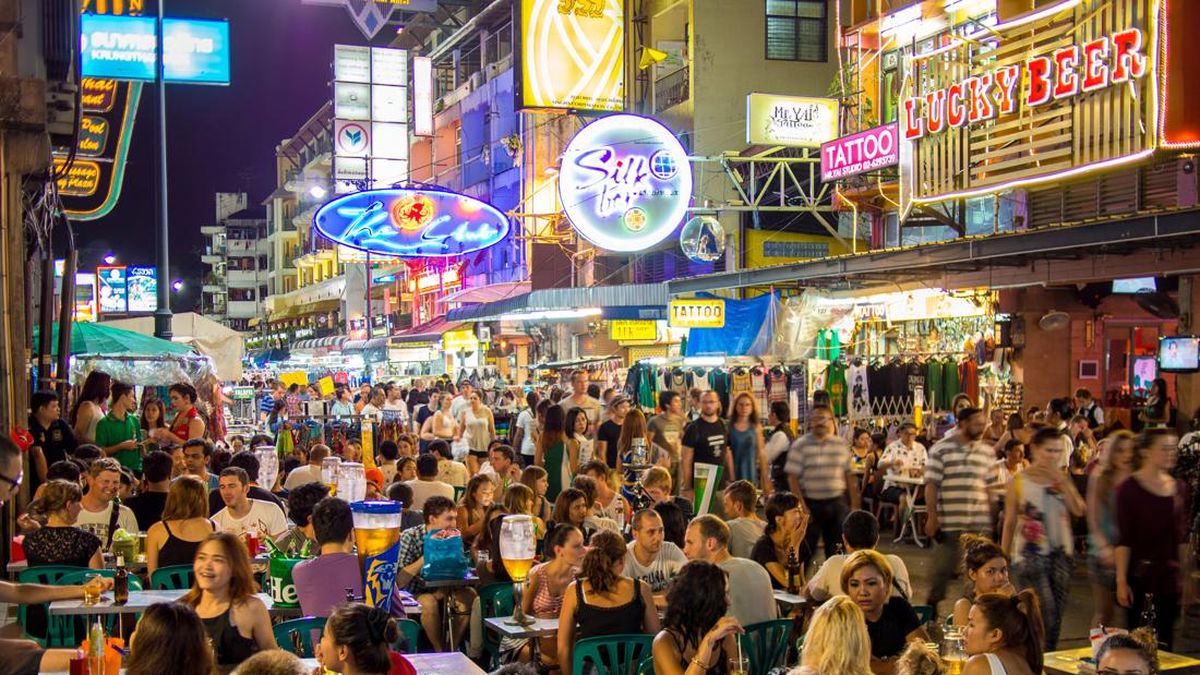
To fully understand the gravity of the proposed reforms, one must examine the unique legal limbo that has defined Khao San Road for decades. Despite functioning globally as one of Bangkok’s most magnetic tourist hubs—drawing millions of backpackers, cultural explorers, and culinary tourists annually—Khao San Road has never been officially designated as a legal entertainment zone by the Bangkok municipal government.
Because the area lacks official nightlife zoning status, business owners have long been forced to register and operate under standard restaurant licenses. These restaurant permits carry rigid statutory restrictions, including early closing times and bans on specific entertainment activities, which fundamentally clash with the reality of a vibrant nightlife strip. Consequently, venues operating in the area have had to navigate a grey zone of compliance, leaving them vulnerable to regulatory harassment, arbitrary enforcement, and opportunistic rent-seeking by corrupt officials.
This regulatory mismatch has long suppressed the economic potential of the district. Workers, including restaurant staff, independent musicians, bartenders, and security personnel, have frequently absorbed the financial shocks of early closures and legal uncertainty. Industry advocates have repeatedly argued that aligning the legal framework with actual commercial practices is essential for sustaining the livelihoods of thousands of workers who depend on the nocturnal economy.
Comprehensive Policy Framework and Proposed Reforms
The pilot project introduced by the government is not merely a blanket extension of operating hours; it represents a multi-tiered regulatory overhaul aimed at transforming how nightlife businesses are governed in Thailand.
1. Revision of the Entertainment Places Act
At the legislative level, the government is considering sweeping amendments to the foundational Entertainment Places Act. These updates are intended to modernize the legal definitions of entertainment venues, adjust operational parameters to reflect contemporary urban lifestyles, and introduce stricter royal decrees identifying protected areas where entertainment venues are strictly prohibited.
2. Standardized Data Collection and Cross-Agency Integration
A major vulnerability in current oversight is the fragmentation of data across different municipal and national departments. As part of the new initiative, the government is executing a comprehensive census of all entertainment venues, restaurants, and hybrid commercial establishments in the Khao San and Rambuttri areas. This data will be unified into a single digital database, ensuring that police, municipal inspectors, and tax authorities operate from an identical set of operational records.
3. Risk-Based Classification System
Under the proposed pilot scheme, businesses will be subjected to a transparent, color-coded risk-classification system. Venues that consistently demonstrate adherence to structural safety standards, sound mitigation protocols, and legal capacity limits will be rewarded with extended operating hours beyond midnight. Conversely, establishments flagged for persistent infractions will face immediate downgrades and stringent penalties.
4. Enhanced Noise and Public Nuisance Reporting
Addressing the delicate balance between commercial vitality and residential peace is a central pillar of the reform package. The government is refining public grievance channels, particularly concerning noise pollution. A streamlined reporting mechanism will allow local residents to lodge complaints that are automatically routed to the relevant municipal enforcement teams for rapid verification and action.
Economic Implications and Stakeholder Engagement
The potential extension of operating hours carries significant economic implications for Thailand’s post-pandemic tourism recovery. Bangkok, like the rest of the country, relies heavily on the visitor economy to drive GDP growth, employment, and small-business revenue. By allowing venues in Khao San Road to operate legally past midnight, the government anticipates a measurable increase in tourism spending, longer average visitor stays, and enhanced job security for the informal and formal service sector workforce.
However, authorities have emphasized that deregulation will not equate to a free-for-all. Prior to the formal implementation of the extended hours, government agencies will conduct rigorous audits of every establishment to verify fire safety protocols, structural integrity, emergency exit accessibility, and compliance with zoning safety codes.
Furthermore, the administration has committed to an inclusive consultative process. Before the pilot project transitions into permanent policy, dialogue sessions will be held involving business operators, local community leaders, and residents. This participatory approach is designed to ensure that the economic benefits of a thriving nightlife district do not come at the expense of community well-being or public safety.
Broader Socio-Political Impact
The initiative on Khao San Road reflects a broader, highly pragmatic shift in Thailand’s governance strategy regarding the informal economy. For decades, the coexistence of vibrant nightlife and rigid statutory laws created an environment where discretionary enforcement was inevitable, breeding administrative corruption and undermining the rule of law.
By confronting these structural challenges head-on through digitization, transparent licensing, and risk-based oversight, the Thai government is attempting to modernize its regulatory machinery. If successful, the Khao San Road pilot project could serve as a national benchmark, demonstrating that urban entertainment districts can be both economically dynamic and strictly accountable to the rule of law, thereby safeguarding the interests of tourists, workers, and local residents alike.