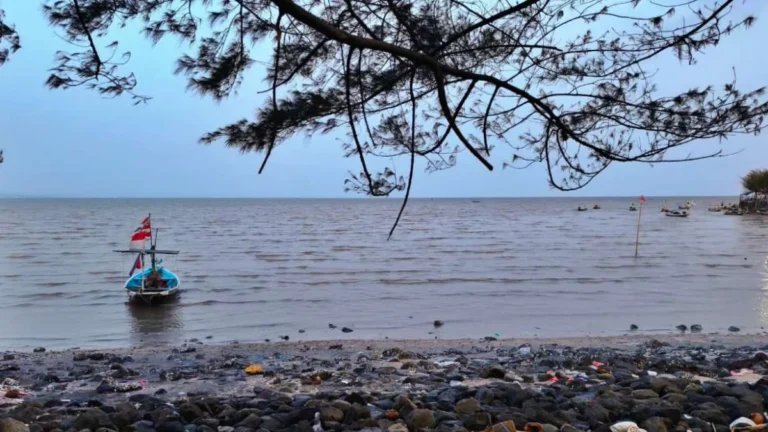
Monday morning, September 28, 2026, marked precisely eight years since a catastrophic 7.4 magnitude earthquake struck the Pasigala region—encompassing Palu, Sigi, and Donggala. As the TelusuRI team touched down at Mutiara SIS Al-Jufri Airport in Central Sulawesi, the collective memory of the 2018 disaster immediately resurfaced. Triggered by the relentless movement of the Palu-Koro fault—one of Indonesia’s most active tectonic fissures—the disaster unleashed devastating 5-to-7-meter tsunamis and massive soil liquefaction, most notably in the Kelurahan Petobo and Perumnas Balaroa neighborhoods of Palu. Entire residential zones and community lands sank several meters, swallowed by churning black mud.
Now, eight years on, despite lingering psychological trauma, life in Central Sulawesi presses forward. A profound shift has taken place, steering public consciousness toward disaster adaptation, mitigation, and long-term resilience. Crucially, this recovery is deeply intertwined with indigenous knowledge systems and traditional community practices that have historically guided human adaptation to the surrounding environment.
This deep-seated lesson in disaster recovery and ecological adaptation served as the foundational backdrop for the "BICARA Sulawesi Tengah" (Talking Central Sulawesi) program held from September 29 to 30, 2026. Represented by Rifqy Faiza Rahman and Deta Widyananda, videographer and expeditioner for Arah Singgah, TelusuRI participated in field visits and led expert panel sessions. Organized through a strategic collaboration between the Lingkar Temu Kabupaten Lestari (LTKL) and Comms Lab, the event carried the theme "Reading Sigi: Resource Management, Knowledge, Economy, and Resilience."
Although the regional focus nominally centered on Sigi, the dialogue encompassed broader geographical realities across Central Sulawesi’s network of active fault lines, including the Sausu and Palolo faults. BICARA Sulawesi Tengah was designed not only as a localized learning space but also as a catalyst to empower academics, journalists, content creators, community groups, and civil society actors. The goal is to forge robust public narratives regarding restorative economic practices, explicitly linking climate change, water security, energy, and food sovereignty. These narratives are subsequently translated into accessible media formats designed to foster disaster adaptation and community resilience.
Unpacking Restorative Economic Development
On Tuesday, September 29, 2026, two primary public seminar sessions convened at the Faculty of Forestry auditorium at Tadulako University in Palu. Against a backdrop of urgent developmental challenges, speakers and attendees engaged in rigorous dialectics, synthesizing field research, policy frameworks, and climate realities to shape a sustainable economic model for Sigi Regency and the wider province.
The opening session featured a diverse panel of researchers and advocates: Fiorentina Refani, Director of Socio-Bioeconomy at the Center of Economic and Law Studies (CELIOS); Yusuf Priambodo, author of Reset Indonesia and expeditioner for Indonesia Baru; and Neni Muhidin, writer, researcher, and founder of the Nemu Buku literacy collective. Each presenter brought critical, research-backed insights concerning Sulawesi’s socio-economic landscape.
Yusuf Priambodo opened the presentations by exhibiting visual documentation from the Indonesia Baru Expedition, which investigated the socio-environmental toll of extractive industries—particularly palm oil plantations and nickel mining. Highlighting vulnerable regions such as Raja Ampat, Halmahera, and Morowali in Central Sulawesi, Yusuf underscored how industrial extractivism has marginalized indigenous populations, depleted freshwater resources, caused arsenic contamination, and alienated communities from ancestral lands. In response, he advocated for a restorative economic paradigm anchored in biodiversity, biotechnology, local food systems, and indigenous wisdom.
Following this, Fiorentina Refani presented CELIOS’s latest findings on the macroeconomic trajectory of Sulawesi, with a specific focus on Central Sulawesi. Paradoxically, while the province recorded the nation’s third-highest economic growth rate at 8.32% in the first quarter of 2026, its structural foundation exhibits severe contradictions. Traditional agricultural sectors are increasingly marginalized by capital-intensive extractive industries, primarily nickel mining and processing. CELIOS quantified the resulting environmental degradation with a high severity index score of 4.5 out of 5, signaling widespread ecological disruption.
Closing the first panel, Neni Muhidin detailed the preliminary outcomes of a toponymic study titled "Reading Landscapes through Names, Memory, and Community Knowledge," conducted across the Pasigala region. The research analyzed local nomenclature shaped by historical events, geographical features, human habits, and historical disasters. Crucially, Neni emphasized that indigenous knowledge regarding disaster mitigation is frequently embedded within local place names. A prime example is Toro Village, situated in Kulawi District, Sigi Regency, bordering the Lore Lindu National Park. Here, communities continue to preserve ancestral ecological knowledge through traditional rituals and communal food storage systems known as gampiri.

Despite utilizing differing methodological approaches, the panelists converged on a singular conclusion: viable socio-economic alternatives exist that can systematically reduce reliance on destructive extractivism without mortgaging the ecological future of coming generations.
Multi-Stakeholder Collaboration: The Sigi Hijau Framework
CELIOS has outlined a nine-sector model for restorative economies, spanning regenerative agriculture, sustainable forestry, fisheries, domestic manufacturing, and eco-tourism. Yusuf Priambodo emphasized that eco-tourism holds immense potential to safeguard forest cover, preserve biodiversity, and protect indigenous cultural identities. Concurrently, Neni Muhidin reiterated that safeguarding local knowledge is an indispensable prerequisite for structural disaster resilience.
During the second seminar session, government officials and civil society leaders demonstrated how these theoretical models are being operationalized. Afit Lamakarate, Head of the Food Crops, Horticulture, and Plantations Office of Sigi Regency, joined Nedya Sinintha Maulaning, Chair of Gampiri Interaksi Lestari, to share empirical accounts of collaborative governance.
The devastation wrought by the 2018 earthquake and tsunami catalyzed a regional consensus that recovery cannot occur in isolation. This realization led to the establishment of the Sigi Green Multi-Stakeholder Collaboration (Kolaborasi Multi Pihak / KMP Sigi Hijau). Backed by landmark local regulations codifying the "Sigi Hijau" (Green Sigi) vision, the regency government, alongside youth-led incubators like Gampiri Interaksi Lestari, has successfully aligned local agricultural policies with traditional ecological management principles.
Digital Storytelling and the Translation of Field Data
Translating complex empirical research into compelling public narratives formed the core of the subsequent session, titled "Data-Driven Storytelling Through Short-Form Video." TelusuRI shared the floor with Nur Amri Firmansyah, a local filmmaker and anthropology student at Tadulako University.

Drawing from its editorial workflows, TelusuRI outlined strategies for packaging empirical research into accessible, high-impact video formats tailored for audiences aged 18 to 35. Showcasing visual outputs from their Arah Singgah expedition—which documented grassroots restorative economy initiatives from Sumatra to Papua—TelusuRI emphasized four core production principles:
- Identifying unique, human-centric angles within complex data sets.
- Demystifying scientific and technical jargon for general audiences.
- Constructing robust narrative arcs that evoke measurable social impact.
- Optimizing video pacing and duration to align with social media algorithms and user engagement metrics.
Complementing this, Nur Amri highlighted the necessity of ethnographic fieldwork in establishing authentic narratives. Utilizing anthropological methodologies, Nur Amri demonstrated how immersive community engagement serves as the bedrock for translating ground-level realities into compelling visual media.
Field Realities: Coffee Farmers and the Gampiri Communal Space
The second day of the program, September 30, 2026, transitioned from academic discourse to empirical observation. Delegations from LTKL, Comms Lab, media outlets, and research institutions embarked on field visits to Dombu Village and the Gampiri Communal Space.
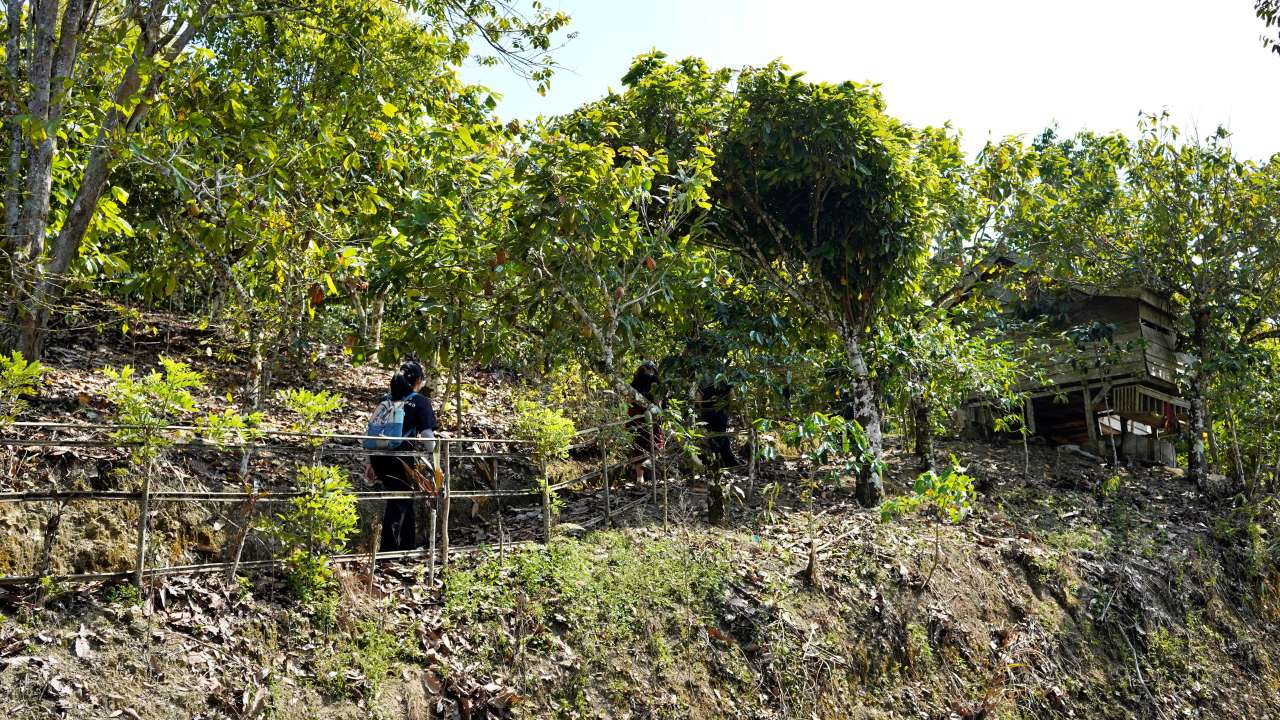
In Dombu Village, located in West Marawola District, Sigi Regency—roughly a one-hour drive across winding, steep mountain roads from Palu—the delegation met with Welim Pela and his wife, Jelvin Likunono. As local agroforestry farmers, the couple cultivates coffee, cocoa, and multi-tier crops under the mentorship of Gampiri Interaksi Lestari. Situated along steep hillside gradients reaching up to 30 degrees, their three-hectare farm bore the visual markers of prolonged drought, displaying arid, sun-baked topographies.
To mitigate climate vulnerabilities and economic shocks, Welim and Jelvin implement diverse agroforestry techniques. Alongside Robusta and Arabica coffee and cocoa as primary cash crops, they cultivate cloves, durian, and citrus fruits. This polyculture approach insulates farmers from single-commodity price volatility while ensuring steady annual yields.

To secure reliable market access, Dombu’s farmers partner directly with Gampiri Interaksi Lestari. Beyond commercial integration, the organization provides continuous capacity-building in sustainable cultivation, harvesting, and post-harvest processing. By adhering to rigorous quality standards, local farmers command higher market valuations, directly boosting household incomes while maintaining ecological integrity.
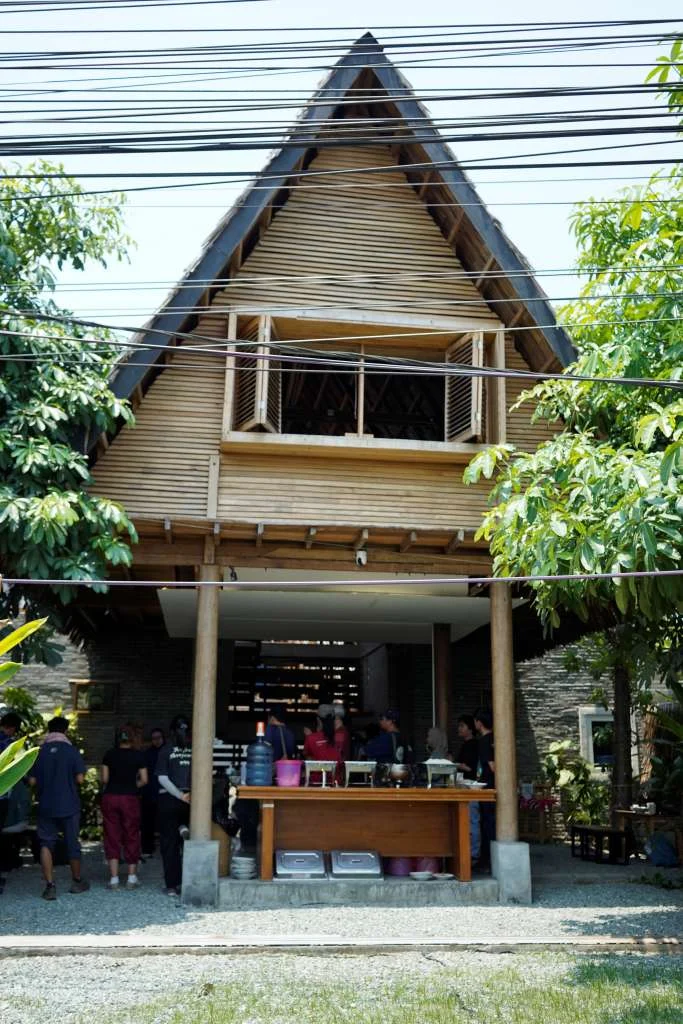
The field itinerary concluded at the Gampiri Communal Space, strategically positioned on the border of Sigi Regency and Palu City. The facility acts as an operational hub, housing administrative workspaces, processing units for coffee, cocoa, and vanilla, sorting facilities, and an assembly hall dedicated to screenings and workshops. Architecturally modeled after the traditional gampiri (communal granary) of the indigenous Kaili people, the building functions as a vital bridge connecting upstream traditional producers with urban markets, ensuring that indigenous goods and knowledge find appreciative audiences nationwide.