Socio Today
The sudden collapse of the Liulan Reservoir in the Guangxi Zhuang Autonomous Region of southern China has reignited a critical international debate regarding the safety, maintenance, and management of the world’s largest network of dams. Occurring in early July 2024, the incident in Hengzhou City, under the jurisdiction of Nanning, serves as a stark reminder of the vulnerabilities inherent in aging infrastructure, particularly when faced with the intensifying weather patterns driven by climate change. As China grapples with the aftermath of the breach, experts are pointing to systemic issues involving construction quality, a lack of transparency in water release protocols, and the historical baggage of dam management in the People’s Republic.
China currently maintains nearly 100,000 dams and reservoirs, a figure that surpasses any other nation on Earth. These structures are the backbone of the country’s industrial and agricultural success, providing essential hydroelectric power, irrigation for vast stretches of farmland, and a primary defense mechanism against the seasonal flooding of major river systems. However, the Liulan incident suggests that this massive infrastructure may be reaching a breaking point, where the dual pressures of environmental extremity and administrative oversight failures converge into localized catastrophes.
Chronology of the Liulan Reservoir Breach
The disaster unfolded against the backdrop of Typhoon Maysak, which brought torrential rainfall to southern China in the first week of July. The Nanning Municipal Government had already issued several warnings as precipitation levels reached record highs in certain districts. In the early hours of July 6, the situation at the Liulan Reservoir reached a critical threshold.
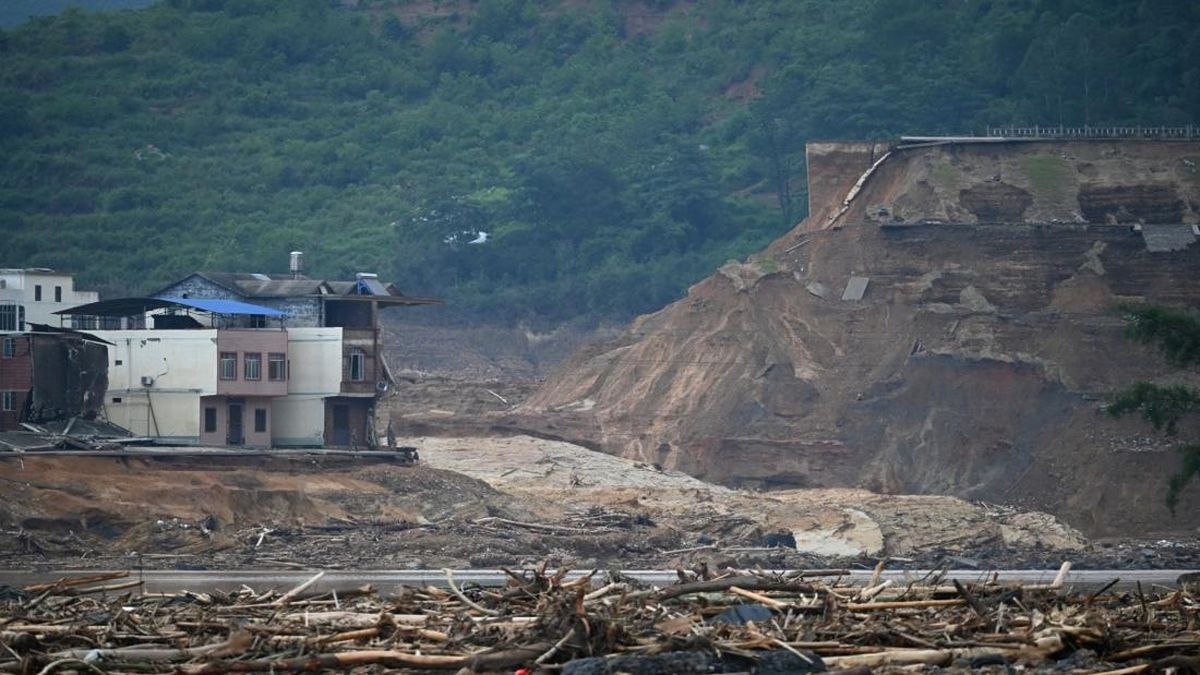
According to eyewitness accounts and local reports, the water level within the reservoir began to rise at an alarming rate following days of incessant downpours. By approximately 3:00 AM, residents in the downstream areas of Hengzhou reported seeing water overtopping the embankment. Within hours, the structural integrity of the dam failed, leading to a catastrophic breach that sent a wall of water rushing into the valley below.
The surge of water did not just bring silt and debris; it brought immediate destruction to the socio-economic fabric of the region. Dozens of hectares of farmland were submerged, and fish ponds—a primary source of income for local villagers—were obliterated as the currents swept away livestock and equipment. Critical infrastructure, including local roads, electricity grids, and communication lines, were severed, leaving many communities isolated in the dark as they scrambled to find higher ground.
Infrastructure Quality and the 2022 Audit Discrepancies
While the immediate cause of the breach was the extreme rainfall associated with the typhoon, geopolitical analysts and infrastructure experts argue that the disaster was years in the making. Sun Lee, a prominent observer of Chinese domestic policy and infrastructure, has highlighted a troubling paper trail regarding the Liulan Reservoir.
Citing documents from the local Water Resources Bureau dating back to 2022, Lee pointed out that the Liulan Reservoir was part of a list of water conservation projects that had failed to complete mandatory construction quality inspections. Despite being scheduled for "reinforcement and strengthening" works, the project allegedly remained in a state of administrative limbo, with its safety certifications unfinalized. This revelation suggests a significant lapse in the oversight mechanisms intended to ensure that aging dams can withstand modern environmental stresses.
The majority of China’s dams were constructed between the 1950s and the 1970s, an era characterized by rapid, often rushed, industrialization. While many of these structures have undergone retrofitting, thousands remain in a "precarious" state, according to previous admissions by the Ministry of Water Resources. The Liulan incident highlights the gap between national policy and local implementation, where budgetary constraints or bureaucratic inertia may prevent critical repairs from being completed.
The Controversy of Unannounced Water Releases
One of the most contentious aspects of the Liulan collapse—and dam management in China more broadly—is the practice of "emergency water releases." Sun Lee and other monitors of the region have raised concerns regarding the timing and communication of these releases. In the days leading up to the breach, there were reports of reservoir gates being opened to alleviate pressure on the dam structure.
However, residents in the path of the floodwaters frequently claim they receive little to no warning. "Pintu air" or floodgates are often opened during the night when the population is asleep, a tactic that critics suggest is used to minimize public panic or to obscure the severity of the reservoir’s condition. In the case of the Liulan breach, the sudden arrival of water at 3:00 AM forced residents to flee to their rooftops in total darkness, a scenario that significantly increases the risk of casualties.
From a management perspective, dam operators face a "trilemma": they must balance the need to store water for the dry season, maintain levels for power generation, and keep enough empty space to catch floodwaters. When a typhoon strikes, the pressure to release water becomes immense. If these releases are not coordinated with downstream evacuation plans, the dam itself becomes a weapon of disaster rather than a shield against it.
Historical Echoes: From Banqiao to the Present
The Liulan incident inevitably draws comparisons to the 1975 Banqiao Dam disaster in Henan Province. Often cited as the most lethal dam failure in human history, the collapse of the Banqiao and Shimantan dams during Typhoon Nina resulted in an estimated death toll ranging from tens of thousands to over 200,000 people, depending on the source. For decades, the Chinese government suppressed information regarding the scale of the Banqiao tragedy, labeling it a "natural disaster" rather than a failure of engineering and management.
Sun Lee argues that a similar pattern of information control persists today. While the advent of social media and smartphones has made it nearly impossible to hide the occurrence of a dam breach, the narrative surrounding the "cause" remains tightly controlled. By emphasizing the "unprecedented" nature of the rainfall, authorities can shift the focus away from structural neglect or poor decision-making by dam operators.
However, the proliferation of platforms like Douyin (the Chinese version of TikTok) and WeChat has created a "citizen-journalist" effect. During the Liulan flood, raw footage of the breach and the subsequent devastation circulated rapidly, providing a counter-narrative to official reports that often downplay the human cost. This digital transparency is putting unprecedented pressure on local officials to be more accountable for the safety of the infrastructure they manage.
Socio-Economic Impact and the "Sponge City" Context
The implications of the Liulan breach extend beyond the immediate loss of property. For the residents of Guangxi, the destruction of agricultural land represents a long-term economic setback. Many of the affected farmers operate on thin margins, and the loss of a single season’s crop or a year’s worth of fish stocks can lead to cycles of debt.
Furthermore, this incident raises questions about the efficacy of China’s "Sponge City" initiative—a multi-billion-dollar urban planning strategy designed to absorb and reuse rainwater. While the program focuses on urban centers, the failure of rural and peri-urban reservoirs like Liulan suggests that the broader hydrological network is not yet integrated or resilient enough to handle the "New Normal" of extreme weather.
Broader Implications for Transboundary Water Management
The management of dams within China also has significant geopolitical implications. China controls the headwaters of several major international rivers, including the Mekong (Lancang), the Brahmaputra (Yarlung Tsangpo), and the Salween (Nu). Downstream nations, such as Vietnam, Thailand, and India, have long expressed concern over China’s lack of transparency regarding dam operations and water release schedules.
The Liulan incident serves as a cautionary tale for these neighbors. If domestic dam management is plagued by unannounced midnight releases and unfinished safety checks, the risk of "accidental" downstream flooding in neighboring countries becomes a tangible security threat. The call for a standardized, transparent, and data-sharing approach to water management is no longer just a domestic requirement for China but a regional necessity.
Conclusion: The Path Toward Accountability
The collapse of the Liulan Reservoir is a symptomatic event that underscores the urgent need for a paradigm shift in how China manages its water infrastructure. The transition from a "build-first" mentality to a "maintain-and-monitor" philosophy is essential to prevent future tragedies.
Experts suggest several key areas for reform:
- Enhanced Transparency: Implementing real-time public dashboards for reservoir levels and mandatory 24-hour notice periods for non-emergency water releases.
- Independent Audits: Moving away from internal quality checks and allowing third-party or provincial-level inspectors to verify the structural integrity of "precarious" dams.
- Early Warning Systems: Investing in localized siren systems and mobile alerts that are specifically triggered by dam-gate movements, ensuring that even those without internet access are warned.
- Climate Adaptation: Re-evaluating the "Probable Maximum Flood" (PMF) calculations for all dams built before 1990 to account for the increased intensity of modern typhoons.
As Sun Lee concluded in his analysis, "The dams that were once symbols of national pride and technological triumph are now becoming sources of constant anxiety for those living in their shadows." Without a fundamental commitment to transparency and rigorous engineering standards, the 100,000 dams of China will continue to represent a "Sword of Damocles" hanging over the heads of millions of citizens during every monsoon season. The Liulan incident must serve as the final warning for a system that can no longer afford to prioritize secrecy over safety.