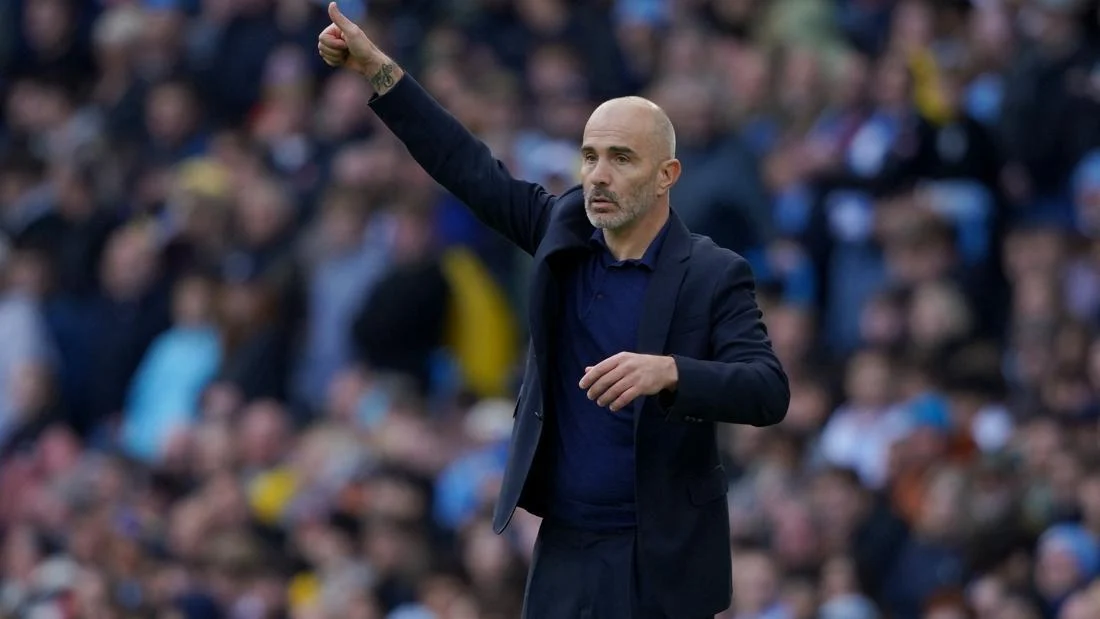
The opening chapter of Enzo Maresca’s managerial tenure at Manchester City has provided a fascinating study in contrast, expectation, and the enduring pressure of maintaining elite standards at the Etihad Stadium. Having navigated his first ten Premier League matches in charge of the reigning powerhouses of English football, Maresca finds himself under the microscope as analysts, supporters, and club executives assess his initial trajectory. Stepping into the shoes of one of the most decorated managers in football history is no small task, yet Maresca’s early numbers offer a compelling narrative when measured against the historic debuts of his predecessors in the post-takeover era.
To understand the weight of expectation resting on Maresca’s shoulders, one must examine the baseline established since the Abu Dhabi United Group assumed ownership of Manchester City. The transformation of the club from perennial underachievers into a global footballing juggernaut was built on heavy financial investment, meticulous structural planning, and, crucially, managerial stability. Managers arriving at City are not merely tasked with winning matches; they are expected to uphold a distinct stylistic identity and deliver silverware immediately. Maresca’s arrival followed a period of unprecedented dominance under Pep Guardiola, whose shadow looms large over anyone tasked with leading the team.
A Chronological Look at the First Ten Premier League Matches Under Modern Ownership
The historical data tracking managerial starts under the Abu Dhabi ownership provides a clear yardstick for evaluating new leadership. When examining the first ten Premier League matches of previous managers appointed in this era—specifically Pep Guardiola, Manuel Pellegrini, and Roberto Mancini—distinct patterns emerge regarding slow burns, fast starts, and ultimate domestic success.
Pep Guardiola’s arrival ahead of the 2016-17 Premier League campaign set a blistering early pace, albeit with underlying vulnerabilities that would eventually manifest over a grueling thirty-eight-game season. In his first ten league fixtures, the Catalan coach secured seven victories, two draws, and suffered a solitary defeat, accumulating twenty-three points and propelling Manchester City to the summit of the table. Despite the stellar start, Guardiola’s debut campaign served as a steep learning curve regarding the physical intensity and unpredictability of English football. City ultimately finished that season in third place, trailing Chelsea, marking the only domestic campaign in Guardiola’s tenure where he failed to secure the league title. Nevertheless, that initial block of fixtures laid the tactical foundation for the dynasty that followed.
Moving backward chronologically to the 2013-14 season, Manuel Pellegrini’s introduction offers a stark reminder that a fast start is not a mandatory prerequisite for lifting the Premier League trophy in May. Pellegrini’s opening ten matches yielded a more modest return of nineteen points, built on a record that reflected early tactical teething problems away from home. Yet, the Chilean manager’s experienced hand steadied the ship, fostering an explosive attacking unit that eventually overhauled the competition. Pellegrini’s City famously outpaced Liverpool in the season’s dying embers to claim the Premier League title, proving that endurance and squad management over the long haul outweigh early-season table positions.
Roberto Mancini’s entry into the Manchester City dugout occurred under entirely different circumstances compared to his peers. Unlike Guardiola, Pellegrini, or Maresca, Mancini did not inherit a squad during the pre-season preparation period. Instead, he arrived mid-way through the 2009-10 campaign in December, replacing Mark Hughes to salvage a season at risk of stagnation. In his first ten Premier League matches at the helm, the Italian tactician accumulated twenty points, steadying a listing ship and instilling defensive resilience. Mancini ultimately guided City to a fifth-place finish at the conclusion of that campaign, moving the club three positions up the table from where he found them and establishing the defensive bedrock for their historic title triumph two years later.
Statistical Breakdown of Enzo Maresca’s Opening Ten Matches
Enzo Maresca’s first ten Premier League games at Manchester City present a tale of two distinct halves, highlighting both his tactical acumen and the inherent volatility of transitioning a squad to a new tactical philosophy. Maresca enjoyed a phenomenal start to his tenure, orchestrating a sequence of seven consecutive victories that had supporters dreaming of a seamless transition of power. The fluid passing sequences, positional rotations, and intense defensive pressing mirrored the stylistic principles associated with the modern Manchester City blueprint, validating the board’s faith in his appointment.
However, the momentum hit a turbulent barrier in the subsequent fixtures. A difficult run resulted in three consecutive defeats, exposing vulnerabilities in squad depth, tactical adaptability, and game management under intense pressure. Despite this late stumble in his opening block of ten games, Maresca’s side sits in third place in the Premier League table with twenty-one points secured.
When placed side-by-side with his predecessors, Maresca’s twenty-one points from ten matches place him in a very respectable position. He outperformed Pellegrini’s nineteen-point start from 2013-14 and edged past Mancini’s twenty-point opening from his rescue mission in 2009-10. Only Pep Guardiola’s twenty-three-point haul from 2016-17 stands superior among permanent managerial appointments in the Abu Dhabi era. Statistically, Maresca’s start is more than adequate; it demonstrates that the team remains competitive at the elite summit of English football.
The Weight of the Legacy: Living in the Shadow of Pep Guardiola
While the raw data portrays a manager holding his own against historical benchmarks, statistics fail to capture the intangible psychological pressures unique to Maresca’s current assignment. The primary challenge facing the current manager is not merely accumulating points, but doing so while succeeding a managerial titan who amassed twenty major trophies during his tenure at the Etihad Stadium. Guardiola did not just win matches; he redefined the tactical lexicon of English football, setting an almost unattainable standard of excellence, consistency, and stylistic purity.
For Maresca, carrying the mantle of Guardiola’s successor invites constant scrutiny. Every tactical tweak, substitution decision, and dropped point is magnified through the lens of what came before. The recent three-match losing streak, while statistically normal across a long Premier League season, sparked disproportionate external anxiety precisely because the club’s recent history has conditioned observers to expect perfection. The internal leadership at Manchester City, known for its cold, analytical approach to football operations, undoubtedly evaluates Maresca through a wider lens than mere matchday hysteria, yet the external media narrative remains unforgiving.
Tactical Evolution and Squad Adaptation
Transitioning a football club of Manchester City’s stature requires delicate handling of squad dynamics, player psychology, and tactical integration. Maresca has sought to implement his own nuanced tactical variations while respecting the foundational automatisms ingrained in the squad over the previous years. The early seven-match winning streak showcased a team capable of executing complex positional structures with precision, suffocating opponents through sustained possession and swift regains.
Conversely, the subsequent three defeats illuminated areas requiring urgent remediation. Analysts point to defensive vulnerabilities during defensive transitions and occasional predictability in the final third when opponents successfully deploy low-block defensive structures. Furthermore, managing the physical and mental fatigue of a squad that has endured deep tournament runs and international commitments year-round presents an ongoing hurdle for any manager entering the club. Maresca’s ability to adapt his tactical approach, introduce squad rotation effectively, and inject fresh energy during congested fixture periods will dictate whether his side can arrest their recent slump and reassert authority at the top of the table.
Broader Implications for the Premier League Title Race
The ramifications of Maresca’s early performance extend far beyond the walls of the City Football Academy, directly influencing the broader landscape of the Premier League title race. The traditional top tier of English football has grown increasingly competitive, with multiple clubs possessing the financial muscle, tactical sophistication, and squad depth to mount sustained challenges for the championship. A slip in form by Manchester City instantly revitalizes ambitions among their direct rivals, transforming every weekend fixture into a high-stakes referendum on the club’s transition phase.
Sitting in third place with twenty-one points after ten games, Manchester City remains firmly within striking distance of the summit. The historical precedent set by Manuel Pellegrini in 2013-14—where a slower start ultimately culminated in championship glory—serves as a reminder that the Premier League is a marathon rather than a sprint. However, the modern iteration of the league leaves significantly less margin for error, with elite standards rising year upon year due to the relentless consistency displayed by top-tier competitors.
Looking Ahead: The Road to Proving Longevity
As the Premier League season moves past its opening milestone, attention inevitably shifts to how Enzo Maresca will navigate the grueling winter fixture schedule. The upcoming weeks will test the depth of his squad, his capacity for crisis management following a string of defeats, and his ability to unite the dressing room behind his long-term vision.
The fundamental question remaining for observers of Manchester City is whether Maresca can emulate the ultimate success of his predecessors by capturing silverware in his debut season, much like Pellegrini managed in 2014, or if he will encounter the turbulent developmental curve experienced by Guardiola during his initial campaign. While the statistics from his first ten matches indicate a solid, competitive start, football is ultimately judged on destination rather than departure. The ensuing months will provide the definitive verdict on whether Maresca’s early promise can be forged into enduring success at the pinnacle of English and European football.