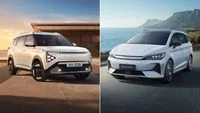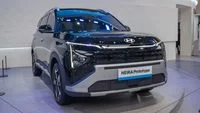
The landscape of electric mobility in Southeast Asia’s largest automotive market is poised for a significant transformation as Hyundai Motor Indonesia prepares to officially introduce its latest electric vehicle offering, the Neira EV, later this month. Positioned strategically as a dedicated family-oriented electric sport utility vehicle, the Neira EV represents a major step forward in Hyundai’s localization strategy, combining a uniquely Indonesian identity with advanced zero-emission powertrain technology. Following its initial public preview at the prestigious Gaikindo Indonesia International Auto Show, the vehicle has generated substantial interest among consumers seeking practical, spacious, and environmentally friendly transportation options.
The official market debut of the Neira EV is scheduled to take place during the upcoming Gaikindo Jakarta Auto Week, running from November 20 to November 29, 2026. This year’s exhibition serves as a critical commercial platform for automotive manufacturers aiming to capture year-end market momentum and showcase their latest technological advancements to urban consumers. Industry analysts view the timing of the launch as deliberate, capitalizing on heightened consumer enthusiasm for electric vehicles amid expanding government incentives and a rapidly growing charging infrastructure network across the Indonesian archipelago.
Rooted in Indonesian Heritage: The Naming Philosophy of Hyundai
The nomenclature chosen for Hyundai’s newest electric SUV carries deep cultural significance. Derived from Banda Neira, a historically renowned island group within the Maluku Islands of eastern Indonesia, the name honors the nation’s rich maritime and historical legacy. This naming convention follows a successful precedent set by the company with previous models, most notably the Cartenz, which drew inspiration from the majestic Puncak Cartenz in Papua.
By utilizing culturally resonant Indonesian names for globally significant products, Hyundai aims to forge a deeper emotional connection with local consumers. Company executives have frequently emphasized that this branding strategy underscores a commitment to treating Indonesia not merely as a lucrative export destination or a manufacturing assembly hub, but as an integral source of inspiration for product development. This localized identity reflects a broader corporate philosophy of integration, ensuring that the vehicles resonate profoundly within the domestic market while maintaining international engineering standards.
Robust Local Manufacturing and High Domestic Content
One of the most compelling economic aspects of the Hyundai Neira EV is its manufacturing provenance. Rather than relying on completely built-up imports, the Neira EV is engineered to be manufactured locally within Hyundai’s advanced production facilities in Indonesia. More importantly, the vehicle is slated to surpass a crucial regulatory threshold, achieving a Domestic Component Level, known locally as Tingkat Komponen Dalam Negeri, exceeding 60 percent.
Achieving a TKDN score above 60 percent requires extensive collaboration with domestic component suppliers, ranging from battery casing manufacturers to interior wiring harness producers and software integration specialists. This high degree of localization not only insulates the vehicle from foreign exchange volatility and global supply chain disruptions but also qualifies the Neira EV for various government fiscal incentives, luxury tax relaxations, and priority status in government fleet procurement programs. Furthermore, high domestic content stimulates job creation across the regional manufacturing sector, fostering technology transfer and strengthening the domestic automotive supply chain.
Technical Architecture and Platform Synergy with Kia
While Hyundai has maintained strict confidentiality regarding the complete official specification sheet prior to the official launch event, automotive industry analysts and supply chain insiders have mapped out the vehicle’s likely technical architecture. The Neira EV is widely understood to share a platform and foundational structural elements with its corporate sibling, the Kia Carens EV, which is similarly slated for localized production in Indonesia.
This shared platform approach allows Hyundai to optimize research and development costs while ensuring robust structural rigidity and crash safety compliance tailored for multi-passenger family vehicles. The architecture is specifically designed to accommodate flexible battery pack layouts, allowing for optimized interior floor packaging that maximizes cabin space for all three seating rows without encroaching upon passenger comfort or cargo capacity.
Drawing insights from the expected specifications of its platform counterpart, the Neira EV is anticipated to offer diverse battery capacity configurations to cater to varying consumer driving needs. For instance, models utilizing a larger battery pack configuration, akin to the 51.4 kWh specification found in related long-range variants, are projected to deliver an impressive driving range exceeding 490 kilometers under standardized testing cycles such as the ARAI MIDC Full Range. Meanwhile, standard range variants equipped with a more compact 42 kWh battery unit are expected to achieve a respectable operating range of approximately 404 kilometers, satisfying daily urban commuting requirements with ease.
Premium Interior Comfort and Advanced Technology Integration
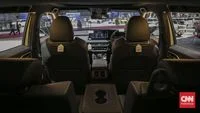
Family-oriented electric vehicles must balance energy efficiency with high levels of creature comforts and entertainment technology to appeal to modern households. Based on technological packages deployed within the shared-platform ecosystem, the Neira EV is expected to incorporate a suite of premium interior amenities designed to elevate the passenger experience.
Higher trim levels are anticipated to feature expansive dual-pane panoramic sunroofs that flood the cabin with natural light, alongside customizable 64-color ambient lighting systems that allow occupants to tailor the interior atmosphere. Audio fidelity is expected to be a focal point, potentially featuring high-end acoustic setups such as eight-speaker BOSE sound systems. Additionally, cabin health management systems, including smart air purification technology equipped with Air Quality Index displays, will likely be integrated to combat urban air pollution.
Connectivity and driver instrumentation will form the digital core of the dashboard. A sweeping dual panoramic display measuring 26.6 inches is projected to span the driver’s field of view, housing both the digital instrument cluster and the central infotainment touchscreen. This seamless interface will support comprehensive smartphone integration, real-time battery telemetry, and intuitive climate control management.
Comprehensive Safety and Advanced Driver Assistance Systems
Safety remains a paramount consideration for family buyers entering the electric vehicle segment. The Neira EV is expected to incorporate cutting-edge active and passive safety measures, including advanced driver assistance systems corresponding to Level 2 autonomy. This suite typically encompasses upwards of twenty distinct safety features, ranging from adaptive cruise control and lane-keeping assist to autonomous emergency braking and blind-spot collision avoidance.
In addition to driving safety aids, the vehicle is anticipated to feature Vehicle-to-Load capabilities both inside the cabin and externally. This technology transforms the EV into a mobile power bank capable of supplying alternating current electricity to external appliances, camping equipment, or household electronics during power outages or outdoor recreational activities, thereby adding significant utility value for family lifestyles.
Commercial Positioning and Pricing Strategy
Pricing strategy will play a decisive role in determining the market penetration speed of the Hyundai Neira EV. Although official retail price figures have been withheld pending the official unveiling at the Gaikindo Jakarta Auto Week, corporate leadership has indicated that the pricing structure will be highly competitive within the emerging family EV landscape.
Fransiscus Soerjopranoto, Chief Operating Officer of Hyundai Motor Indonesia, emphasized during recent briefings that the current market environment provides an ideal window for expanding electric vehicle adoption among mainstream family buyers. Given its structural kinship with the Kia Carens EV—which industry observers estimate will command an on-the-road Jakarta price range between Rp382 million and Rp432 million—the Neira EV is expected to occupy a closely aligned pricing bracket. This competitive positioning will likely challenge traditional internal combustion engine MPVs and SUVs, accelerating the migration of family-oriented consumers toward electrified mobility solutions.
Market Implications and Strategic Outlook for Indonesia’s EV Ecosystem
The introduction of the Hyundai Neira EV carries profound implications for the broader Indonesian automotive landscape. As the country aggressively pursues its ambitious target of carbon neutrality and seeks to establish itself as a regional electric vehicle manufacturing hub, the arrival of a locally produced, high-domestic-content, seven-passenger electric SUV addresses a critical market gap.
Historically, the electric vehicle market in Indonesia has been skewed toward compact hatchbacks, luxury crossovers, or commercial delivery vans, leaving larger families with limited zero-emission choices that do not sacrifice seating capacity. By introducing a dedicated three-row electric SUV with competitive pricing and robust domestic manufacturing support, Hyundai is effectively democratizing access to family-friendly electric mobility.
Furthermore, the high localization rate of over 60 percent sets a high benchmark for competing original equipment manufacturers operating within the country. It demonstrates that large-scale electric vehicle production with substantial domestic supply chain integration is not only feasible but commercially viable. As charging infrastructure continues to expand across major toll roads and urban centers, vehicles like the Neira EV are expected to ease range anxiety and cultural hesitancy regarding electric propulsion among mainstream consumers.
Ultimately, the launch of the Hyundai Neira EV at the Gaikindo Jakarta Auto Week 2026 marks a maturing milestone for Indonesia’s automotive industry. It transitions the national electric vehicle narrative from early adoption and niche luxury segments to mass-market family utility, cementing Hyundai’s strategic commitment to shaping the sustainable future of transportation in Southeast Asia.