Deep within the densely
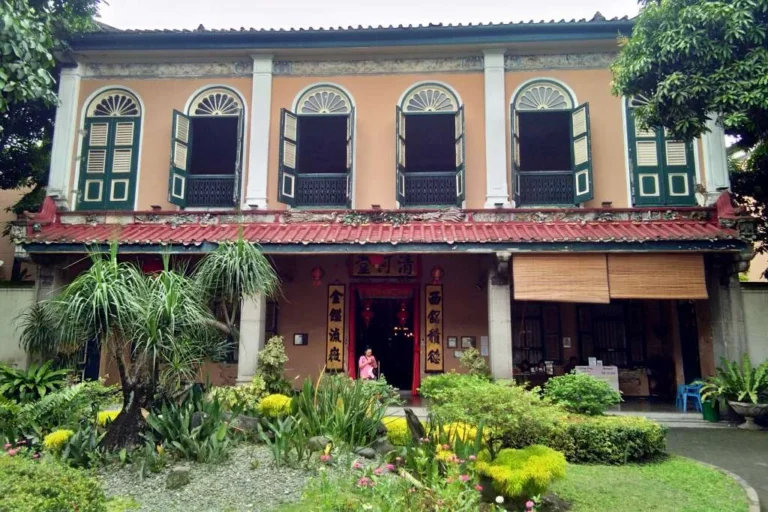
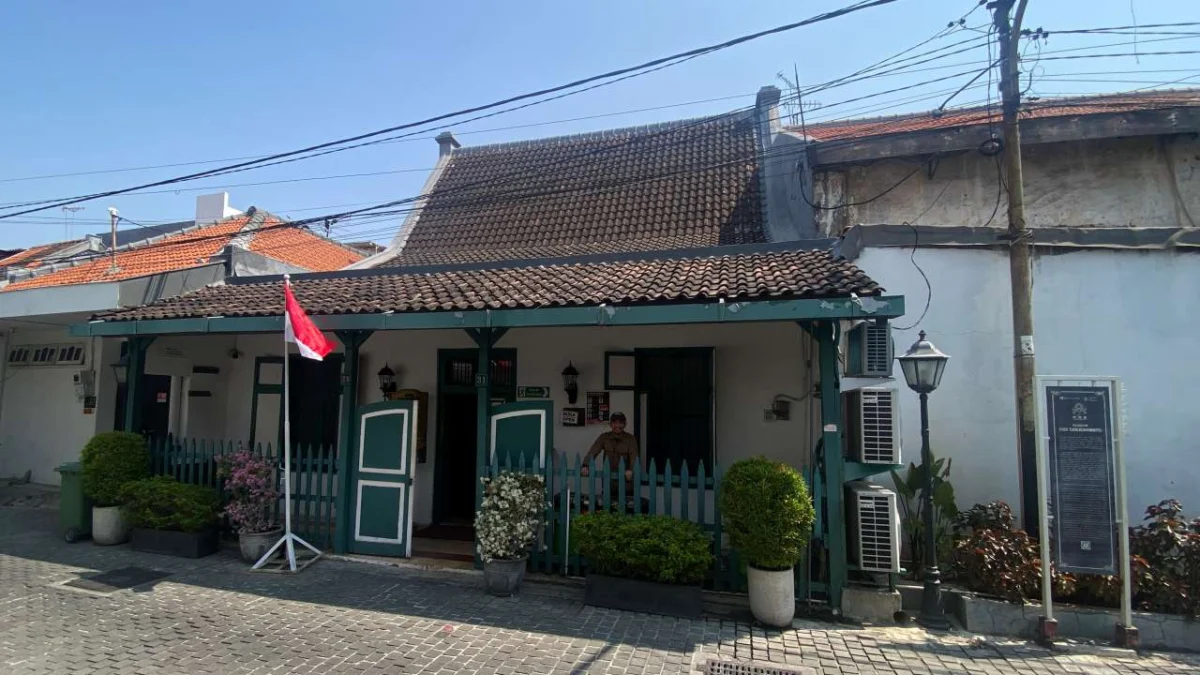
populated alleys of Peneleh, Surabaya, an old wooden-fenced house still stands facing a modest neighborhood street, its weathered roof tiles, peeling white walls, and aged wooden pillars bearing silent witness to the relentless march of time. A lone red-and-white Indonesian flag flutters proudly in its front yard, punctuating the historic atmosphere of the surrounding district. Located at Jalan Peneleh Gang VII Number 29–31, this humble structure is the former residence of Harko Oemar Said (H.O.S.) Tjokroaminoto, a towering figure in Indonesia’s nationalist movement. On October 11, 2026, visitors can access the site for a nominal admission fee of Rp10,000, processed seamlessly via QRIS following prior booking and digital guest registration through the official Surabaya Tourism portal.
The name Tjokroaminoto evokes profound reverence in Indonesian history. As the prominent leader of Sarekat Islam, he earned a legendary reputation not merely as a political strategist, but as a pivotal mentor to a generation of young anti-colonial visionaries who would later shape the destiny of the archipelago, most notably Indonesia’s founding father, Sukarno. His residence functioned far beyond a domestic sanctuary; it served as an intellectual crucible where fiery young minds from diverse backgrounds gathered, debated, and formulated the ideological foundations that would eventually fracture colonial hegemony, even as they later pursued divergent political trajectories. While the magnetic pull of these historic figures remains the primary draw for modern pilgrims, the structural and functional evolution of the building itself presents an equally compelling narrative of urban heritage, community adaptation, and architectural preservation spanning over a century.
Architectural Heritage and Early Beginnings
Stepping across the threshold into the front parlor, visitors are immediately enveloped by an ambiance distinct from contemporary, sterile museum environments. A cluster of sturdy wooden chairs encircles a classic round table topped with polished marble. Directly behind this seating arrangement sits a low credenza flanked by an array of archival photographs depicting the vanguard of the Indonesian national awakening. Overhead, dark wooden ceiling beams intersect with worn yellowish-brown terracotta tiles, anchoring the space in the late 19th-century architectural vernacular of East Java.
According to historical assessments compiled by the Surabaya City Government, the building’s origins trace back to the 1870s. This architectural milestone confirms that the structure predates Tjokroaminoto’s prominence as a nationalist leader by several decades, standing as a silent survivor of the Dutch colonial era’s urban expansion. During his occupancy, Tjokroaminoto shared the residence with his wife, Soeharsikin, and their children. To accommodate the pressing educational needs of the era, the family converted several back and upper-room areas into a boarding house for ambitious students enrolled in Surabaya’s elite secondary institutions.

This domestic arrangement catalyzed a unique socio-political environment. The boarding house was never merely a lodging facility for transient youth; it functioned as an informal political academy where residents absorbed nationalist discourse through daily interactions with Tjokroaminoto and his illustrious circle of intellectual visitors. Living under the oppressive weight of a colonial administration that systematically marginalized indigenous populations from administrative, economic, and higher educational spheres, these youths found intellectual liberation within the walls of the Peneleh home. Exhibition galleries within the museum now house extensive documentations detailing the rapid expansion of Sarekat Islam—which evolved from the merchant-focused Sarekat Dagang Islam into a formidable mass movement boasting hundreds of thousands of members. Under Tjokroaminoto’s stewardship, the organization transcended basic commercial advocacy, aggressively championing political parity, fundamental civil rights, and structural justice for the native populace. A milestone in this trajectory was the National Congress of Sarekat Islam in 1916, which solidified pan-Indonesian nationalist ideologies. Among the prized artifacts preserved in protective glass cases are two distinct sets of historical attire: a student uniform worn by a young Sukarno during his tenure at the Hogere Burgerschool (HBS) in Surabaya, and the formal congress vestments worn by Tjokroaminoto himself.
The Spartan Reality of Sukarno’s Attic Chamber
Among the most heavily visited and emotionally resonant spaces within the museum is the modest attic room once occupied by a young Sukarno. Ascending to this historic loft requires navigating a steep, narrow, green-painted iron staircase that tests the balance of modern visitors. Upon reaching the upper level, one encounters a low-ceilinged chamber floored with raw timber planks, punctuated by a single, diminutive wall window that allows meager shafts of natural light to pierce the gloom. Furnishings are exceedingly sparse: a compact wooden cabinet, woven mats spread directly across the wooden floorboards, and a simple plaque bearing the inscription "Kamar Soekarno" (Soekarno’s Room).
This austere environment is not merely a curatorial choice designed to romanticize early 20th-century student hardship; it is an authentic reflection of the profound deprivation Sukarno endured. In his authorized autobiography, Bung Karno: Penyambung Lidah Rakyat Indonesia (As Told to Cindy Adams), the future president candidly recalled the bleak reality of his living quarters, noting that "all the rooms were equally wretched." Boarders who arrived earlier secured marginally superior accommodations, whereas Sukarno’s specific attic space possessed neither windows nor doors, plunging the room into perpetual darkness and necessitating artificial illumination even during peak daylight hours. His sparse inventory consisted solely of a wobbly desk, a rudimentary wooden chair, a clothes hanger, and a solitary floor mat, devoid of any mattress or pillow.
This stark confession serves as a humbling historical anchor, reminding contemporary observers that the cradle of Indonesia’s presidency was forged in severe physical discomfort. Sukarno arrived in Surabaya in 1916 specifically to enroll at the prestigious HBS. Beyond his formal academic pursuits, the true catalyst of his political awakening was the vibrant intellectual ecosystem fostered downstairs by Tjokroaminoto. While the museum has utilized selective restorations and replica furnishings to evoke the period atmosphere, the architectural bones of the attic retain their authentic, claustrophobic intimacy, offering a poignant contrast to the grand political trajectory of its most famous occupant. Descending from the loft, visitors encounter Tjokroaminoto’s private sleeping quarters, outfitted with a white-canopied bed, a large mirrored wardrobe, and period domestic amenities—a vivid reminder that long before the house became a political sanctuary, it was the domestic hearth of a traditional family.
A Century of Metamorphosis: From Residence to Public Facility and Museum
The institutional biography of the Peneleh residence extends far beyond its golden age of nationalist agitation. Historical records maintained by the Surabaya City Museum indicate that the property was sold by Tjokroaminoto in 1921 due to mounting financial pressures and shifting organizational demands, effectively ending his direct domestic connection to the site. For decades following his departure, the building slipped into relative obscurity as it passed through various private hands.
A critical historical turning point occurred in 1958, when Sukarno, by then serving as the President of the Republic of Indonesia, returned to Surabaya and paid a nostalgic, highly publicized visit to his former boarding room. Archival records reveal that during this visit, President Sukarno expressed a strong personal desire to acquire and preserve the historic structure, an ambition that finally materialized through state intervention in 1968. Intriguingly, the acquisition did not immediately result in the establishment of a commemorative museum. Instead, from 1968 until 2016, the building underwent a surprising sociological transformation, repurposed entirely as a public communal facility and neighborhood social center for local residents.

This nearly half-century chapter of grassroots civic utility represents a fascinating, albeit under-documented, phase in the building’s biography. While comprehensive public exhibitions detailing the everyday activities of local citizens during this prolonged municipal phase remain relatively sparse, this era underscores a vital preservation dynamic: the seamless integration of historical architecture into the living fabric of a modern urban community long after the founding epoch had passed.
The definitive institutional shift toward museological preservation commenced in 2016, when the Surabaya City Government initiated comprehensive structural restorations. Under the administration of then-Mayor Tri Rismaharini, the site was officially inaugurated as the Museum H.O.S. Tjokroaminoto on November 27, 2017. Today, the facility houses approximately 143 cataloged collections directly linked to Tjokroaminoto’s life, family, and the broader nationalist movement. While a significant portion of the inventory comprises original artifacts, selected replicas are strategically employed to reconstruct the authentic spatial dynamics of the early 1900s.
Socio-Cultural Implications and Modern Heritage Tourism
The enduring appeal of the Peneleh museum lies in its capacity to subvert tourist expectations. While the vast majority of modern visitors arrive driven by hero-worship—seeking out Sukarno’s attic or attempting to visualize Tjokroaminoto through the prism of his famous disciples—the physical site ultimately narrates a much larger, collective story of urban resilience. Over the span of more than a century, the Peneleh house has functioned successively as a family home, a revolutionary incubator, a commercial asset, a grassroots community center, and finally, a state-protected museum.
This multifaceted trajectory offers critical insights into contemporary heritage management in rapidly modernizing Indonesian metropolises. Surabaya’s proactive approach to preserving vernacular colonial-era housing within densely populated urban kampungs demonstrates that historical preservation need not rely on displacement or sterile gentrification. Instead, the integration of digital ticketing platforms such as QRIS and the municipal tourism portal bridges the gap between 19th-century history and 21st-century civic administration, ensuring that the legacy of Indonesia’s national awakening remains accessible to younger generations. Ultimately, the house at Jalan Peneleh Gang VII stands not merely as a monument to past political triumphs, but as a dynamic cultural archive that continues to evolve alongside the city it helped define.