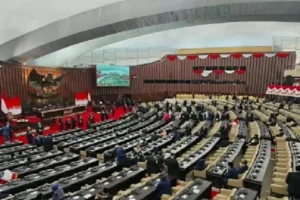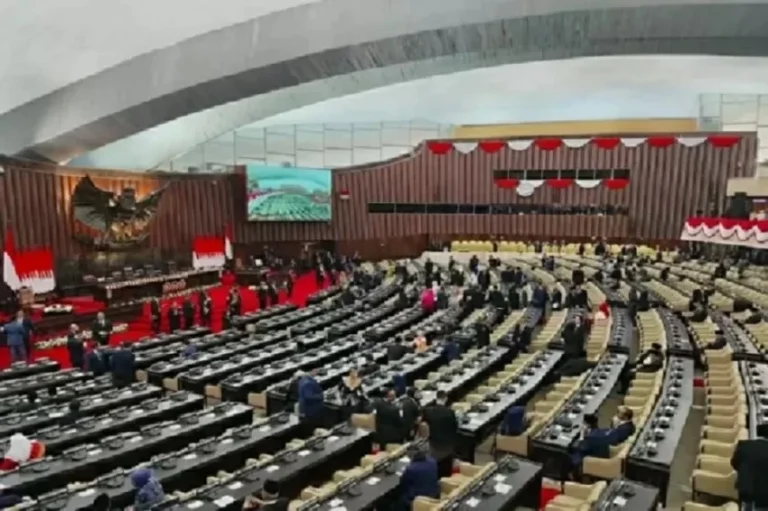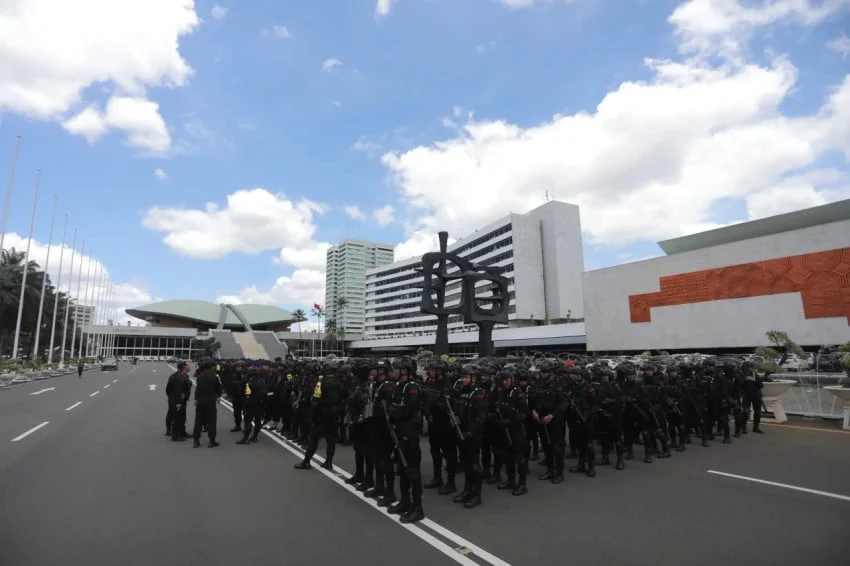
The Directorate of Traffic of the Jakarta Metro Police, known locally as Ditlantas Polda Metro Jaya, has formulated a comprehensive set of situational traffic management plans and robust security protocols ahead of a planned mass demonstration at the legislative complex. The large-scale public assembly is scheduled to take place at the House of Representatives and People’s Consultative Assembly, commonly referred to as the Gedung DPR/MPR RI, located in the strategic Senayan district of Central Jakarta. Authorities have urged commuters, motorists, and the general public to exercise caution, anticipate significant congestion along major thoroughfares, and proactively seek alternative routes to minimize disruption to their daily travels.
The security apparatus, spearheaded by the Jakarta Metro Police in coordination with internal parliamentary security personnel and municipal transportation agencies, has taken preemptive steps to ensure that the constitutional right to peaceful assembly is adequately protected while simultaneously maintaining public order and safety. This high-profile mobilization highlights the delicate balance law enforcement agencies must strike during periods of heightened civic engagement, particularly around critical national infrastructure and seats of government power.
Comprehensive Traffic Management and Diversion Strategy
According to official advisories disseminated through the official traffic management communication channels of the Jakarta Metro Police, including their widely followed social media presence on platforms such as Instagram (@TMCPoldaMetro), the implementation of traffic engineering will remain strictly situational. This means that road closures, lane restrictions, and vehicular detours will not be applied continuously throughout the day but will instead be activated dynamically based on the real-time density of protesters, the volume of surrounding vehicular traffic, and potential spillover effects onto arterial roads such as Jalan Jenderal Gatot Subroto and the inner-city toll road network.
Commuters traveling from the eastern districts of Jakarta toward the western or southern business districts have been strongly advised to bypass the Senayan parliamentary corridor entirely. Public transportation users, including those relying on the Transjakarta bus rapid transit system that services the Polda Metro Jaya and Gerbang Pemuda corridors, may also experience temporary route modifications, delayed headway times, or adjusted boarding procedures depending on how the demonstration unfolds on the ground. Traffic police officers have been deployed to key intersections surrounding the legislative complex to manually regulate traffic flow, assist pedestrians, and guide motorists toward designated alternate routes such as Jalan Palmerah, Jalan Asia Afrika, and surrounding side streets.
Strategic Security Preparations and Tactical Coordination
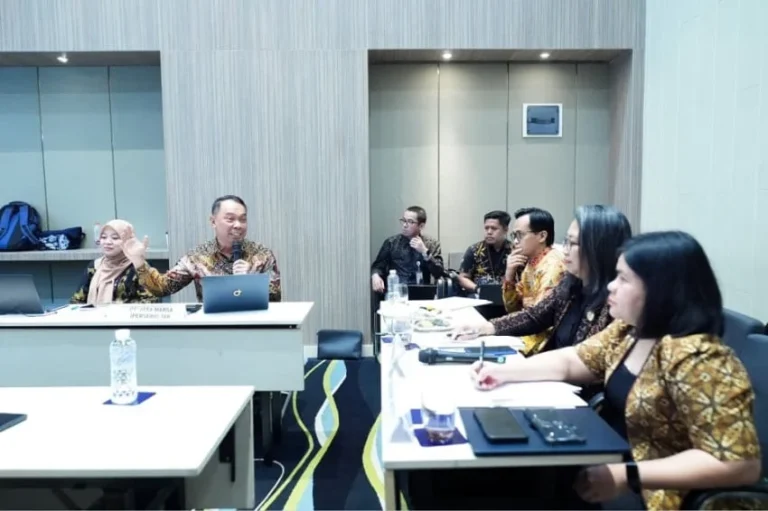
To ensure seamless coordination among the thousands of law enforcement personnel deployed to the scene, the leadership of the Jakarta Metro Police conducted advanced planning sessions prior to the day of the action. The Head of Public Relations for the Jakarta Metro Police, Senior Commissioner Budi Hermanto, outlined the operational readiness of the security forces, emphasizing that the deployment strategy was meticulously planned through standardized law enforcement simulations.
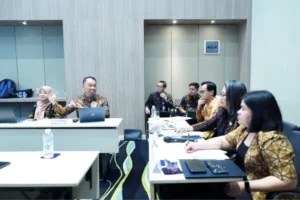
A cornerstone of these preparations involved the execution of a Tactical Floor Game, commonly abbreviated as TFG. This interactive simulation exercise allows commanders and unit leaders to visualize troop movements, assess potential security vulnerabilities, coordinate communication channels, and unify their operational perspective. The primary objective of the TFG, according to Senior Commissioner Budi Hermanto, is to ensure that all personnel understand their respective roles in safeguarding the democratic process. Security forces are instructed to facilitate the constitutional right of citizens to voice their aspirations while strictly adhering to human rights standards, maintaining professional restraint, and preventing any escalation into violence or property damage.
The deployment framework encompasses multiple layers of security. The innermost ring typically surrounds the main gates and administrative structures of the parliamentary compound, secured by internal parliamentary police and elite mobile brigade units. The outer rings focus on crowd management, traffic control, and the separation of opposing factions should counter-demonstrations occur. Medical teams, firefighting units, and rapid response vehicles have also been placed on standby at strategic staging areas near the complex to address any medical emergencies or unforeseen incidents swiftly.
Background Context and Historical Significance of the Date
The timing of the demonstration carries notable symbolic weight, as it coincides with a significant date in the Indonesian national calendar. The choice of the specific date often reflects the strategic intent of organizers seeking to leverage historical resonance to amplify their message. Protests and public assemblies at the national legislative complex are a recurring phenomenon in the capital city, serving as a primary barometer of public sentiment regarding various legislative proposals, economic policies, governance issues, and socio-political developments.
Over the past several years, the Gedung DPR/MPR RI has served as the epicenter for numerous high-stakes demonstrations involving diverse segments of society, ranging from labor unions and student organizations to environmental activists and professional associations. These gatherings frequently focus on contentious lawmaking processes, fiscal adjustments, labor rights, and anti-corruption measures. The frequency of such events underscores the vibrant, albeit sometimes turbulent, nature of Indonesia’s democratic landscape, where public expression and street-level mobilization remain vital channels for political participation alongside institutional lobbying and parliamentary debate.
The recurrence of demonstrations at this specific venue has prompted municipal authorities and law enforcement agencies to refine their standard operating procedures continuously. Modern crowd control strategies in Jakarta increasingly emphasize de-escalation, transparent communication through social media updates, and minimal physical confrontation, contrasting sharply with historical approaches that relied more heavily on immediate forceful dispersal.
Economic and Logistical Implications for the Capital
The convergence of large crowds and subsequent traffic disruptions around the primary legislative hub generates significant ripple effects across Jakarta’s broader economic and logistical ecosystem. The Senayan and Gatot Subroto corridors function as critical arteries connecting the central business district with residential satellites such as Tangerang, Depok, and Bekasi. Consequently, any severe restriction of traffic in this zone reverberates throughout the entire metropolitan area, impacting delivery schedules, public transit efficiency, and the punctuality of thousands of office workers and business travelers.
Commercial enterprises operating within the vicinity of the parliamentary complex often implement flexible working arrangements, remote operations policies, or early dismissal protocols for their employees on days when major protests are scheduled. This proactive adaptation helps mitigate productivity losses and ensures employee safety. Furthermore, retail establishments, public spaces, and hospitality venues near the affected zones frequently experience altered foot traffic patterns, prompting business owners to enhance physical security measures as a precautionary stance.
From a municipal governance perspective, large-scale demonstrations also impose substantial administrative and operational costs. The deployment of thousands of police officers, municipal transport personnel, sanitation crews responsible for post-demonstration cleanup, and medical workers requires meticulous logistical planning and inter-agency budgetary coordination. City administrators continually evaluate how to balance the financial and operational tolls of such events with the overarching necessity of upholding democratic freedoms and ensuring public safety.
Official Statements and Public Appeals
In light of the anticipated disruptions, municipal authorities and police spokespersons have consistently reiterated calls for calm, order, and mutual respect between demonstrators and law enforcement personnel. Officials emphasize that while freedom of speech and peaceful assembly are guaranteed under the Indonesian Constitution, these rights must be exercised responsibly within the legal boundaries established by prevailing laws and regulations.
Demonstration organizers have been urged to coordinate closely with local police departments regarding their intended routes, expected participant numbers, and planned duration. Such cooperation facilitates better crowd management and reduces the likelihood of misunderstandings between marshals and security forces. At the same time, civil society monitors and legal aid organizations frequently deploy observers to the field to document police conduct, ensure the protection of civil liberties, and mediate potential disputes.
As the situation continues to evolve dynamically on the ground, the Jakarta Metro Police have committed to providing continuous updates through their official communication channels. Motorists and residents are strongly encouraged to monitor real-time traffic applications, heed the guidance of officers stationed in the field, and allow extra time for their daily commutes to navigate around the affected areas safely and efficiently. The overarching goal for all stakeholders remains the peaceful articulation of civic aspirations coupled with the preservation of public order in the nation’s capital.