Surabaya’s coastal conservation efforts face a growing paradox as decades-old ecological initiatives struggle to maintain public engagement. Situated in the Rungkut district of East Surabaya, the Wonorejo Mangrove Ecotourism Area presents a compelling case study in the complexities of managing urban natural reserves. Despite its foundational role in the city’s green infrastructure, recent observations on a Sunday afternoon reveal a stark contrast between its ecological vitality and its declining commercial and recreational foot traffic.
As urban centers across Southeast Asia grapple with the dual pressures of industrial expansion and climate change, municipal leaders have increasingly turned to nature-based solutions. Surabaya, known nationally for its aggressive urban greening policies under successive administrations, established Wonorejo in August 2009 as a pioneer project combining environmental preservation with public recreation. Yet, seventeen years after its initial inauguration, the site reflects the challenges of long-term facility maintenance, shifting urban demographics, and the necessity of adaptive destination management.

Chronology of Conservation: From Wonorejo to the Surabaya Mangrove Botanical Garden
The trajectory of mangrove management in Surabaya spans more than a decade and involves multiple tiers of government and civic institutions. The formal journey began on August 9, 2009, when local authorities officially inaugurated the Wonorejo Ecotourism area. Designed primarily to curb coastal abrasion, protect marine nurseries, and offer urbanites an accessible slice of nature, the site quickly became a staple of the city’s environmental portfolio.
Momentum surrounding the city’s coastal ecosystems accelerated significantly on July 26, 2023. Coinciding with World Mangrove Day, the fifth President of Indonesia, Megawati Soekarnoputri, officially inaugurated the Surabaya Mangrove Botanical Garden in neighboring Gunung Anyar. This expansive conservation area encompasses three distinct zones: Gunung Anyar, Medokan Sawah, and Wonorejo. The high-profile opening ceremony was attended by prominent figures, including Surabaya Mayor Eri Cahyadi, then-East Java Governor Khofifah Indar Parawansa, and Laksana Tri Handoko, Head of the National Research and Innovation Agency (BRIN).

During the 2023 inauguration, leadership emphasized that botanical gardens and ecotourism zones must yield tangible socio-economic benefits for the surrounding communities, serving as centers for public education and sustainable economic activity. However, while the overarching strategy successfully unified administrative oversight across the three zones, day-to-day conditions at the individual sites vary dramatically. While newer installations benefit from recent capital investments, older assets like the Wonorejo Ecotourism Pier face distinct operational hurdles.
Infrastructure and Public Engagement: The Reality of Urban Ecotourism
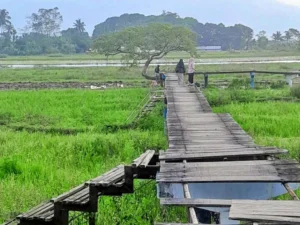
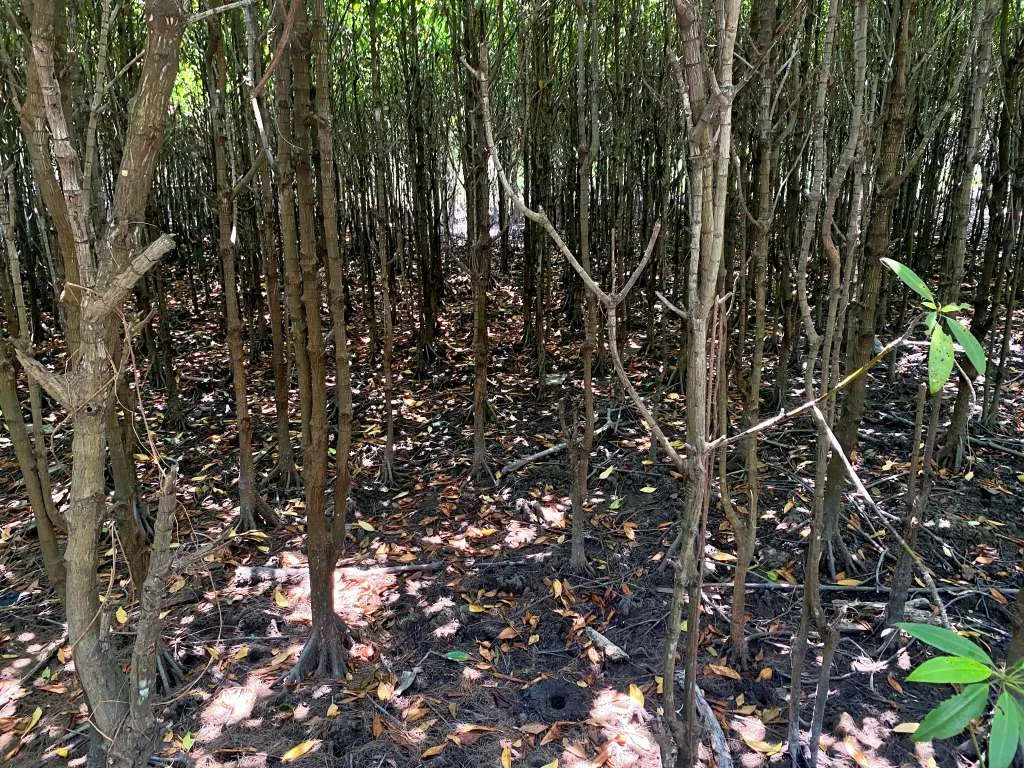
Navigating the Wonorejo boardwalk highlights both the enduring appeal of the mangrove forest and the vulnerabilities of its tourism infrastructure. Visitors entering the complex are greeted by traditional thatched-roof architecture at the main pier. Free of general admission fees for those opting for self-guided walks rather than motorized boat tours, the site offers immediate physical immersion into a dense canopy of coastal trees. Wooden boardwalks slice through the dense thickets, creating natural green tunnels where filtered sunlight plays across the timber planks.

For residents navigating Surabaya’s dense industrial landscape, the dense foliage offers a rare respite. Nevertheless, visitor numbers remain remarkably subdued, even during peak weekend hours. Observers note that while the natural landscape remains resilient, the human-made amenities intended to support visitors require urgent rehabilitation.
This infrastructural lag is most visible in the designated culinary center within the complex. Rows of food stalls, designed to foster local micro-enterprises and provide weary travelers with refreshments, sit completely vacant. Unoccupied seating areas, peeling paint, and a complete absence of active vendors point to a systemic disconnect between the site’s economic potential and its current operational reality. Without active concessions, visitors unable to purchase basic supplies like drinking water have their visits curtailed, shortening dwell times and undermining the commercial viability of the ecosystem.
Economic and Social Implications for Local Communities

The decline in foot traffic at Wonorejo carries direct financial implications for nearby residents who rely on the ecotourism economy. Ecotourism models depend on a symbiotic relationship: tourists gain recreational and educational value, while local vendors and guides secure sustainable livelihoods. When visitor numbers drop, vendors abandon their stalls, eroding the community support networks critical for long-term conservation compliance.
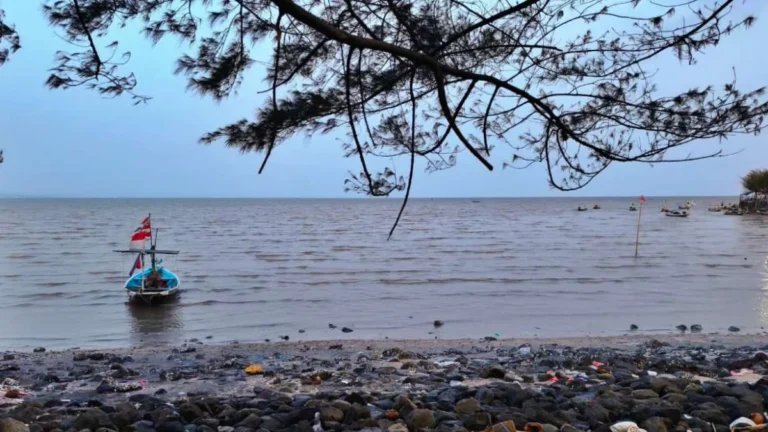
Conversely, informal activities persist along the periphery of the protected zones. Local residents frequently gather along the riverbanks surrounding the mangrove forest to fish. For many working-class families in the area, angling serves as an accessible, low-cost recreational outlet that requires no admission fees or specialized equipment. This juxtaposition—between formal, underutilized tourism infrastructure and organic, community-level use—suggests that the space retains deep social relevance, albeit outside traditional commercial frameworks.
Ecological Dynamics and Educational Opportunities

Beyond recreational utility, the Wonorejo mangrove forest functions as a vital ecological laboratory. The landscape is defined by complex biological adaptations that characterize estuarine ecosystems. Prominent among these are pneumatophores—specialized breathing roots that project upward through the dense, anoxic mud to facilitate oxygen exchange for the submerged flora. Additionally, mangrove species exhibit sophisticated physiological mechanisms to survive high salinity levels, utilizing specialized root filtration systems or salt-secreting leaf glands to thrive in brackish tidal zones.
These coastal forests also act as indispensable nurseries for marine life. The intricate web of submerged roots shelters juvenile fish, crustaceans, and mollusks, directly supporting the broader coastal fishery economy of East Java. Despite this biological richness, interpretive infrastructure within the Wonorejo complex—such as educational signage, guided ecological tours, and interactive exhibits—remains minimal. Experts argue that integrating science-based interpretation, bird-watching programs, and school-led conservation workshops could significantly elevate the site’s appeal, transforming passive sightseeing into an active educational experience.
Strategic Pathways for Urban Ecotourism Development

As Surabaya’s mangrove reserves enter a new decade following high-level national attention, municipal stakeholders face clear strategic imperatives. revitalizing spaces like Wonorejo does not necessarily require aggressive commercialization or concrete-heavy structural overhauls. Instead, urban planners emphasize targeted, low-impact interventions:
- Facility Restoration: Immediate structural repairs to boardwalks, lighting, and sanitation facilities to ensure visitor safety and comfort.
- Economic Reactivation: Incentivizing local culinary vendors and small businesses to return through subsidized permits, promotional campaigns, or structured market days.
- Educational Integration: Partnering with academic institutions and environmental NGOs to establish permanent interpretive centers, highlighting estuarine ecology, carbon sequestration, and local biodiversity.
- Community-Centric Management: Involving local fishing communities and residents directly in the daily maintenance and guided programming of the ecotourism zone.
By addressing these foundational challenges, municipal authorities can bridge the gap between high-level conservation policy and grassroots execution. Ensuring that urban natural reserves remain vibrant, functional, and economically sustainable is essential not only for Surabaya’s environmental resilience but also for preserving the city’s connection to its vital coastal heritage.