ROME — A widespread wave of bomb threats struck educational institutions across Italy, forcing the immediate evacuation of thousands of schools and prompting high-level security meetings involving the nation’s top leadership. Despite the scale of the disruption, Prime Minister Giorgia Meloni quickly moved to reassure the public, confirming that the threats were false alarms and that no authentic danger had been detected.
The coordinated nature of the incident, which affected approximately 6,000 schools nationwide according to reports from the Italian news agency Ansa citing the Ministry of Education, has intensified anxieties regarding modern hybrid warfare tactics, cyber threats, and psychological operations aimed at destabilizing European infrastructure. Security and intelligence agencies have launched intensive investigations to trace the origin of the mass dissemination and identify the perpetrators behind the coordinated disruption.
The Chronology of the Disruption
The crisis unfolded during regular morning hours as academic institutions across various regions of Italy received identical or similar electronic communications warning of explosive devices planted on school premises. The sheer volume of the messages overwhelmed administrative systems and triggered automated emergency protocols in numerous provinces.
Upon receiving the alerts, school administrators, working in tandem with local law enforcement and civil protection agencies, initiated immediate evacuation procedures. Students and faculty members were ordered out of classrooms and assembled in courtyards, sports fields, and nearby public spaces while bomb squad units and canine teams deployed to conduct thorough sweeps of the affected buildings.
Sofia De Ponte, a 19-year-old student at the prominent Virgilio High School in Rome, described the chaotic moments following the alerts. "The principal came to the courtyard and told us that an email had arrived containing a bomb threat, and right after that, the school building was immediately evacuated," she recounted. Many students were forced to leave behind personal belongings, backpacks, and study materials inside classrooms, unable to re-enter until authorities completed extensive security clearances of the facilities.
While the exact number of schools that enacted full physical evacuations remains fluid due to the decentralized nature of localized emergency responses, the psychological and logistical impact was felt nationwide. Major urban centers, including Rome, Milan, Naples, and Turin, reported significant disruptions as police cordoned off school zones and diverted traffic to facilitate emergency operations.
Government Response and Prime Ministerial Assessment
In response to the nationwide scare, Prime Minister Giorgia Meloni convened an emergency session with senior security chiefs, intelligence directors, and law enforcement officials to evaluate the credibility of the threats and coordinate a unified national response.
Following the security briefing, Meloni issued a public statement via social media to calm an increasingly anxious populace. "Right now, based on the checks that have been carried out, no elements have been found that indicate a real danger," Meloni stated.
The Italian premier characterized the wave of communications not as localized criminal pranks, but as a calculated psychological operation. "These reports instead appear to be related to a strategy aimed at generating unrest and panic, which is currently the subject of the necessary in-depth investigations," she added.
Educational authorities and school administration unions echoed these assessments. Antonello Giannelli, president of the National Association of School Heads (ANP), strongly condemned the perpetrators, emphasizing the severe societal cost of such malicious acts. "This shows how great irresponsibility, when combined with the extraordinary communication power of the means we have at our disposal today, can cause large-scale damage and disruption," Giannelli remarked in an official statement. "We hope that light will soon be shed on the origin of these threats and that those responsible can be identified."
Broader Context: A Rising Tide of Hybrid Warfare and Cyber Threats
The mass school hoax does not exist in a vacuum. It follows a troubling pattern of security incidents, cyber attacks, and coordinated disruptions targeting critical infrastructure and public institutions across Europe over recent months.
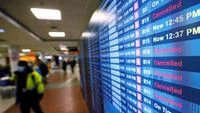
In the weeks leading up to the Italian school evacuations, European aviation authorities reported a series of fraudulent bomb threats targeting commercial flights across the continent. These incidents led to costly flight diversions, emergency landings, and severe delays, straining the resources of European border control and aviation security agencies. Furthermore, several European nations, including Italy, experienced sophisticated cyberattacks targeting critical infrastructure, such as automated climate control and cooling systems in supermarket chains.
These events have heightened geopolitical tensions and stoked fears among Western security analysts regarding the escalation of "hybrid warfare"—a mix of conventional military pressure, cyberattacks, disinformation campaigns, and psychological operations orchestrated by hostile state or non-state actors.
Adding weight to these concerns, Italian Foreign Minister Antonio Tajani recently revealed that he had been the direct target of aggressive cybercriminals. Tajani stated that malicious actors leaked his personal data online in retaliation for Italy’s staunch diplomatic and military support for Ukraine amid the ongoing conflict with Russia. The convergence of targeted political harassment, critical infrastructure cyberattacks, and mass civil disruption campaigns has led security officials to warn that European societies are facing an increasingly complex threat landscape.
Implications for Public Safety and Institutional Resilience
The recent wave of false bomb threats in Italy highlights the profound vulnerabilities that modern, hyper-connected societies face against psychological and cyber disruptions. While no physical casualties or explosive materials were discovered, the economic, educational, and emotional tolls are substantial.
- Educational Interruption: Thousands of students faced abrupt interruptions to their curriculum, high-stakes exam preparations, and daily routines. The repetition of such hoaxes threatens to produce "evacuation fatigue," potentially leading students and staff to take future warnings less seriously—a dangerous complacency in an era of genuine security threats.
- Resource Strain: Emergency services, bomb squads, and local police forces were diverted from routine duties to respond to thousands of simultaneous false alarms. This overextension of public safety infrastructure could compromise response capabilities during actual emergencies.
- Psychological Impact: Parents, teachers, and students experienced acute anxiety and fear. The intent of the perpetrators—identified by Prime Minister Meloni as generating widespread unrest and panic—was partially achieved through the sheer amplification of fear via digital communication channels.
As Italian law enforcement agencies, the Postal and Communications Police, and national intelligence services delve deeper into the digital footprints of the messages, the focus has shifted toward enhancing cybersecurity resilience, tracking international digital routing networks, and improving crisis communication protocols for public institutions.
For now, schools across Italy have resumed normal operations following official all-clear declarations from security forces. However, the incident serves as a stark reminder of the evolving nature of security threats in the 21st century, where the click of a button can paralyze a nation’s educational system and test the psychological resilience of an entire society.