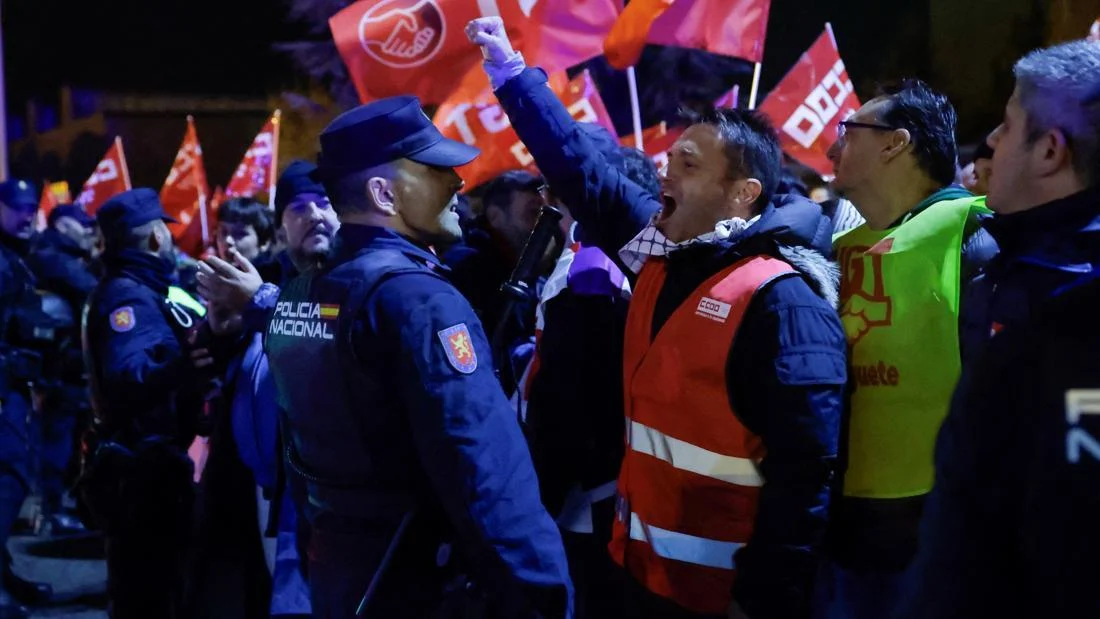
MADRID — Spain witnessed a massive nationwide labor disruption on Wednesday, November 11, 2026, as workers across the country downed tools for a 24-hour general strike. The movement, spearheaded by various trade unions, was primarily driven by a deepening crisis in the nation’s housing sector, where skyrocketing property prices and rental costs have rendered urban living increasingly unaffordable for the working class. The industrial action brought significant parts of the Spanish economy to a temporary standstill, most notably impacting logistics, transport, and wholesale markets, including the critical Mercamadrid distribution hub.
The Anatomy of the Housing Crisis
The catalyst for this widespread unrest is a confluence of factors that have plagued the Spanish real estate market for years. According to recent data from the Bank of Spain and national housing indices, residential property prices have consistently outpaced wage growth for the better part of the last decade. In major metropolitan centers such as Madrid, Barcelona, and Valencia, the average monthly rent often consumes more than 40% to 50% of the median household income, a threshold that international economists categorize as severe financial stress.

The housing shortage is further exacerbated by a lack of investment in social housing initiatives. While the government has previously promised to increase the stock of affordable rental properties, critics argue that the implementation has been sluggish. Furthermore, the prevalence of short-term tourist rentals—a direct consequence of Spain’s thriving tourism industry—has removed thousands of long-term rental units from the market, driving prices higher for local residents.
Chronology of the Escalation
The grievances that led to the November 11 strike did not materialize overnight. The buildup can be traced back to early 2026, when inflation began to erode the purchasing power of average Spanish households.
- January – March 2026: Labor unions signaled increasing frustration as collective bargaining agreements failed to account for rising living costs, specifically housing and utilities.
- June 2026: Several regional protests broke out in Madrid and Barcelona, with demonstrators demanding an immediate cap on rental prices and stricter regulations for holiday properties.
- September 2026: The government announced a snap election, scheduled for November 29, 2026. This announcement provided a political focal point for labor unions to escalate their demands.
- November 11, 2026: The nationwide 24-hour strike commenced at midnight, with major picketing operations occurring at critical infrastructure, including food supply chains like Mercamadrid.
The Scene at Mercamadrid
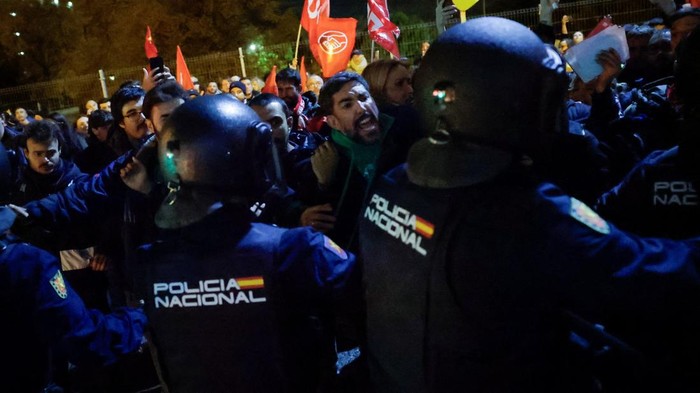
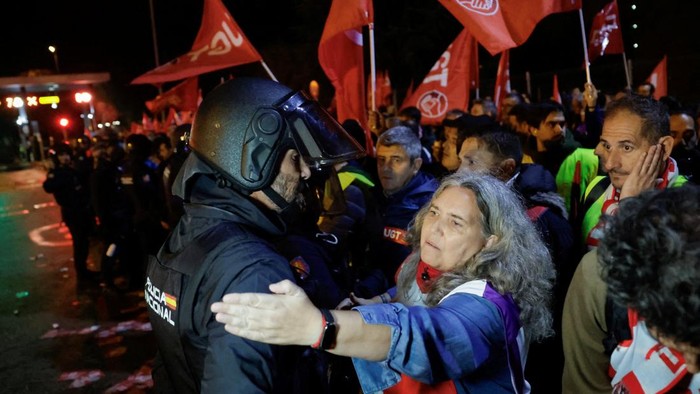
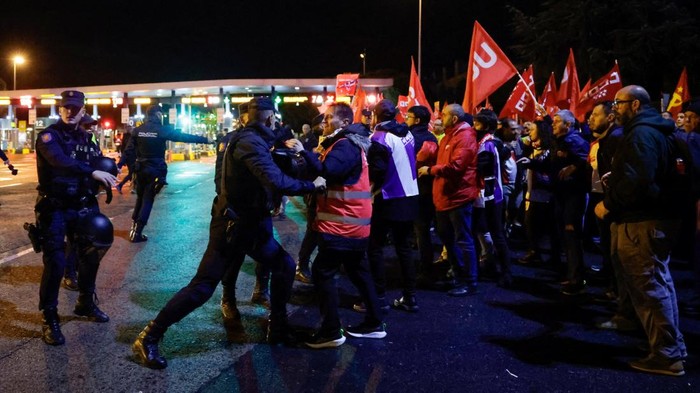
The impact of the strike was most visible at Mercamadrid, the central wholesale market that serves as the lifeblood for fresh produce across the Spanish capital. By the early hours of Wednesday, workers had established picket lines at key entrances, effectively slowing the distribution process. While the primary goal was to draw attention to their plight, the situation was not without tension.
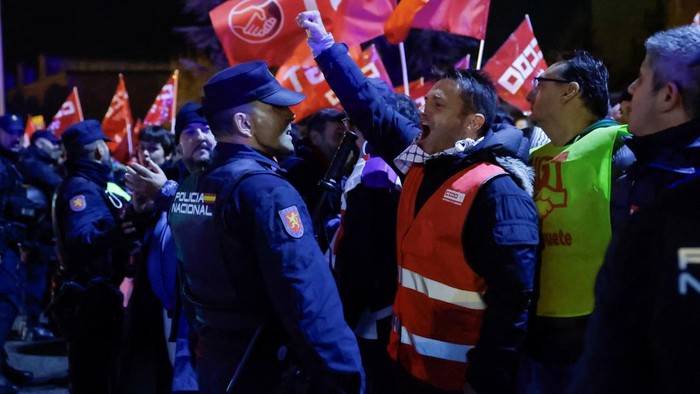
Local reports indicated that police were deployed in significant numbers to manage the crowds and ensure that essential services were not completely disrupted. At one point, a tense standoff occurred between demonstrators and law enforcement, with brief arguments breaking out as union members attempted to block delivery trucks. Despite these incidents, the demonstrations remained largely disciplined, serving as a powerful visual representation of the frustration felt by laborers who feel that their hard work no longer affords them a stable home.
Economic Implications and Wage Disparities
The core demand of the unions is a fundamental realignment of the relationship between labor compensation and the cost of living. Union representatives have argued that even for those in full-time, stable employment, the "living wage" has become a misnomer in the current economic climate.
Economic analysts suggest that the strike highlights a deeper structural flaw in the Spanish economy. Historically, Spain has relied on labor-intensive sectors and a large tourism industry, both of which often offer lower-wage profiles. When paired with a housing market that operates on global asset pricing models, the disconnect becomes unsustainable. Without a significant increase in base wages or a government-led intervention in housing supply and price controls, the structural inequality is expected to worsen.
Political Reactions and the Impending Election
With the general election set for November 29, the timing of the strike is politically significant. Opposition parties have seized upon the unrest, criticizing the incumbent administration for failing to address the housing emergency effectively. Meanwhile, government officials have called for calm, emphasizing that the issue is a complex, multi-layered challenge that cannot be solved by legislation alone.
A spokesperson for the governing coalition stated that they are committed to "dialogue and long-term sustainable policy," but union leaders have rejected these overtures, labeling them as "empty rhetoric" designed to appease voters ahead of the ballot. The strike has effectively made housing the primary issue of the upcoming election, forcing every major political party to articulate a concrete plan for reform.
Broader Social Impact
Beyond the immediate economic disruptions, the strike has sparked a broader cultural conversation about the "right to the city." In many European capitals, the phenomenon of "gentrification-driven displacement" has become a central point of civic debate. The Spanish case is particularly poignant because it brings together traditional labor issues—wages and working conditions—with the modern crisis of urban affordability.
For the younger generation, often referred to as the "precariat" due to the prevalence of short-term contracts, the ability to secure a home is seen as a rite of passage that is currently out of reach. Sociologists tracking the event noted that the demographic composition of the protestors included not only traditional blue-collar workers but also a significant number of young professionals who are increasingly frustrated by their inability to achieve financial independence despite having formal employment.
Future Outlook and Negotiations
As the 24-hour strike concludes, the question remains: what comes next? The effectiveness of such a mass protest depends on the government’s willingness to engage with union demands. If the administration continues to resist calls for rent caps or significant wage hikes, further labor unrest is a high probability.
Furthermore, the impact of this strike on the November 29 election outcome could be transformative. Should the labor movement successfully mobilize their base, the political landscape of Spain could see a shift toward more populist or progressive platforms that prioritize social welfare over current market-driven approaches.
In the immediate term, supply chains are expected to normalize, but the underlying tension remains palpable. The events of November 11 have served as a clear warning to the political and business elite that the status quo is no longer tenable. As Spain approaches its snap election, the message from the streets of Madrid is clear: the right to housing is no longer a luxury, but a fundamental expectation of a functional society. The government, regardless of who wins the upcoming polls, will be forced to confront this issue as a top-tier national priority, or risk further escalation in the months and years to come.
Ultimately, the Spanish housing crisis is a mirror of similar struggles occurring across the European Union. As the continent grapples with inflationary pressures, the demand for housing justice is likely to remain at the forefront of the political agenda, making the outcome of this particular conflict a benchmark for future labor movements across the region. For now, the nation waits to see if the rhetoric of the campaign trail will translate into the concrete policy changes that the workers of Spain so desperately demand.