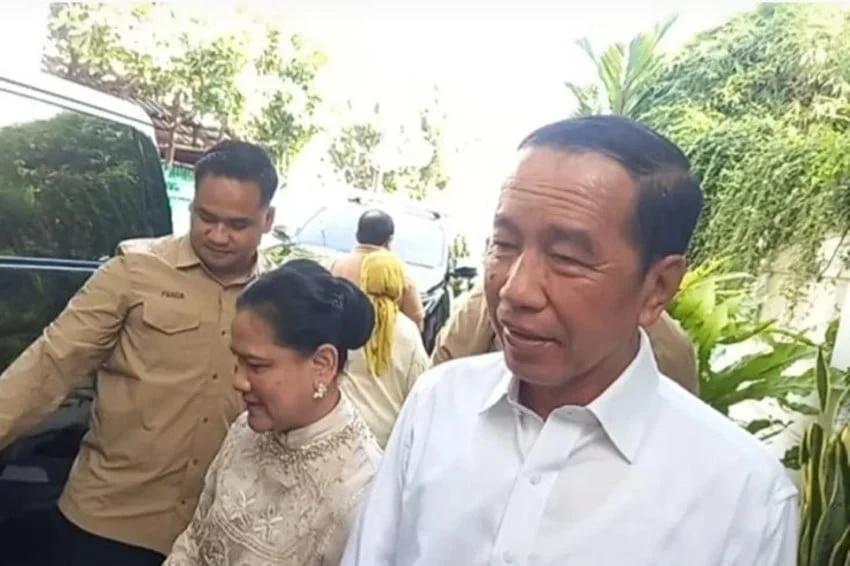
The legal proceedings surrounding the authenticity of the academic credentials of Joko Widodo, Indonesia’s seventh president, have reached a critical juncture. Former President Joko Widodo, widely known as Jokowi, is scheduled to appear in person today at the East Jakarta District Court. The high-profile court session addresses the persistent allegations concerning his university diploma, a controversy that has generated significant public discourse and multiple legal maneuvers across the country.
The confirmation of his attendance was provided by his aide, AKBP Syarif Muhammad Fitriansyah, who verified that the former head of state is currently in Jakarta and prepared to fulfill the judicial summons. This development marks a pivotal moment in ongoing litigation that involves prominent public figures and activists, transforming what began as online speculation into formal courtroom proceedings under the scrutiny of the national judiciary.
Background Context of the Academic Credential Controversy
The controversy surrounding Joko Widodo’s educational background stems from long-standing allegations initially popularized on various social media platforms and later channeled through formal legal complaints. Critics and political opponents have repeatedly questioned the authenticity of the bachelor’s degree awarded to Jokowi by the Faculty of Forestry at Universitas Gadjah Mada (UGM) in Yogyakarta, from which he graduated in 1985.
Despite repeated clarifications, the publication of official academic records, and testimonies from university authorities—including the Dean of the Faculty of Forestry and fellow alumni who shared classrooms with him during the 1980s—the narrative surrounding the alleged forged diploma persisted. UGM officials have consistently maintained that the university issued a legitimate degree to Joko Widodo, presenting archival evidence, student registry books, and graduation photographs to substantiate their position.
However, the persistence of the claims eventually led to legal interventions, transforming a public relations challenge into a matter for the criminal justice system. Prosecutors and law enforcement agencies initiated investigations into individuals accused of spreading defamatory statements and disinformation regarding the authenticity of the presidential credentials, culminating in the current trials taking place in the capital.
Chronology of the Legal Proceedings
The pathway to today’s court appearance has been marked by a series of strategic legal filings, preliminary hearings, and escalating tensions between the prosecution, the defendants, and interested observers.
The decision to summon the former president was officially disclosed during a previous court session involving defendant Roy Suryo, a prominent digital forensics expert and former government minister who has been implicated in the dissemination of materials related to the diploma controversy. Before closing the session, the Jaksa Penuntut Umum (JPU)—the Public Prosecutor team—formally requested permission from the presiding judges to summon Joko Widodo and his aide, AKBP Syarif Muhammad Fitriansyah, as material witnesses.
During the hearing on October 28, 2026, the prosecution outlined the necessity of securing testimony directly from the former president to establish key facts regarding the issuance, custody, and presentation of the academic documents in question. Furthermore, the prosecution requested that the testimony of Joko Widodo be coordinated alongside proceedings involving another central figure in the controversy, activist and commentator Tifauzia Tyassuma, commonly known as Doctor Tifa.
The prosecution emphasized administrative and security considerations in requesting that both hearings be consolidated or scheduled concurrently on November 5, 2026. Given the immense public interest and potential security protocols required for a former head of state, judicial authorities granted the schedule adjustment to ensure orderly proceedings and public safety within the courthouse premises.
Legal Stakes and Defense Strategies
The courtroom atmosphere has grown increasingly tense as defense teams and affiliated figures prepare for exhaustive cross-examinations. Legal representatives for the defendants, alongside vocal critics such as Doctor Tifa—who has publicly claimed to have prepared thousands of targeted questions for witnesses—intend to press for microscopic details regarding university administration records, graduation procedures from four decades ago, and the physical condition of the diploma document itself.
Legal analysts point out that the inclusion of the former president as a witness places a unique burden on the judicial system to maintain strict procedural decorum. While witnesses in Indonesian courts are legally bound to provide truthful testimony under oath, the appearance of a former leader requires meticulous logistical planning by court security and local law enforcement to manage media presence, supporters, and potential protestors.
The defense strategy primarily revolves around challenging the evidentiary chain of custody and demanding physical verification of the original documents by independent forensic experts. Conversely, the prosecution aims to rely on direct testimony from the primary certificate holder, corroborated by institutional records from Universitas Gadjah Mada, to decisively refute claims of document falsification and establish the legal accountability of those who propagated the allegations.
Broader Societal and Political Implications
The unfolding trial at the East Jakarta District Court carries significant implications for the broader landscape of Indonesian public discourse, freedom of expression, and the legal limits of political criticism.
In recent years, the intersection of digital media, political polarization, and the spread of unverified claims has prompted heightened scrutiny from regulatory bodies and law enforcement agencies. The misuse of online platforms to disseminate potentially defamatory or fabricated information about public figures has driven authorities to enforce stricter interpretations of electronic information and transaction laws.
The resolution of this specific case through judicial channels serves as a bellwether for how the Indonesian legal system handles high-stakes disputes involving the reputations of former high-ranking officials. A conclusive judicial finding backed by physical evidence and direct testimony is expected by legal experts to set a definitive legal precedent regarding the verification of official credentials and the accountability of individuals who circulate unsubstantiated allegations against state leaders.
As proceedings get underway today, national media outlets, legal scholars, and the general public will be closely monitoring the testimonies delivered inside the courtroom. The outcome of this session not only impacts the immediate defendants standing trial but also addresses a long-running controversy that has tested the resilience of institutional transparency and public trust in Indonesia’s democratic governance.