The debate surrounding the enforcement of Indonesia’s anti-corruption laws has entered a critical new phase following a high-level strategic discussion in Jakarta. The Association of Alumni of the Sepuluh Nopember Institute of Technology (IKA ITS), alongside representatives from several of Indonesia’s most prominent university alumni networks, officially proposed a comprehensive reform of the legal framework governing corruption eradication. The initiative aims to harmonize strict law enforcement with legal certainty and fundamental fairness for professionals operating within state-owned enterprises, government institutions, and public service sectors.
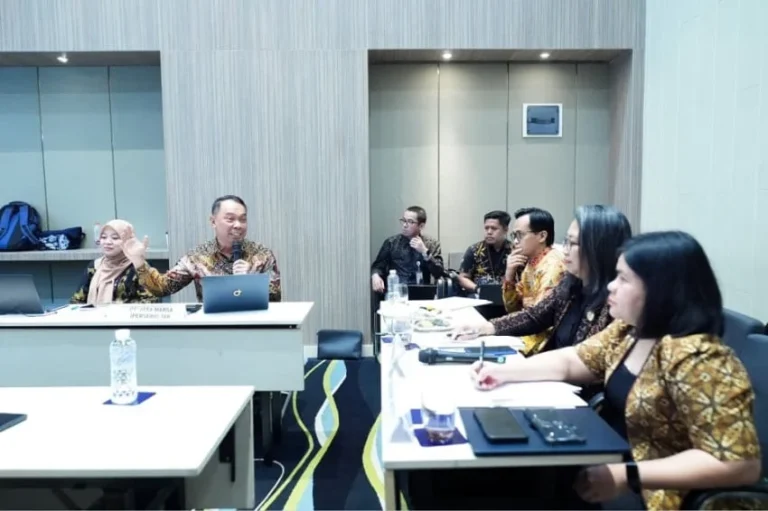
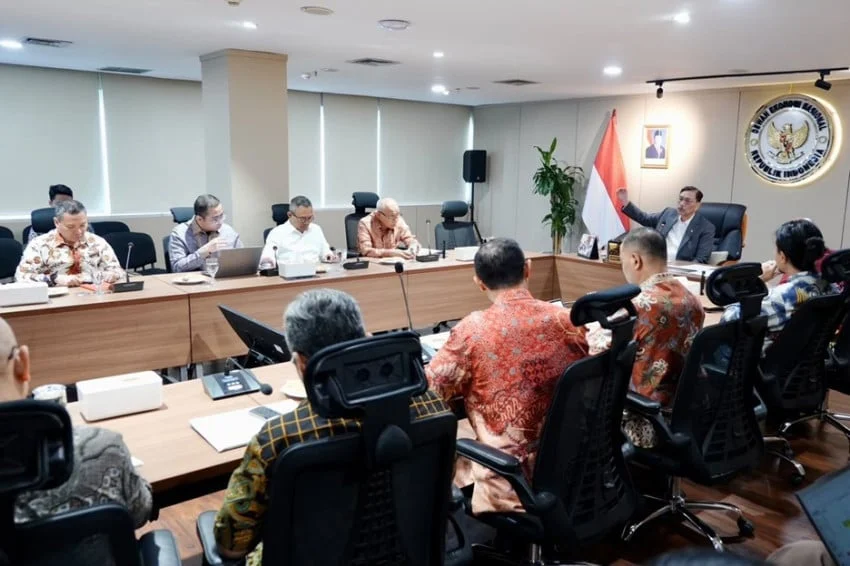
The proposal was formally presented during a focused institutional discussion on the Anti-Corruption Law (UU Tipikor) hosted by the Chairman of the National Economic Council (DEN), Luhut Binsar Pandjaitan. The gathering, held at the DEN Building in Jakarta, brought together key leaders from the National Economic Council, elite academic alumni organizations including IKA ITB (Bandung Institute of Technology Alumni Association), ILUNI UI (University of Indonesia Alumni Association), IKA ITS, KAGAMA (Gadjah Mada University Alumni Association), IKA UNAIR (Airlangga University Alumni Association), and IKA UNPAD (Padjadjaran University Alumni Association), alongside prominent industry professionals and legal experts.
Background Context and Institutional Concerns
For years, Indonesia’s anti-corruption architecture—anchored primarily by Law No. 31 of 1999 as amended by Law No. 20 of 2001 concerning the Eradication of Criminal Acts of Corruption—has served as the cornerstone of the nation’s governance clean-up efforts. However, application challenges have increasingly emerged, particularly at the intersection of corporate business judgment, administrative discretion, and criminal liability.
During the discussions at the DEN Building, stakeholders highlighted a persistent structural ambiguity in how statutory provisions are applied to corporate decisions made by state apparatuses and directors of State-Owned Enterprises (SOEs). The core anxiety centers on the potential criminalization of normal business risks and administrative missteps, a phenomenon that has reportedly induced a pervasive culture of decision-making paralysis among economic and public sector leaders.
Addressing the forum, IKA ITS Deputy Chairperson Boy Robyanto articulated the core grievances felt across the professional and corporate spectrum. He stressed that the prevailing vagueness in interpreting corruption elements—specifically the definition and calculation of "state financial losses" (kerugian keuangan negara)—has generated profound legal uncertainty for decision-makers within SOEs and public agencies.
"The lack of clarity in applying anti-corruption provisions, particularly regarding state losses, has created uncertainty for decision-makers within state-owned enterprises," Boy stated during the meeting. He warned that this ambiguity engenders systemic hesitation among professionals when executing vital business decisions, ultimately hindering public service delivery, slowing down strategic infrastructure projects, and diluting the overall competitiveness of national enterprises in the regional and global marketplace.
Legal Scrutiny of Key Legislative Articles
A focal point of the deliberation was the practical application of Articles 2 and 3 of the original Anti-Corruption Law, the substantive provisions of which have now been carried over into Articles 603 and 604 of Indonesia’s newly enacted Criminal Code (KUHP). These articles deal broadly with unlawful self-enrichment or the enrichment of other persons or corporations that results in financial losses to the state.
Boy specifically drew attention to the necessity of refining the legal parameters governing these articles. He argued that lawmakers and judicial authorities must establish sharper statutory boundaries to separate genuine criminal corruption from administrative irregularities and commercial miscalculations.
"The elements of state financial losses, unlawful acts, and criminal intent need to be formulated and interpreted much more clearly, ensuring that genuine business risks, administrative errors, and criminal acts of corruption are not lumped together," Boy emphasized.
Legal scholars and corporate governance observers have long echoed this sentiment. Under standard corporate law, the Business Judgment Rule traditionally shields corporate directors from personal liability for decisions made in good faith, with due care, and with the reasonable belief that the action is in the best interest of the corporation. However, in the context of Indonesian SOEs, prosecutors and anti-corruption courts have frequently evaluated commercial losses through a strict criminal lens, occasionally classifying legitimate business failures or administrative deviations as criminal corruption.
International Best Practices and the UNCAC Framework
A further dimension raised during the discourse was Indonesia’s international legal commitments. Boy Robyanto reminded participants that Indonesia formally ratified the United Nations Convention Against Corruption (UNCAC) nearly two decades ago through Law No. 7 of 2006.
Following twenty years of domestic implementation under the UNCAC framework, the alumni representatives argued that the time is ripe to critically evaluate and integrate international best practices. Aligning domestic law enforcement more closely with global standards would ensure that the aggressive pursuit of corrupt actors runs parallel with, rather than contradictory to, the stimulation of national economic growth and foreign investment appeal.
International frameworks typically emphasize distinguishing between malfeasance (intentional wrongdoing) and misfeasance or non-feasance stemming from standard operational complexities. Integrating these distinctions into the Indonesian legal landscape is viewed by the alumni coalition as an essential prerequisite for fostering a modern, confident corporate culture within the state apparatus.
Case Studies Illustrating Practical Dilemmas
To ground their legislative and regulatory reform proposals in empirical reality, the IKA ITS delegation pointed to specific historical and ongoing legal proceedings involving PT Pelabuhan Indonesia (Pelindo) and its corporate subsidiaries. These cases were cited to illustrate the structural complexities and unintended consequences arising from the current judicial interpretation of state losses.
The first case highlighted involved the dredging operations at Tanjung Perak Port, executed by Pelindo’s subsidiary, PT Alur Pelayaran Barat Surabaya (APBS). According to the factual overview presented, the dredging project was successfully completed, physically delivered, and has since provided continuous operational and logistical benefits to maritime traffic and port productivity.
Despite the tangible utility and economic output generated by the project, the corporate profits derived from the operation became the subject of protracted legal scrutiny. Prosecutors and courts questioned the underlying procurement process, identifying procedural deviations that were categorized as unlawful acts benefiting the corporation. Crucially, while judicial proceedings acknowledged that the individual defendants did not personally enrich themselves or siphon funds for private gain, the corporate entity’s earnings were nonetheless targeted within a criminal framework.
This case, among others discussed at the forum, underscores a recurring dilemma in Indonesian jurisprudence: how to address procedural or administrative non-compliance in public procurement without inadvertently penalizing successful operational outcomes or destroying corporate value.
Chronology of the Strategic Dialogue
The meeting at the DEN Building on Friday, November 6, 2026, represents the culmination of months of preliminary consultations among various intellectual, professional, and economic circles. The chronological evolution of this policy initiative can be traced through several key phases:
- Identification of Professional Bottlenecks (Early 2025 – Mid 2026): Various university alumni associations, legal practitioners, and corporate executives began noting an uptick in cautious behavior among SOE directors, leading to delayed project disbursements and stalled capital expenditure programs.
- Inter-Alumni Coalition Formation (Mid 2026): Major university networks—including representatives from ITB, UI, ITS, Gadjah Mada, Airlangga, and Padjadjaran—began coordinating cross-institutional policy papers aimed at addressing systemic legal hurdles in national development.
- Formal Engagement with the National Economic Council (November 6, 2026): The presentation of the reform proposals directly to DEN Chairman Luhut Binsar Pandjaitan marked the transition of these academic and professional concerns into a formal institutional dialogue platform.
- Ongoing Legislative and Policy Review (Post-November 2026): The DEN and relevant state bodies are expected to review the recommendations, consulting further with law enforcement agencies, the Supreme Court, and the Ministry of Law and Human Rights to explore potential regulatory refinements or legislative reviews.
Broader Economic Implications and Analyst Perspectives
Economists and legal analysts have offered mixed yet generally receptive reactions to the discourse surrounding anti-corruption law reform. Proponents of reform argue that legal certainty is the single most critical variable for attracting both domestic and international capital into strategic infrastructure projects. When corporate officers operate under the constant threat of retrospective criminalization for business decisions that yield unexpected losses, enterprise efficiency plummets, risk aversion sets in, and bureaucratic stagnation follows.
Conversely, anti-corruption watchdogs have historically urged caution regarding any legislative modifications that might narrow the definition of state losses or restrict the investigative powers of law enforcement bodies such as the Corruption Eradication Commission (KPK), the Attorney General’s Office, and the Indonesian National Police. Civil society organizations frequently stress that robust enforcement against state resource leakage remains vital for maintaining public fiscal health and preventing systemic plunder of national assets.
To balance these competing imperatives, policy experts suggest that the solution does not lie in weakening anti-corruption statutes, but rather in establishing clearer administrative dispute-resolution mechanisms. Under such a hybrid framework, pure administrative or civil infractions should ideally be resolved through administrative courts, state financial audits by the Audit Board of Indonesia (BPK), and corporate restructuring, reserving criminal prosecution exclusively for cases involving proven fraudulent intent, bribery, kickbacks, and deliberate self-enrichment.
Next Steps for the National Economic Council
As the coordinating body tasked with formulating strategic economic policies to accelerate national development, the National Economic Council (DEN) is uniquely positioned to bridge the gap between economic growth objectives and legal enforcement standards. The inputs provided by IKA ITS and allied alumni networks will feed into ongoing policy assessments aimed at optimizing the investment climate while maintaining zero-tolerance standards for genuine corrupt practices.
The dialogue concluded with an agreement to continue multi-stakeholder consultations, involving legal scholars, business leaders, regulatory authorities, and law enforcement agencies. The ultimate goal is to craft a balanced, forward-looking implementation guideline or legislative review recommendation that safeguards public finances, respects international standards such as the UNCAC, and empowers professional leadership across Indonesia’s economic landscape to drive the nation toward its long-term development targets.