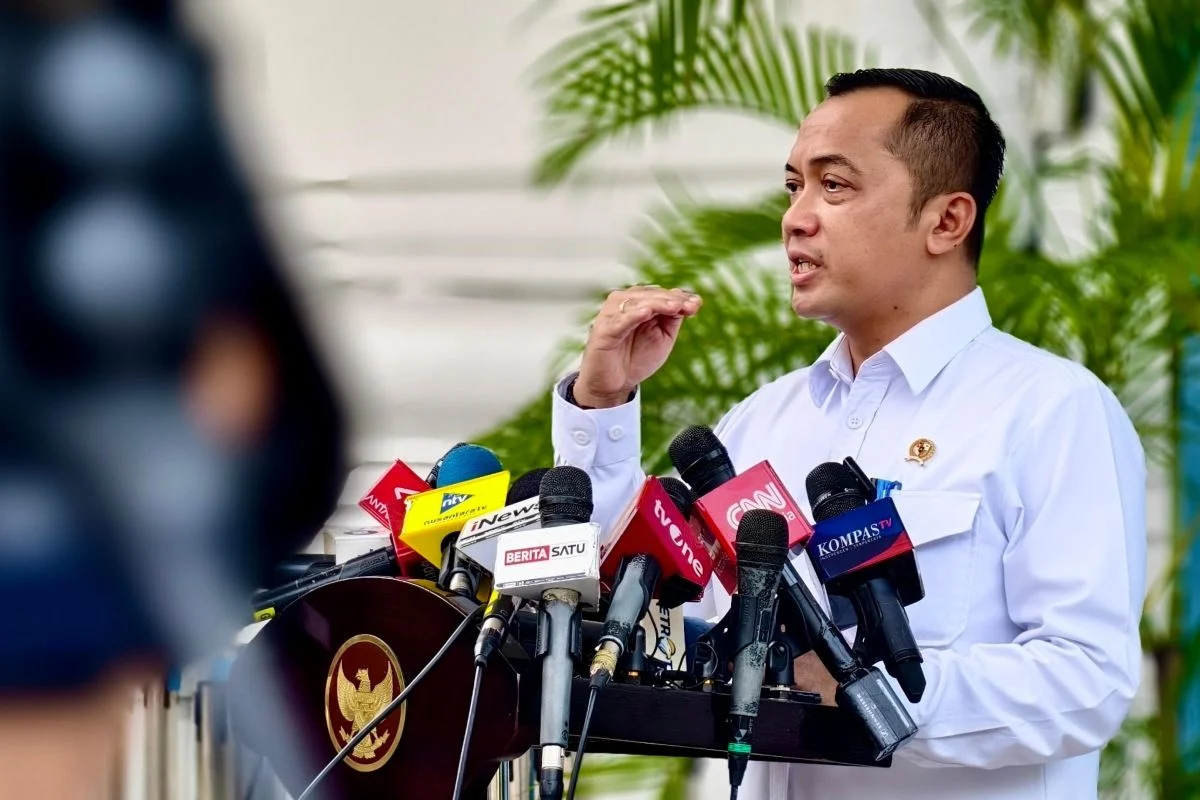
The political landscape of Indonesia was sent into a state of profound shock in November 2026 following the revelation of an unprecedented security breach: the alleged illegal wiretapping of President Prabowo Subianto. This scandal, which implicates the highest echelons of the Indonesian National Police (Polri), has raised critical questions regarding the integrity of the state’s internal security apparatus and the sanctity of executive communications. The situation escalated rapidly as the Criminal Investigation Agency (Bareskrim) of the National Police moved to detain and charge former National Police Chief General Listyo Sigit Prabowo, alongside two other high-ranking officers, Irjen Ahrie Sonta Nasution and Irjen Eko Hadi Santoso.
The Anatomy of a Security Breach
The investigation, led by the current Kabareskrim Polri, Commissioner General Asep Safrudin, suggests that the unauthorized surveillance operation was active between 2025 and 2026. The scope of this operation was not limited to the President; it reportedly encompassed a wide net of targets, including high-ranking government officials, prominent political figures, investigative journalists, non-governmental organizations (NGOs), and key players in the business sector.
At the heart of this controversy is the misuse of the Lawful Interception Management System (LIMS). Under normal circumstances, LIMS is a sophisticated, legally sanctioned tool intended for law enforcement to monitor communications in pursuit of criminal investigations, typically requiring rigorous judicial or administrative oversight. The allegations suggest that the accused officers circumvented these safeguards, inputting phone numbers into the system without any valid legal basis or procedural verification. Furthermore, forensic analysts discovered evidence of an organized attempt to erase records and digital footprints of these interceptions in October 2026, pointing to a deliberate effort to conceal the illicit activity.
Chronology and Institutional Fallout
The unraveling of the scandal began in late October 2026, when internal audits within the national security infrastructure detected anomalies in the access logs of the LIMS. By early November, the evidence became insurmountable, leading to the swift arrest of General Listyo Sigit Prabowo and his associates. The involvement of a former National Police Chief has dealt a significant blow to public trust, prompting an urgent call for institutional reform.
President Prabowo Subianto, upon being briefed on the extent of the breach, issued a direct order to the current police leadership to ensure maximum transparency throughout the investigation. The President’s directive emphasizes that no individual, regardless of their rank or past position, is above the law when it comes to compromising the state’s security architecture.
Global Context: A History of Executive Espionage
While the Indonesian scandal is unprecedented in its domestic execution, it is not an isolated phenomenon in the global arena. History is replete with instances where heads of state have found themselves the targets of sophisticated surveillance, often by their own allies. These international precedents provide a chilling framework for understanding the gravity of the current situation in Jakarta.
1. The 2009 SBY Surveillance Case
The most poignant domestic precedent occurred in 2009, involving former President Susilo Bambang Yudhoyono (SBY). In 2013, documents leaked by Edward Snowden revealed that Australia’s Defence Signals Directorate (DSD) had monitored the mobile communications of SBY, his wife, the late Ani Yudhoyono, and other high-ranking officials. The discovery led to a deep freeze in diplomatic relations, the withdrawal of the Indonesian Ambassador to Australia, and the temporary cessation of intelligence-sharing agreements. This event serves as a stark reminder of how fragile international trust becomes when the privacy of a leader is breached.
2. The Transatlantic Tensions: Merkel and Obama
In 2013, the world watched as a massive diplomatic rift formed between Germany and the United States. Revelations that the National Security Agency (NSA) had tapped the personal cell phone of Chancellor Angela Merkel for over a decade—dating back to her time as an opposition leader—shook the foundations of the NATO alliance. The incident forced a confrontation between Merkel and then-President Barack Obama, highlighting that even in democratic alliances, strategic interests often override diplomatic ethics.
3. Sovereign Violations: Dilma Rousseff in Brazil
President Dilma Rousseff’s experience in 2013 underscored the economic dimension of state surveillance. NSA documents revealed that her private communications and those of the state-owned oil giant Petrobras were being monitored. The breach was so severe that it resulted in the cancellation of a high-profile state visit to Washington, marking one of the most significant diplomatic protests in modern South American history.
4. The Mexican and French Parallels
Similarly, Enrique Peña Nieto of Mexico and François Hollande of France were targeted by foreign intelligence services. In the case of France, the disclosure by WikiLeaks in 2015 that the NSA had spied on three consecutive French presidents—Chirac, Sarkozy, and Hollande—exposed the extent to which global powers prioritized intelligence gathering over the sovereign privacy of their closest partners.
Analysis: Implications for National Security
The case against the high-ranking police officers in Indonesia transcends mere "abuse of power." It touches upon the "fundamental aspects of the state." When a head of state’s communication line is compromised, the risks are multifaceted:
- Policy Vulnerability: Strategies regarding national defense, economic policy, and international negotiations are laid bare, allowing malicious actors to preempt or sabotage government initiatives.
- Diplomatic Integrity: The confidentiality of communications with foreign counterparts is essential for statecraft. An insecure communication line can jeopardize international alliances.
- Institutional Erosion: The fact that the perpetrators occupied senior positions within the security apparatus suggests a systemic failure in the checks and balances designed to monitor the overseers.
The Path Forward: Accountability and Reform
The current investigation is now entering a critical phase. Legal experts and civil society organizations are closely monitoring the proceedings to ensure that the process remains free from political interference. The Coordinating Minister for Political, Legal, and Security Affairs (Menko Polkam) has signaled that this crisis should be viewed as an opportunity for the total restructuring of the National Police’s digital surveillance protocols.
The use of LIMS technology, while necessary for modern policing, must be subjected to stringent, independent, and multi-layered auditing. The current scandal has created a consensus that the "blind trust" historically afforded to security agencies regarding their technical capabilities is no longer viable.
Conclusion
The wiretapping scandal of 2026 will undoubtedly go down in Indonesian history as a defining moment for the resilience of its democratic institutions. As the legal system proceeds with the trial of the former police chief and his subordinates, the broader implication remains clear: the security of a nation is only as strong as the integrity of the individuals entrusted to protect it. Whether the state can emerge from this scandal with a reformed, transparent, and trustworthy security apparatus remains to be seen. However, the events of November 2026 have served as a harsh, irreversible lesson on the dangers of unchecked surveillance and the vital importance of protecting the sanctity of the presidential office from both foreign and domestic threats.
The resolution of this case will not only determine the fate of the accused officers but will also define the future standards for digital privacy and government accountability in Indonesia for decades to come. As the investigation deepens, the public awaits a conclusion that honors the rule of law and restores the essential trust between the people, the government, and the institutions sworn to protect them.