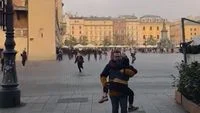
KRAKOW, POLAND — A quiet Saturday afternoon in the historic center of Krakow was violently shattered on November 7, transforming a bustling cultural hub into a scene of terror and devastation. A heavily armed lone gunman opened fire in a crowded commercial and tourist district, killing six people and injuring several others before law enforcement intervened. The incident, which sent shockwaves throughout Poland and the broader European Union, has ignited urgent discussions regarding domestic security, the rising tide of right-wing extremism, and the psychological accessibility of firearms within the region.
Authorities have confirmed that the violence did not end at the initial crime scene. Following a tense standoff and subsequent SWAT raid at the suspect’s private residence, investigators discovered three additional bodies, raising the total death toll to nine. As the city attempts to mourn and recover, national security agencies are piecing together a harrowing portrait of radicalization, premeditation, and systemic vulnerabilities that allowed a heavily armed individual to execute one of the deadliest mass shootings in modern Polish history.
Chronology of Terror: How the Events Unfolded
The sequence of events on November 7 began in the early afternoon, a peak period when locals and international tourists alike frequent Krakow’s historic core, renowned for its medieval architecture and vibrant street life. According to preliminary police reports and witness testimonies, the suspect—identified only as a 34-year-old Polish national—arrived in the district equipped with semi-automatic weaponry and tactical gear.
At approximately 2:15 PM local time, the gunman initiated the attack near a prominent public square, firing indiscriminately at pedestrians and patrons seated at outdoor cafes. Amateur video footage captured by bystanders and subsequently analyzed by law enforcement shows chaotic scenes of civilians scrambling for cover behind historic stone structures and fleeing down narrow alleyways as loud, rhythmic gunfire echoed across the cobblestone streets.
Law enforcement response was swift. Within four minutes of the first emergency call, local uniformed patrol units arrived at the scene, engaging the active shooter to prevent further loss of life. A brief but intense exchange of gunfire ensued, resulting in injuries to the suspect before officers successfully subdued and arrested him.
Later that evening, acting on intelligence gathered from the suspect’s mobile devices and vehicle, counter-terrorism units executed a raid on a residential property located on the outskirts of Krakow. Upon entering the premises, officers discovered three deceased individuals, bringing the immediate casualty count to a devastating high. Forensic teams later confirmed that the victims found at the residence were known associates of the gunman, though their exact relationship and the timeline of their deaths remain under active investigation.
Profile of the Suspect and Ideological Motives
In the wake of the tragedy, Polish law enforcement, in coordination with the Internal Security Agency (ABW), launched a comprehensive investigation into the background and motivations of the perpetrator. Initial findings paint a disturbing picture of an individual deeply immersed in violent extremist ideologies.
Investigators revealed that the suspect had been active on various encrypted messaging platforms and fringe online forums associated with radical right-wing and neo-fascist movements. Digital footprint analysis indicates a preoccupation with anti-immigrant sentiment, white supremacist literature, and accelerationist philosophies—ideologies that advocate for the violent overthrow of democratic institutions through targeted acts of terror.
While Polish intelligence services had not previously flagged the individual as an immediate high-tier national security threat, authorities are examining whether he acted as a "lone wolf" inspired by international extremist manifestos, or if he maintained direct operational links to clandestine extremist cells operating within Central and Eastern Europe. The presence of tactical gear, pre-positioned ammunition caches, and explicit digital manifestos recovered from his residence strongly suggest a high degree of premeditation.
Supporting Data and Comparative Context
Mass shootings of this magnitude remain statistically rare in Poland, a nation that generally maintains lower rates of violent gun crime compared to parts of the Americas or Western Europe. Strict domestic firearm licensing laws require rigorous psychological evaluations, background checks, and documented justifications for gun ownership. Consequently, the Krakow attack has immediately prompted intense scrutiny regarding how the suspect managed to acquire high-capacity firearms and tactical equipment.
According to data compiled by the Polish National Police Headquarters (Komenda Główna Policji), violent crimes involving legally registered firearms have historically hovered at minimal levels, though illicit trafficking of weapons originating from conflict zones in Eastern Europe continues to pose a persistent challenge for border security agencies. Criminologists and security analysts note that while Poland has experienced sporadic episodes of political extremism and xenophobic vandalism in recent years, incidents escalating to lethal mass violence are unprecedented in the country’s post-communist urban centers.
The psychological fallout on the local population is profound. Krakow, as Poland’s cultural capital and a major global tourism destination, relies heavily on a secure and welcoming public image. The integration of high-casualty violence into a historic urban landscape underscores a sobering global reality: no region is entirely immune to the contagion of ideologically motivated mass violence.
Official Responses and Government Reactions
High-ranking government officials moved swiftly to address the nation in the immediate aftermath of the shooting. Prime Minister, alongside the Minister of Interior and Administration, convened an emergency security cabinet meeting in Warsaw to coordinate the national response and reassure the public regarding ongoing safety measures.
In a televised national address, the Prime Minister condemned the attack as an act of domestic terrorism, expressing deep condolences to the families of the victims and praising the rapid, courageous intervention of the local police force. "The violence witnessed in Krakow is an assault on our collective humanity, our democratic values, and the safety of our citizens," the Prime Minister stated. "We will leave no stone unturned in eradicating the dark forces of extremism that seek to divide our society."
Local municipal authorities in Krakow declared a period of official mourning, canceling public festivities and cultural events scheduled for the weekend. Improvised memorials, consisting of candles, flowers, and handwritten notes, quickly emerged near the site of the shooting as residents and visitors gathered to pay their respects to the victims.
International leaders also expressed solidarity with Poland. Statements of condolence poured in from the President of the European Commission, neighboring heads of state, and global diplomatic missions, emphasizing unity in the face of violent radicalization and the shared necessity of countering extremist networks across borders.
Broader Impact and Implications for National Security
The Krakow tragedy is expected to catalyze significant shifts in Poland’s internal security policy, intelligence-gathering priorities, and public safety infrastructure. Analysts have identified several critical areas requiring immediate attention from policymakers and law enforcement agencies:
1. Strengthening Counter-Extremism Monitoring
Intelligence agencies are likely to face increased pressure to enhance surveillance on digital platforms where radicalization frequently incubates. The ability of fringe ideologies to radicalize isolated individuals underscores the need for proactive, tech-enabled intelligence frameworks capable of identifying behavioral indicators before violent intent translates into action.
2. Review of Gun Control and Licensing Enforcement
While Poland already enforces stringent gun ownership laws, the attack will inevitably trigger legislative debates concerning the loopholes that permit individuals with extremist leanings to bypass psychological screenings or acquire weapons through illicit channels. Lawmakers are expected to propose tighter regulations on ammunition stockpiles and the sale of tactical equipment to private citizens.
3. Urban Security and Public Space Protection
Historic European cities, prized for their open, accessible public spaces and pedestrian-friendly zones, face a complex challenge in balancing heritage preservation with modern counter-terrorism architecture. Security planners in Krakow and other major Polish municipalities will likely review threat mitigation strategies, potentially incorporating discreet surveillance enhancements and rapid-response transit protocols without compromising the open character of public districts.
4. Societal Polarization and Social Cohesion
Beyond legislative and tactical adjustments, sociologists emphasize that the underlying drivers of violent extremism—including polarization, online echo chambers, and economic anxieties—must be addressed through comprehensive educational and civic engagement initiatives. Healing the communal trauma inflicted by the Krakow shooting will require a sustained, multi-layered effort by civil society, religious institutions, and educational networks to foster resilience against extremist narratives.
As the legal proceedings against the suspect commence and forensic investigations continue to unfold, the city of Krakow remains resolute. The events of November 7 will forever alter the city’s contemporary history, serving as a solemn reminder of the fragility of peace and the ongoing global imperative to counter hatred in all its forms.