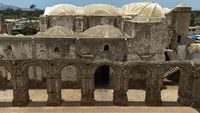
The small historic town of Zana in Peru, long burdened by centuries-old narratives of divine retribution and colonial devastation, stands on the precipice of a monumental transformation. As preparations reach a fever pitch, the community of roughly 4,000 residents is channeling its collective hopes into an upcoming pastoral visit by Pope Leo XIV, scheduled for November 11–17. For a municipality whose identity has long been defined by ghost stories, catastrophic floods, and a grim reputation as a cursed wasteland, the papal journey is viewed not merely as a high-profile diplomatic stop, but as a long-awaited spiritual redemption and a definitive turning of the page.
Main Facts and the Weight of History
Zana’s current quiet disposition belies a remarkably turbulent past. During the 16th century, under the height of the Spanish colonial empire, Zana flourished as a bustling, affluent commercial hub. Its wealth was manifested in grand, towering churches and sprawling estates that attracted merchants and missionaries alike. However, this golden age was cut short by a catastrophic confluence of natural and man-made disasters.
Roughly three centuries after its founding, a devastating flood swept through the valley, nearly wiping the settlement off the map. The raging waters battered the ornate colonial infrastructure, leaving behind skeletal remains of grand cathedrals where vultures now nest. This natural calamity compounded an already dark reputation. Prior to the flood, Zana had been a frequent target for ruthless pirate raids that pillaged its accumulated riches. The local folklore and historical memory, however, were most deeply scarred by the brutal murder of a Catholic priest during the colonial era—an event that local historians argue fundamentally shifted the town’s spiritual standing.
According to Rosario Cossio, director of the Afro-Peruvian Museum in Zana, the assassination of the clergyman cast a profound shadow over the community. The act was severe enough that the town was colloquially and officially deemed no longer fit for the administration of Catholic sacraments, cementing its status in regional lore as a place abandoned by divine grace. For generations, this dark narrative overshadowed Zana’s actual contributions to Peruvian history, trapping the local population in the psychological aftermath of an ancient stigma.
Chronology of a Resilient Heritage
To understand Zana is to trace a complex timeline of faith, destruction, and survival.
- 16th Century: Zana is established during the Spanish colonization, rapidly growing into a prosperous regional trade center characterized by magnificent religious architecture.
- 1606: Santo Toribio de Mogrovejo, the revered Spanish missionary, dies in Zana after dedicating much of his life to evangelizing the indigenous populations of Peru and fiercely defending them against the abuses of the Spanish crown. His legacy remains deeply embedded in the town’s identity.
- Late 18th to Early 19th Century: The town suffers a catastrophic flood, destroying the majority of its colonial infrastructure and reducing its magnificent churches to ruins, effectively ending its era of economic prosperity.
- 2015: Then-Archbishop Jorge (now Pope Leo XIV), who spent nearly two decades living and working in Peru, is granted Peruvian citizenship, deepening his ties to the region and cementing his frequent pilgrimages to Zana for the annual feast of Santo Toribio.
- November 11–17 (Upcoming): Pope Leo XIV is scheduled to visit Zana as part of his inaugural Latin American tour, marking a historic moment for the town as it celebrates the tercentenary of Santo Toribio’s canonization.
The Legacy of Santo Toribio de Mogrovejo
Despite the heavy aura of the curse, Zana has quietly maintained a position of profound religious significance as a bastion for the veneration of Santo Toribio de Mogrovejo. The Spanish-born missionary is celebrated not only for his tireless evangelical efforts but, perhaps more importantly, for his fierce independence from colonial authorities. Santo Toribio frequently utilized his ecclesiastical authority to denounce the systemic abuses, exploitation, and arbitrary rule inflicted upon the indigenous peoples of Peru by the Spanish crown.
This uncompromising defense of the marginalized made Santo Toribio a towering moral figure in Latin American church history—and an ideological precursor to the pastoral philosophies of Pope Leo XIV, who has similarly emphasized social justice and the protection of vulnerable populations throughout his ecclesiastical career. It is fitting, therefore, that the centerpiece of the Pope’s visit to Zana will be the celebration of the 300th anniversary of Santo Toribio’s canonization.
Community Mobilization and Grassroots Preparations
The impending arrival of the Pontiff has served as a powerful catalyst for civic pride and physical renewal within the municipality. Far from passively awaiting the event, residents have mobilized entirely through grassroots efforts to restore what remains of Zana’s historical aesthetic.
Maria Colchado, a 63-year-old local homemaker who has dedicated months to coordinating community readiness, encapsulated the prevailing sentiment of her neighbors. "The curse has ended," Colchado remarked, viewing the papal visit as an extraordinary blessing that validates the town’s endurance. Colchado is among dozens of volunteers who have labored to renovate the humble local church that the Pope will tour. Funding for the restoration—which includes a fresh coat of stark white and deep red paint—was raised creatively through community-run ticket raffles, showcasing the collective investment of the town’s populace.
Edinson Farfan, who succeeded Pope Leo XIV as the bishop of the neighboring city of Chiclayo, noted that the enthusiasm is palpable across all demographics. "The Holy Father deeply loves Zana," Farfan stated. "Everyone wants to present the absolute best side of our community to him."
The spirit of renewal is visible on every corner. Hundreds of Vatican flags have been ordered to line the narrow streets, fluttering outside modest homes. Towering posters bearing the likenesses of both Santo Toribio and Pope Leo XIV have been affixed to the exterior walls of the municipal hall and the main parish church—the very site that safely houses a revered relic consisting of the shinbone of Santo Toribio.
A Deep Personal Connection: Pope Leo XIV’s Roots in Peru
The excitement in Zana is further amplified by the unique personal history shared between the Pope and the nation of Peru. Born and raised in Chicago, United States, the Pontiff’s trajectory shifted profoundly when he relocated to South America. Over nearly two decades of pastoral service in Peru, he immersed himself in the local culture, language, and spiritual landscape, eventually attaining Peruvian citizenship in 2015.
During his tenure as an archbishop in the region from 2015 to 2023, he made regular pilgrimages to Zana, attending the annual celebrations honoring Santo Toribio every April 27th and participating in various local diocesan initiatives. Consequently, the townspeople do not view his upcoming visit merely as a routine diplomatic tour by a foreign head of state, but rather as a profoundly emotional homecoming.
"The Pope is coming home," Colchado reiterated, echoing a sentiment shared by nearly everyone in the municipality. This deep-seated familiarity ensures that the papal visit will transcend standard ceremonial protocols, functioning instead as a reunion between a spiritual leader and a flock he has known, served, and walked alongside for many years.
Broader Impact and Socio-Economic Implications
Beyond the immediate emotional and spiritual relief felt by the residents, Pope Leo XIV’s visit carries substantial socio-economic implications for Zana. For decades, the town’s tragic historical reputation—while fascinating to academic historians and folklorists—acted as an impediment to sustained economic development and tourism.
By placing Zana on the itinerary of his first official Latin American papacy tour, Pope Leo XIV is effectively projecting global attention onto a marginalized community. Analysts and local leaders anticipate that the international media coverage surrounding the visit will catalyze a revitalization of cultural tourism. The preservation of colonial ruins, the Afro-Peru Museum managed by Rosario Cossio, and the legacy of Santo Toribio are expected to draw travelers interested in religious history and heritage conservation.
Furthermore, the successful grassroots mobilization required to prepare for the event has strengthened local civic infrastructure and community cohesion. By working collectively to paint facades, renovate sacred spaces, and organize logistics, the residents of Zana have demonstrated a renewed capacity for self-reliance and cooperative governance.
As the calendar ticks down to November 11, the ghosts of Zana’s past—the pirates, the colonial murder, and the devastating floods—are finally being supplanted by a forward-looking narrative of faith, resilience, and global solidarity. For the 4,000 souls who call Zana home, the arrival of Pope Leo XIV is not just the end of a curse, but the beginning of a vibrant, long-overdue chapter in their historic town’s continuum.