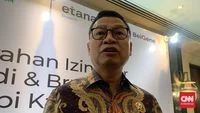
Minister of Agriculture Andi Amran Sulaiman has been officially recognized for his strategic contributions to the nation’s food security and organizational reform, securing the "Transformative Leadership in Agricultural Governance" award at the CNN Indonesia Awards 2026. The prestigious accolade was presented by Transmedia Director Latif Harnoko to the Minister’s representatives during a ceremony held at the JW Marriott Hotel in Jakarta on Friday, November 6, 2026. This recognition underscores a pivotal shift in how Indonesia’s agricultural sector has been managed over the past two years, marked by rigorous deregulation, fiscal discipline, and a heightened focus on the welfare of the farming community.
The Foundation of Reform: Deregulation and Efficiency
The core of the Ministry of Agriculture’s (Kementan) current success lies in its aggressive pursuit of bureaucratic simplification. Under Minister Amran’s tenure, the Ministry has prioritized the removal of administrative bottlenecks that historically hindered the productivity of the agricultural sector. A primary achievement in this transformation was the systematic overhaul of the fertilizer distribution framework. By simplifying 145 separate regulations—many of which had been criticized for being redundant or overly bureaucratic—the Ministry significantly reduced the friction between supply and demand.
This administrative reform had immediate real-world consequences for Indonesian farmers. The consolidation of these regulations, coupled with improved logistics management, allowed the government to lower the price of subsidized fertilizers by 20 percent. For smallholder farmers, who constitute the backbone of the Indonesian rural economy, this reduction represents a substantial decrease in operational costs, thereby increasing their net margins and incentivizing greater agricultural output.
Economic Impact and Statistical Performance
The impact of these policies is reflected in the nation’s economic indicators. By October 2026, the Ministry of Agriculture reported a robust growth in the Agricultural Gross Domestic Product (GDP) of 5.74 percent. This figure is particularly significant given the global climate challenges and supply chain instabilities that have characterized the mid-2020s.
Economists point to this growth as evidence that the "Transformative Leadership" framework is not merely rhetoric but a functional strategy for national resilience. By focusing on the efficiency of budget allocation—cutting unnecessary expenditures and redirecting funds toward productive, scalable agricultural programs—the Ministry has managed to stabilize food production despite shifting global market conditions. The performance metrics reported by the Ministry have been corroborated by various independent research institutions, which have consistently ranked Minister Amran’s performance highly within the broader cabinet of President Prabowo Subianto.
Chronology of the CNN Indonesia Awards
The CNN Indonesia Awards 2026 marks the third iteration of this annual event, which has established itself as a benchmark for excellence in public and private sector leadership in Indonesia. Since its inception in 2024, the awards have served as a platform to highlight entities that demonstrate not only operational success but also the ability to deliver tangible benefits to the Indonesian public.
- 2024: The inaugural awards focused on foundational institutional successes and early-stage innovations, setting the standard for the following years.
- 2025: The scope of the awards expanded to include individual leaders who demonstrated exceptional crisis management and long-term planning.
- 2026: This year’s edition emphasized "Transformative Leadership," specifically targeting individuals who successfully dismantled legacy systems to build more accountable and agile governance structures.
The awards process involves a rigorous selection criteria that reviews the impact of programs on society, the nation, and the state. Candidates are evaluated based on their ability to integrate innovation into public service, their commitment to transparency, and the measurable improvement in the quality of life for their constituents.
Official Responses and Institutional Significance
Speaking on the sidelines of the event, representatives for the Ministry of Agriculture noted that the award serves as a morale booster for the thousands of civil servants and agricultural extension workers across the archipelago. The Ministry’s communication strategy has focused on the concept of "Agro-Modernization," which relies on a combination of technology, accurate data-driven decision-making, and the removal of corruption-prone layers in the supply chain.
"The recognition received today is a testament to the collective effort of all stakeholders in the agricultural sector," said a Ministry representative during the acceptance speech. "The focus has always been on ensuring that the farmer is the primary beneficiary of every regulation we issue. We are not just managing agriculture; we are building a foundation for national food sovereignty."
Independent analysts observe that the award also signals a shift in how the current government perceives the role of the Ministry of Agriculture. Rather than acting as a traditional bureaucratic entity, the Ministry is being repositioned as a growth engine. The 5.74 percent growth in agricultural GDP is seen as a key factor in keeping national inflation in check, as food prices are a major component of the Consumer Price Index (CPI) in Indonesia.
The Broader Implications of Agricultural Governance
The "Transformative Leadership" model championed by Minister Amran provides a template for other government bodies. By focusing on the three pillars of deregulaton, budget efficiency, and accountability, the Ministry has demonstrated that institutional reform is possible even in complex, legacy-heavy sectors.
The reduction of fertilizer prices and the simplification of distribution channels serve as a case study for future policy implementation. Prior to these changes, the fertilizer sector was often plagued by corruption, uneven distribution, and delays that crippled planting seasons. The successful intervention by the Ministry suggests that by stripping away unnecessary regulatory layers, the government can achieve market correction without the need for constant, massive injections of state capital.
Furthermore, the public perception of the Ministry of Agriculture has seen a marked improvement over the last two years. Public trust, which is often difficult to cultivate in the agricultural sector due to the volatile nature of commodity prices, has been bolstered by the visible results of these reforms. According to recent surveys, the efficiency of the Ministry is frequently cited as a positive factor in the overall performance of the current administration.
Looking Ahead: Challenges and Future Outlook
While the CNN Indonesia Awards 2026 celebrates the achievements of the past two years, the road ahead remains complex. Climate change continues to pose an existential threat to crop yields, and global geopolitical tensions threaten the availability of imported agricultural inputs.
The Ministry of Agriculture acknowledges that maintaining a 5.74 percent growth rate will require sustained investment in agricultural technology, such as climate-resilient seeds and automated irrigation systems. The "transformative" aspect of the leadership will be tested as the government transitions into the next phase of its national development plan, which emphasizes digitalization and the integration of smallholder farms into the global export market.
However, the current framework provides a stable base. By prioritizing accountability, the Ministry has made it easier for future administrations to track resources and ensure that aid reaches its intended recipients. The 145 regulations that were successfully simplified are now part of a more streamlined system that allows for greater flexibility in responding to regional agricultural needs.
Conclusion: A Legacy of Reform
The CNN Indonesia Awards 2026 serves as both a celebration of individual leadership and a recognition of the collective effort to modernize the Indonesian agricultural sector. By honoring Minister Andi Amran Sulaiman, the event highlights a clear trajectory: the modernization of Indonesia is not just a technological or industrial endeavor, but an administrative one.
As the Ministry continues to execute its agenda, the focus will likely remain on the delicate balance between high-level policy reform and the daily needs of the Indonesian farmer. The success of the last two years proves that when bureaucratic barriers are lowered, the agricultural sector is capable of significant expansion. The "Transformative Leadership in Agricultural Governance" award stands as a validation of this approach, offering a blueprint for how the Indonesian government intends to secure its future in an increasingly competitive global landscape.
The ceremony concluded with a message of commitment from the government to continue these reforms, ensuring that the momentum gained in 2026 is carried forward into the coming years. For the agricultural sector, the path is now clearer: efficiency, transparency, and a relentless focus on the farmer’s success remain the keys to national prosperity.